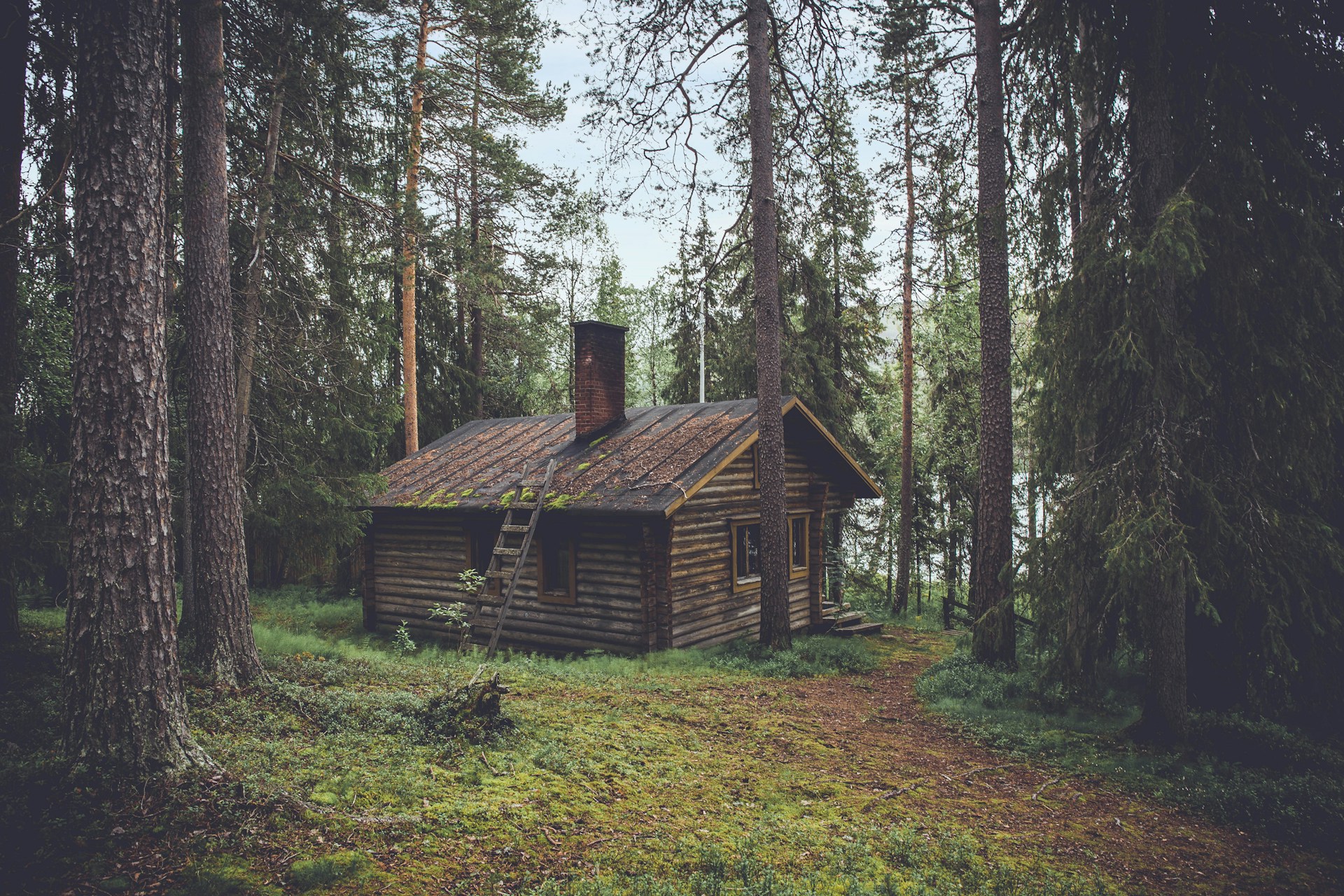
Carston Van Der Bloom could see the small cabin in the distance. It didn’t take him long to track escaped slaves. He’d spent years tracking them all over, and this was no different. It took him two weeks to find Ramses after he’d disappeared from the Harrington plantation. Van Der Bloom tied his horse to a low-hanging branch of a tree and tugged at it to make sure it didn’t wobble at all. He filled the other hand with rope and headed for the cabin.
The light from the fireplace danced with the glass of the front window. He knocked at the cabin door, then pulled the hammer back on his pistol. A voice answered in Shawnee, and Van Der Bloom answered in the same tongue. The Shawnee woman opened the door slowly, and a flash from Van Der Bloom’s pistol illuminated his figure as the hot smoke left the barrel of the gun. Her body fell to the wood floor.
Ramses sat by the fireplace as still as a deer in the forest, waiting for the dark figure to approach. Van Der Bloom knelt and used his knife to take the woman’s scalp, using an old lace to tie it to his belt. His steps were slow, and he came to the fireplace and took a seat across from Ramses.
“Did it feel like you were gone long?” Van Der Bloom asked.
“How long does it usually take ye to find folks that run away?” Ramses asked.
“Doesn’t matter. All that matters is that I am here now.”
“‘Spose I shoulda expected ye.”
“Yes, you should have.”
Van Der Bloom looked over his shoulder at the body, then at the space: the traditional logs that made up the walls, the wooden paneled floors, the fireplace.
“I want to know if, for you, the thought of getting away is as exhilarating as the chase is for me.” Van Der Bloom asked.
Ramses was perplexed.
“If you’ll oblige,” Van Der Bloom said.
When I saw you get off ye horse, I thought, ‘he bigger than people say.’ People said you was Dutch and that Dutch people were tall. You came up on the veranda with Benji, the slave ye caught. Chains dragging, fingers stained with dirt, tired, and cold. Virginia’s winters normally ain’t that cold. But, that year, 1860, it was cold and bitter, and we seen a lot of snow.
The last bit of light was leavin’, and it was gettin’ dark. I was workin’ with the cows and horses–a ranch hand, or cowboy, they called us. Me and the other slaves stopped what we were doin’ and just watched. We’d all heard of the mythical slave catcher, Carston Van Der Bloom, and those that didn’t sure was told about him that day. We never saw his eyes or much of his face. We only saw the brim of ye hat, and that always found a way to cover things. You could see the scruffy jaw. Never quite could get a good look at ye.
“I’ll be damned,” said Mr. Harrington.
Robert Harrington came out of the front door in a thick coat to join the two men on the veranda. He had a big grin on his face.
“You do indeed always deliver. I admit, I had my doubts.”
“No need,” said Van Der Bloom.
Harrington waved his hand to signal to Jones, who was the overseer, and me. The three of us took Benji to the barn to a spot where Jones liked to beat people. He took some of the slave gals there, too. They’d come back to us and be silent for months.
The barn smelt like horse shit and hay bales. Jones tied Benji to a post and told me to stand there and watch. Deep down, I think they always wanted the slaves to watch when they beat one of us. Make us know what’s gon’ happen if we run off. Jones also wanted me there to check on the horses and make sure they was fed.
“Benji, don’t you move,” Jones said.
He slung that whip, and it flicked into Benji’s flesh. The whip made a shallow ditch in the skin, and the white meat quickly ran red. Jones flung it again, making another long piece of open flesh to make an ex. He spat and smirked.
“I don’t think Mr. Harrington would take it well, you beatin’ Benji too bad,” I said. Benji was one of the best workers on the Harrington plantation, and Mr. Harrington liked Benji in particular for that.
“Think about it, Mr. Jones,” I said.
I been beat like that and see that same smirk before. Caught me reading once. I never let him catch me again. Jones shook his coat off. I was trying to stay warm, watching my breath out in front of me.
“Ramses! Don’t just stand there,” he said. “Fetch me a pale of water. I’m gonna need to wash him off when I’m done teachin’ him a lesson. See, you ain’t this brave, Ramses, so you’re safe and good here. No need for me to do you like I’m doin’ this boy.”
Never knew why, and no else did either, know what on God’s earth made Mr. Harrington call me Ramses. We all guessed it had somethin’ to do with the Egyptian things he collected all around the house. I never saw the inside of the house, but that’s what the others said. Jones didn’t know that I thought of runnin’ away. I ain’t the only one. I tamed horses. Coulda easily took one and gone, just like that. I had to think about my boy, Otis, all of five years old. Lucky enough, we still together. His momma gone now.
I ran up to the house for the water and set it down for Jones. My coat wasn’t thick like Jones’s, and I was shivering. I looked at it, sittin’ on the dirty ground.
“Don’t even think about it,” Jones said.
I looked away and tried to stand firm, waiting for the man to finish what he was doin’. The sound of Benji hollerin’, the agony, was gettin’ to me. It cut me deep like I was bein’ whipped to death, too. I stopped feeling the cold and was shaking after each strike against that man’s flesh. I thought of Otis, and when he would get grown, he could be whipped like that. Jones was heavin’ between lashes and didn’t hear a damn thing for the two seconds I let that spade drag in the dirt over to where he stood. I ain’t a small man, by no means. Bigger than Jones, for sure. I lifted that spade, and in that cold, my muscles seemed to double in strength at that moment. Me, and it towered over Jones until I brought it down like God brought down lightnin’ and thunder. Benji was on his knees, and he heard Jones’s body hit the dirt. Blood, skin, bone, and hair mussed in the dirt, none of them could see Jones’s face anymore. Benji could barely turn to see the body, and when he did, the pace of his breath and the fatigue in his eyes barely changed. I threw the spade into a pile of hay and put Jones’s coat loosely on Benji’s back. His feet were like weights as he stumbled all the way to the slave house.
Some of the other slaves were waiting in the room for Benji, and recognized that it was Jones’ coat that he was wearing.
“Where’s Pa?” Otis was askin’ for me.
Benji told him I was doin’ God’s work.
They took the coat and hid it in a corner of the house. Tended to Benji’s wounds with some cotton cloth and such.
I flung Jones’s body on my back, wishing I hit the fool with more than one blow, and I carried him all the way to the old oak tree. Another place Jones liked to whip folks. Night came, and I went back for the spade and dug a trench deep enough to cover Jones. I got back to the house with the others, and ‘course they had questions.
“What you gonna do?” Benji asked.
“Don’t know,” I said.
I looked at Otis, just watchin’ us talk. At that age, they don’t know what’s goin’ on. He knew somethin’ was wrong, but not what. Thinkin’ about leavin’ alone was right and wrong all at the same time. How could I leave my own boy in this condition? We barely survivin’ daily. Harrington’ll get another overseer and keep whippin’ folks. One day, it could be Otis that’s tied to a tree gettin’ lashes. Could have the dogs on him if he run away. All the same stuff could be comin’ his way. It’s just how it was.
Ramses took a swig of moonshine and then fingered around in his pocket for a cigarette. He lit it and tossed the match into the fire burning next to them in the living room. Any movement he made, he managed to keep an eye on the barrel of the pistol that pointed at him. Van Der Bloom was as still as a tree, not moving a millimeter.
“I couldn’t let my son live like that. Not without me. We packed some things for the journey. I took Otis by the arm and took Jones’s coat. We headed for the barn and found another coat for Otis. It was too big, but it didn’t much matter. We left at night, and since the property was so big, no one was lookin’ for Jones. Not a peep. We get to the edge of the land, and Mr. Douglas is out there havin’ himself a little huntin’. Otis was small enough to get behind a tree. I told him to keep his head down, don’t move, and I’ll be back to get him when I’m done. And I snuck up on Douglas and yanked him off his horse. Big knife he had for guttin’ boars, and I got that off of him. I was quick. Jammed that knife in his belly a few times and left him there in the red snow. Otis and I set off on the horse, ‘cept you. But you did catch up with us yet.’’
“What did you do then? Where did you go?” Van Der Bloom asked Ramses.
“Well, only thing that made any sense was to go north,” Ramses said.
“And that’s how you ended up here in Pennsylvania?”
Ramses nodded.
“What are you gonna do now?” Ramses asked.
Van Der Bloom looked at the dead Shawnee woman on the kitchen floor. Her scalp was removed, and the white flesh shone in the light from the fireplace.
“I may sell this scalp for coin first, then I’m taking you back to the Harrington plantation.”
“The great Carston Van Der Bloom selling scalps? That’d be the day.”
“Killing Indians will always be worth something.”
“Until they’re gone,” Ramses said.
Van Der Bloom shrugged. Otis came out of the bedroom and stood at his father’s side. He said he had a nightmare. Ramses’s eyes widened, and he told Otis to go back to bed, but he didn’t listen. Van Der Bloom didn’t seem to mind the boy standing there.
“When you sat there telling me that story, I thought, ‘wow, you’ve been through a lot.’’’
“Maybe you should let me go.”
“Would you let you go, sitting where I’m sitting?”
“Doesn’t matter what I think. Might not ever matter. Never gonna be white.”
Van Der Bloom nodded.
“I’ve never had any sympathy for your kind. Not going to start now. I have a reputation—one that I earned. Letting you go would change that.”
“Nobody got to know you. Let me go.”
Van Der Bloom was silent. Otis got closer and hugged his father. The fire was burning hotter, and Ramses moved the blanket away from his lap. He sniffled, and in the light from the fire, he could see Ramses’ eyes glistening.
“I couldn’t let my boy stay there. I had a chance to go alone, and quickly too. I coulda taken a different way and ended up somewhere else. I brought him into this world, and that might not mean anything to you. To you, him and me just niggers. And the job is to catch us and take us back. Well, after seein’ Benji get whipped like that—like so many others before him, I didn’t want no more of it. Didn’t want it for Otis neither.”
“All that doesn’t matter to me.”
“How could it? You’re a white man. You won’t ever know what it’s like to be me and go through what I been through.” Ramses paused. “You got any children?”
Van Der Bloom shook his head. Ramses wiped his eyes.
“I’m gon’ bet you wouldn’t let ‘em live like we was livin’. You’d break away too.”
With his other hand, Van Der Bloom reached down for the moonshine and poured a gulps-worth into a glass he found. He threw his head back, and the drops of the liquid escaped at the corners of his mouth and wiggled through the coarse hairs of his beard like mice in a maze.
“Don’t say anything else. The journey to get you back isn’t a short one, and I anticipate, and I hope I’m wrong, that you may try to escape again. So, the journey may be longer than I want it to be.”
“But do you understand why I had to go? You ain’t got a children, but what would you do? You woulda ran away just like me. You’re a man, and I’m a man. You free, and always gonna be free. The thought of being a slave never occurred to you.”
“You’re certain of that?”
“Havin’ that smell of a new land—a different tree in the forest- was somethin’ else. One of them trees that didn’t lose its leaves in the winter. I knew I wasn’t close to the Harrington house no more. You probably wouldn’t even notice somethin’ like that.”
Van Der Bloom stood up and holstered his pistol. Ramses and Otis held one another while Van Der Bloom went for a bag hanging on the back of his horse and set it down in front of Ramses.
“I’m going to take something from you,” he said.
“Why? I’ve got nothing left to give. I thought I had freedom, and you’ve taken that away from me.”
From the bag, Van Der Bloom removed a mallet. He unsheathed a big knife and stood over Ramses with the knife and mallet in each of his hands.
“For the inconvenience,” Van Der Bloom said.
He motioned for Ramses to lay his hand on the side table. He stood for a moment looking at the big broad hand and the fingers, analyzing before he put the knife down—a cowboy could still do his job with two fingers missing. He settled on the fourth finger and the small finger of the left hand. Small pieces of wood remained unburned in the fire. He took one chuck of wood and gave it to Ramses to put bit down on. As he gently pressed the mallet atop the knife, the thought did cross his mind to put a bullet in each of their heads and bring nothing back. The bounty was greater if he brought them back alive. They were an investment. No more thinking, he said to himself. He looked at Ramses in the eyes, holding the mallet and the knife. He could see fear, but it was not fear of going back. He also gleaned that from all of the talking he tolerated from Ramses. He held his son’s hand with his free one. The mallet rose and fell. The wood piece was still hot and burned sort of crescent at the corner of Ramses upper lip. The two fingers were put into a small cotton cloth Van Der Bloom brandished immediately. He packed up the bag and strapped back on the horse.
Morning fog concealed the sight of Van Der Bloom’s appearance onto the Harrington plantation. He joined Mr. Harrington on the veranda just as he did the week before to return Benji. The other slaves joined together to watch the meeting, looking for sight of Ramses or Otis, or both. Some of them cried, knowing that no slave ever escaped Van Der Bloom. That was his legend, and it added to his myth. Except he was no longer a myth. They’d seen him in the flesh. Some thought he was doing God’s work. That they were meant to be subjected to toil, all day in the sun, sweating through the night, and shivering in the winter.
Van Der Bloom opened the cotton cloth, now brown with dried blood.
“I took his life. He wouldn’t come willingly,” Van Der Bloom said.
“And the boy?” Harrington asked.
“The boy got away.”
“No matter. He’ll probably die out there. A bear or a wolf’ll get him,” said Harrington.
“Do you want to keep the fingers?”
“I’m not a savage, for God’s sake.”
“Are you satisfied with the evidence of his death?” Van Der Bloom asked, looking at the fingers.
“Yes. You can keep those and do what you want with them.”
Van Der Bloom collected his money, and since his hat was low, and again, no one saw his face. He tucked the cloth containing the fingers back into his coat. Harrington shook his head in both disgust and disbelief. There was still something he admired as he watched the famed slavecatcher walk away, and mount his horse. As he trotted into the fog, he hoped to never see him again.
I am a Florida native of Jamaican descent currently living in Jersey City, New Jersey. I have been working in the healthcare field in New York, New York, for over seven years. I studied English Literature at Florida International University and I post my poems (sometimes reading aloud), thoughts, readings, and short stories via Substack under A.N. Miller at https://substack.com/@anmiller?utm_source=user-menu. I have published short stories such as Maps and Meeting the Maasai in Vocal Media, as well as Cinema in Zouch Magazine. I’m currently writing a collection of poems, as well as a short story collection of Westerns. You can find me on Instagram and Threads at amillersdble. I enjoy exploring how people are shaped by their different cultures and the customs of their times.