Issue Eight: February, 2026

It’s been a while.

We’ve been in a bit of a drought here at Underwood Press.

And, it’s funny that, as I step further away from the grind of earning a living, I also seem to get busier with everything else: Podcasts, writing, film making.

If you haven’t already, please take a look at our newest podast: The Nephilim Hunter. You can find it under the “Podcasts” heading at the top. Season two is in post-production as well as some other podcasts.

But, it’s also good to be back at True Chili.

We’ll be opening up the general submission window shortly.

Got to keep that campfire glowing.

“Metronome” by John Kucera


Thoughts of a life that’s as complicated as everyone else’s,
struggling for balance, juggling time.
The mantle clock that was my grandfather’s has stopped at 9:20; we haven’t had time
to get it repaired. The brass pendulum is still, the chimes don’t ring.
One day you look out the
window, green summer, the next, and the leaves have already fallen,
and a grey sky lowers the horizon. Our children almost grown,
our parents gone, it happened so fast. Each day, we must learn
again how to love, between morning’s quick coffee and evening’s
slow return. Steam from a pot of soup
rises, mixing with the yeasty smell of baking bread. Our bodies
twine, and the big black dog pushes his great head between;
his tail is a metronome, 3/4 time. We’ll never get there,
Time is always ahead of us, running down the beach, urging
us on faster, faster, but sometimes we take off our watches,
sometimes we lie in the hammock, caught between the mesh
of rope and the net of stars, suspended, tangled upon love, running out of time.


John Kucera was educated at Carlow University in Pittsburgh, Pennsylvania. His work has appeared in New Reader Magazine, The Sandy River Review, Connections Magazine and Friends Journal. He lives in Arizona, where he writes and teaches.

“Inside the Barrel” by T.R. Healy


His head bent, his black Stetson nearly covering his eyes, Colby Hanson peered into the wheelbarrow as if looking for something inside it even though it was empty.  Then, abruptly, he reared back and pushed it toward a kid not much older than his son, picking up speed with each step.  Soon he was moving so quickly the front wheel began to rattle and shake.  He was within a couple of feet of Lonnie when the kid jerked his head as if he were going to move right then went to his left, and immediately Colby smashed into his left kneecap.

     “Damn, Colby!” the kid whined after he fell to the ground.  “That hurt something fierce.”

     “You’re lucky it was only a little red wagon that hooked you, son, and not some slobbering 1,500-pound Brahma.”

     “Then your chili would’ve  been cooked, all right,” Buck, another instructor at the rodeo school, chimed in with a slight grin.

     Colby agreed.  “Some of you gents may think you’re fast as lightning but, believe me, you can’t outrun an arena bull,” he told the nine students standing along the corral fence.  “You can out maneuver a bull, though, but not with wimpy head or shoulder fakes.  You have to sell the fake with your whole body.  You have to really step into it.  Lift up your leg like you’re climbing a ladder.  Let the bull see your leg then pull it away.  Otherwise you’ll end up on your backside like Lonnie just did.”

     The young guy, stepping back against the fence, smiled weakly.

     “Now who can I chase next?” Colby asked as he pushed the make-believe bull back to the center of the sandy corral.

     A rawboned kid raised his hand and climbed down from the fence.

     “Let’s do it then.”

     And for the rest of the morning Colby chased one kid after another around the corral until their step fakes met his approval.  They were at the school not to become bullriders but rodeo clowns, also known as bullfighters, whose main job is to protect fallen riders from being hooked or trampled on by the bulls they were riding.  They did this by drawing attention to themselves and away from the riders.  Manically they jumped up and down, made faces, shouted and laughed, waved red bandanas, ran around in circles, anything they could think of to distract the animal.  Unlike circus clowns, they were often in considerable pain when they left the arena.

     On the circuit for nearly seventeen years, Colby started teaching the bullfighting class only a couple of years ago when he was offered the position by one of the owners of the school, Elton Mathers, a retired bullrider he had protected scores of times from being freight-trained.  At first, he declined, doubting if he could teach anyone anything.  Certainly he had not succeeded with his son, Flynn, who never showed the slightest interest in learning about bullfighting.  It was almost as if his son were embarrassed about what he did, though he never admitted it.  But his lack of curiosity said enough.  So Colby assumed if he couldn’t interest his son in his work, he wasn’t likely to interest anyone else.  But Elton insisted he give it a try and he did because he could use the extra pocket money and, so far, found it more rewarding than he could have imagined.

*

     “These young bucks are here because they want to put on greasepaint and face off with a bull,” Elton told him.  “You don’t have to worry about motivating them.  They have all the motivation in the world.  What you have to do is show them what to do when they get in the arena and I guarantee you they’ll soak it up like maple syrup.”

     “You want me to tell them about all the broken bones they’re going to get too?”

     “You can if you want.  It doesn’t matter to me, old stick, because I doubt if these kids much care.  They’re here to fight bulls, and if some bones are broken, so be it.”

     “Not as many as we’ve got, I hope.”

     Elton nodded, tucking a nugget of tobacco in a corner of his mouth.  “Just about everything that can be broken has been, hasn’t it?”

     “That’s for sure.”

     “Well, whether you tell them or not, it’s something they’ll learn right quick, one way or another.”

     “I just hope not too quickly.”

     “Oh, I don’t know, Colby.  Maybe the quicker the better then they’ll know if they are cut out for this line of work.”

*

     “Don’t forget, gents, part of the job of rodeo clowns is to entertain the crowd,” Colby reminded his students.  “That’s why we paint our faces and wear funny clothes.  So when you’re in the arena be happy and loose.  Put a smile on folks’ faces.  Glide around like you’re on skates.”

     “Skates, sir?” one of the students asked quizzically.

     At once, he bent his knees and stretched out his arms as if mounted on a skateboard.  “Glide across the sand as if it were ice, gents.”

     The student smiled at him, skeptically, just as his son did the time Colby mentioned, after watching him perform some intricate spins and jumps on his skateboard, that he was nimble enough to be a top notch clown some day.

     “I’m not a funny person, Pop.  You are but I’m not.”

     That was when he realized Flynn had no intention of following him into the rodeo business so he was not really surprised when his son enlisted in the Army soon after he graduated from high school.

*

     “This is not a trash can, gents, or a spittoon for bullriders,” Colby said, as he stepped behind the dented white aluminum barrel set up in the middle of the corral.  “It is what the more educated in our fraternity call ‘a clown condominium.’”

     A few of the students laughed at the ancient wisecrack.

     Smiling, too, he climbed inside the 75-pound barrel and for a brief instant disappeared as he squeezed himself into it.  Then he popped back up, and, lifting the barrel by the handles inside it, shuffled around the corral as if he were a show horse.  He wanted to be sure all of the students had a good look at the rank cylinder.

     “Believe it or not, gents, but this pickle barrel could well save you quite a few visits to the emergency room,” he said, after he climbed out of the contraption.  “For sure, it will make your time fighting bulls a mite less painful and hectic.  It really is your only protection in the arena.  It’s where a clown can seek cover when he needs a moment to gather himself.  Of course, as soon as he does, the bull usually comes after him and attacks the barrel, and he’s back running around as if his hair’s on fire.”

*

     Late one afternoon, chopping carrots for the beef stew he was preparing for dinner that evening, Colby heard a car door slam shut outside his house then heard another one.  Not expecting company, he parted a corner of the shade and peeked out the kitchen window.  Stunned, he let go of the knife, which fell into the sink, and felt his knees give and almost fell himself but managed to grab the faucet.  Two soldiers, in garrison caps and dress greens, walked up the flagstone path to his front door.  They knocked three times, quickly and firmly, then waited for him to answer, but he remained absolutely still, as if his left hand were frozen to the faucet, and just stared at the drawn shade.  Then they knocked three more times.

     They could knock all day, as far as he was concerned.  He knew what they wanted to tell him but he didn’t want to hear it.  Not now, not ever.

     You poor kid, he groaned under his breath.  You thought you knew so much.  You wouldn’t listen to what anyone told you.  Not then, not ever.

*

     Colby walked around and around the barrel, not saying a word as if he had forgotten his students were still in the corral.  He always thought of himself as a bullfighter, not a barrelman, but like all rodeo clowns he had spent a good bit of time inside barrels during his career.  They were too confining, though, drastically restricting his movement.  Also, it was a lot more punishing inside a barrel, which many bulls attacked with incredible ferocity, sometimes kicking them end over end as if they were soup cans.  His right arm had been broken three times while scrunched up inside a barrel and his left ankle twice.  And he had been cut more times than he could count by bull sticking their horns into barrels.  Once he nearly got his left eye poked out.

     “Now, gents, I’d like to show you what it’s like to be a barrelman,” he announced, as if finally realizing he was still teaching a class.  And very deliberately he removed his hat and set it on a post, looked at the bucking chute and climbed inside the barrel.

     Some students smiled, expecting him to pop up a minute later with a bright red bulb on his nose or an orange wig, but he didn’t budge.  No one did.  Then, all of a sudden, the chute door opened and out charged a filthy red brindle bull with horns as sharp as spikes.

     His teeth clenched so he didn’t bite through his tongue, Colby braced his knees against the thinly padded interior of the barrel and waited for the bull to attack.  He didn’t have to wait long, either.  Almost as soon as he drew another breath, the bull slammed into the back of the barrel, knocking it over on its side.

     “Son of a bitch!” Colby cried, after banging his nose against a handle.  And, at once, a thin stream of blood trickled across his lips.  He tried to breathe through it but it hurt too much so he gulped for air like water.

     The snorting bull kicked with its hind hooves, and the barrel started to roll and he banged his nose again.

     “Son of a bitch!”

      The longer you’re in a barrel, he knew from experience, the more likely you’ll get injured.  So he hoped to spend the rest of the afternoon there, tumbling back and forth across the corral, the bull striking the barrel until he was sure his lungs had been turned inside out.  Ever since he learned of his son’s death in some place he couldn’t find on any map he owned, he looked forward to climbing into a barrel whenever he could because the pain he felt there insulated him for a while from the worse pain he felt, at home, thinking about his son.


T.R. Healy was born and raised in the Pacific Northwest where he had fond memories of riding horses on the beach.

“The Lone Cowhand” by Nick Olsen


When I was just a young guy,
I wanted to grow up and punch cows in the mountains up high.
Well I did pretty good, ‘cause I am sitting here tonight,
Just me, the horses and cattle.
I am watching the fire, and listening for trouble;
Hopefully it’s a peaceful night.
The winds a blowing, it’s getting chilly,
So, I pull my collar up tight.

I lived in town for a couple of years,
All it did was bring trouble and tears.
I got divorced, and set for a spell in prison.
It made me think that maybe town and trusting people is a bad decision.
Well, I’ve probably lived half my life by now,
And I just want to be alone.
Just me, the horses and cows,
Watch them eat the knee-high grass.
Well, I guess guys like me come from a different class.
Hopefully I can leave a legacy of being a gentle cowhand,
And Lord, if I die tonight, out on the range,
Just me the horses and cattle;
Please tell the world I tried my best to be a good man,

And love being in the saddle.
Lord, let them know, there will always more horses to ride.


Nick is fun loving, ranch loving, cow punching man. Enjoys all things outdoors and cowboy related. As much ranching as he thinks he’s done, he is enjoying new ventures and learning new skills. Cowboy poetry is a fairly new venture and loves reading the old poets.

“The Barkeep and a Cowboy Discuss Mark Twain and Sigmund Freud” by Patricia Williams


A cowboy, sitting in a saloon, (talking politics that applied to either
side) quoted Mark Twain – said to the barkeep, with a sigh: “Truth’s
got no defense against a fool who’s set on believin’ a lie.”

The barkeep replied, as he poured another whiskey, “Now that ain’t
somethin’ ya learn in school, but” he continued, “I gotta’ tell ya’–
nothin’ much is changed since Mr. Twain was livin.’ What’s happnin’
ta’day, ain’t no different than what went on yesterday: coyotes and
cowboys still howl at the moon and fools still believe the foulest of lies.”

“And this fella’ Freud,” the cowboy added, as he downed another drink,
“he’s a real expert on how humans behave. He’s high flutin’, got too
much wobblin’ jaw and too much mustard, but I’ll giv’um an “A” for
his advice about life (even if they say there’s no proof that he said it):

“Before you diagnose yourself with despair or low self-esteem and before
you take anybody’s advice, take a drink, look around with a squinty eye,
and make damn sure you’re not surrounded by “plastered” assholes.”


Patricia Williams lives in the Wisconsin woods, with wildcats and turkeys and bears (O my!!) eight miles from a village of nine-hundred and 25 from anything larger. She began writing poetry after retiring from thirty-plus years of teaching art and design.

“Top of the Stage” by James A. Tweedie


It’s better to ride on the top of the stage
Than to sit in the cramped space below
Where there may be a child of an uncertain age
With his brothers and sisters in tow.

The dust from the trail—though the curtains are drawn—
Finds its way through the cracks in the door.
And when all the best seats have been taken and gone
There is no place to sit but the floor.

Close quarters and sweat are more burdens to bear
And the rocking can turn strong men green.
There’s the creak of the carriage, the lack of clean air,
And at night there’s not much to be seen.

But here on the top there’s more pleasure than pain
As the mountains and mesas pass by.
Above deserts and plains there are rainbows and rain,
And at sunset, a campfire sky.

And when the stage driver’s not cracking his whip
Or the messenger’s waving his gun,
There’s tobaccy to spit and some whiskey to sip
And some tall tales to add to the fun.

I/d rather be free on the top of a stage
Than entrapped in a small Pullman berth.
For the friends that I’ve made and the smell of the sage
Are the two finest things on God’s Earth!


James A. Tweedie is a husband, father, grandfather, author, poet, photographer, composer, fly-fisherman, clam digger, community organizer, and retired pastor. He has enjoyed living in California, Scotland, Utah, Australia, Hawaii and presently in southwest Washington State where his home is a short walk from a 24-mile long Pacific Ocean beach.

“Meadow” by David Radford


We have a slice of prairie in front
Farmland restored to natural state
A meadow, our driveway’s open gate

Path markers invite me to wander in
Invitation easily forgotten
with everything else that needs to be done

On the meadow’s
summer canvas

Alas          Canada Thistle —

an unwelcome guest
scourge of the Midwest
deemed a noxious pest

Most likely brought to this country
by settlers long ago
Its seeds mixed inadvertently
with seeds they meant to sow

These thistle flowers have to go
always a chore in the meadow
Bold purple accents here and there
placed as if with an artist’s care

This year, now that the chore is done
I am accepting the invitation

with regret for not accepting sooner
How easily small things glide by
the small things which really matter

Time is just a meandering stream
as I trace my way through the meadow

Cares recede like an ebbing tide
as butterflies dance in the summer sun

How quickly my heart returns the smile
of a nodding yellow bloom

To wander its paths is balm for my soul
Where they may lead I never know


David Radford is a retired college professor who loves gardening and the great outdoors. Creative writing has been a welcome change from the technical writing his career demanded.

“Cowboy’s Last Sunset” by Jeral Williams


Riding into life’s sunset,
he watches the early morning kiss the sky
and ponders the warrior question,
“Is today a good day to die?”

Riding the prairie,
death is not a stranger to old cowboys,
a companion not a friend.
Niobrara fossils etch death over millions of years,
bleached Bison bones reflect greed.
Below Sand Creek earth
Arapahoe children’s bones bear hate,
while above— the hawk, the rabbit, the snake
dance in circles of prey.
Hunters prey on pheasant, quail, antelope and deer,
the flooded arroyo and the prairie fire cause wide-spread fear.

Occasionally he rides like the wind just to remember,
but mostly he walks his horse pausing often,
finding comfort in tumbleweed solitude,
watching prairie dogs rise erect
then dive fearing the hawk’s shadow.

He has no fear of life’s sunset,
today just wasn’t a good day to die.


Jeral Williams is retired Professor of Psychology and late-in-life poet. He was raised in the West and now lives in the South. His love for the West has never waned.

“Lasso Counsel” by Dale Champlin


Low in the sky, the shadowy moon
shawls your dirt road, your red barn
the shit-shuffled corral.
Black and abstract, pinion pines,
lone sentinels keep watch.

Some nights roosting barn owls
mutter under their breaths—
and you, pressed flat
by the thumbprint of your father,
whipped by the harsh words
of your mother—

secure your lasso to the rafter,
throw your Stetson to the
straw-strewn floor
and kick off your boots.


Dale Champlin, an Oregon poet, has poems in The Opiate, Timberline Review, Pif, Willawaw, and elsewhere. Her first collection, The Barbie Diaries, was published in 2019, Callie Comes of Age, 2021, and Isadora, 2022. Dale loves nothing more that the scent of juniper and sage. Visit her at dalechamplin.com

“Late Night Reckoning” by M.D. Smith IV


The 1880 Arizona territory sun glared down like the eye of a vengeful god. The town of Dry Creek sat under its weight, dust-covered and crooked, a few leaning buildings huddled together like old men too tired to stand straight. Heat shimmered off the dirt street along with the pungent smells of horse dung in piles everywhere, and every man’s hand drifted a little closer to his belt when the stranger rode in.

He came in slow on a dark roan horse, dust trailing off his boots like a ghost’s whisper. Black hat, coat faded from too many suns, and a sixgun riding low on his right hip, rawhide tied above the knee. Not slapped on like a ranch hand or worn like a lawman’s badge—no, this was the hang of a man who’d drawn and lived to draw again. Folks on the porch of the saloon leaned forward, rocking chairs creaking. As cowpokes gathered at the saloon’s batwing doors, the piano stopped mid-song. A boy’s voice whispered, “He’s a killer.”

Another white-whiskered old man at the bar doors said, “Those kind always have serious business when they come to town.”

The stranger stopped his horse, took a deep breath as he looked from side to side, dismounted in silence, tying off at the rail outside the Dead Dog Saloon. No one dared to say a word as he stepped through the swinging doors. Everyone had rushed back to their seats. Eyes tracked him. He didn’t look at anyone. He didn’t need to.

***

Inside, the place reeked of sweat, smoke, and spilled rotgut. A card game coughed up laughter in the corner. A piano softly picked up in mid-tune, but now played at a slower pace. The barkeep, a fleshy man with a broken nose and watery eyes, went rigid. The stranger’s boots thudded slow on the warped floorboards as he walked up and ordered whiskey in a low voice that didn’t care if anyone heard it.

“That’ll be two bits,” the barkeep said.

“Better be damn good for that much.” The stranger tossed the coin onto the counter.

Broken Nose walked to the other end of the bar to put the money in the register. Behind him, the soft clack of heels approached. A warm, whispered voice said, “You the one called James Mercer?”

He turned.

She stood with her weight on one hip, red silk dress clinging to curves carved from trouble. Dark hair fell over one shoulder, ruby lips, rose-colored cheeks, and eyes sharp as broken glass stared back at him.

“I might be,” James said.

“I wrote you that letter,” she said, voice still low. “About your brother. Eli.”

He nodded once. “Figured. Didn’t think I’d ever get one from a whorehouse in Dry Creek.”

“I ain’t just a whore,” she said, jaw tight. “And he wasn’t just your brother.”

He waited.

She looked around. The room held too many ears.

“Upstairs,” she said. “We’ll talk there.”

***

Her room was small but clean. Lace curtains, faded wallpaper, a chipped basin of water by the washstand. James sat in the chair by the window, hand resting casual on the butt of his Colt. Lilly poured two drinks, handed him one, then lit a lamp low and sat on the bed.

James eyed not only the pretty face, but the muscles in her arms. “Where’d you come from? You ain’t the typical soiled dove.”

“It’s a long story, but the short take is, Indians killed my family—Ma, Pa, and two little brothers—when I was seventeen, while I watched between the slats under our overturned wagon. That’s a horror you don’t soon forget. Two days later, without water, I thought I’d die, but another small wagon train came by and I hitched a ride to the nearest town. For two years, I worked hard as a cook and did the cleaning on a mean ranch, until I finally had enough of the owner taking liberties with me. If I was going to do that, I could get paid much more and be in a whole lot better situation. Here I am.”

“Life can be hard.” James shifted and straightened his back. “And my brother?”

“He was more than just another cowpoke to me. Spoke with kind and polite words. He wasn’t interested in my services, just me. I came to favor him a lot, too. I saw him play cards with some of the other dusty old men, and he won a little bit, and that might’a gave him some confidence. He bought me several drinks over the next day and even some lilac-scented bath salts at the general store. I warned him about the big game that always went on at the back table. Not only big stakes, but cheatin’ went on there. He said he had too keen an eye to let that happen. No way I could stop him, so the dangerous game began.”

“They said Eli drew first,” she said, voice strained. “Said he cheated at cards, was called out, went for his gun, and Lyle Berrigan had no choice.”

James looked out the window. “Eli never cheated in his life. And he wasn’t fast enough for a draw.”

“I know,” she said. “He never touched his gun. Lyle fired one shot under the table into his belly, then another above, and hit him square in the heart. Eli fell backwards in his chair, not moving. They put his pistol in his hand afterwards. Anyone, like me, who saw what really happened, knew better than to say anything or they’d end up at the undertaker, too. Later, I was outside the office door. I heard ‘em talking. Lyle, Sheriff Merton, and two others—Russ Cobb and Dalton Hayes. They knew your brother had gold in his saddlebags. He’d just come down from his strike not far from Tucson. That card game was just a way to get rid of Eli and claim it was a legal killin’.”

James’s mouth tightened like a vise straightening nails. “He wrote me about that strike.”

“They took it. Everyone said the shootin’ was fair. The sheriff swore to it. He and Lyle split the gold and probably sold the claim to somebody else. That whole group is about as crooked as a coiled rattlesnake and twice as mean and unpredictable. They don’t answer to nobody. It was terrible what they done to your brother.”

James drained another glass she’d poured. “That why you wrote me?”

“I already told you how I liked Eli,” she said. “Not like the rest of ‘em. We had somethin’ special.” Her voice broke, just slightly. “He said if anything happened, I should write to you in Tombstone.”

There was a long pause.

“How many know I’m here?”

“Half the saloon, by now,” she said. “Eli talked about having a big brother. There’s a strong resemblance. You cast a long shadow, and talk moves quick.”

“They’ll come tonight.”

She nodded. “Yep. I ‘speck they’ll come. We’ll make out that you hired me for the night. They’d find out where you were, anyway. But I can help too. I got a .38 in my dresser for cowboys who don’t know what ‘That’s enough’ means.”

“You just make sure you stay outta the way of flyin’ lead. I don’t want you getting’ hurt on my mind. It’s about loaded down with regrets, anyhow.”

***

They came just after 3 a.m., leather boots whispering up the stairs of the dead quiet saloon, wood creaking under the weight. James was already in the corner beside the window, Colt .45 in hand, another pistol from his saddlebag, tucked in his belt.

Lilly was pale but steady. Dressed in nothing but her socks and a slip, knees drawn up, she gripped her little revolver tight against her chest like it might save her soul.

The first shadow moved into the light underneath the door and stopped. The doorknob turned slightly.

James fired once—crack! The echo thundered in the quiet room. They heard a yell and the sound of a body crumpling on the wood floor.

“One down,” James whispered to Lilly.

“Hell!” someone shouted. “Let’s get him.” More boots pounded. The door burst inward, and chaos erupted like an angry volcano.

Lyle Berrigan came first, a sawed-off scattergun booming. The blast tore the headboard off the bed. Lilly screamed, already to the side of the bed, ducking low. James put two bullets in Lyle’s chest, who fired the second barrel into the ceiling, and hit the floor like a burlap sack of potatoes.

The sheriff was next, shouting for James to drop it. James shot the lamp, plunging the room into shadows and firelight from outside. Then he moved—quick, low, ruthless.

Gunfire roared and flashed in the darkness. James took one in the left shoulder but dropped the sheriff with a shot through the cheek. Blood sprayed the wall.

Russ Cobb scrambled into the room with a knife, caught Lilly’s arm—she screamed and fired wild. James turned and shot him in the gut. The man groaned, hit the floor, and didn’t get up.

Dalton tried to run. James was on him at the top of the stairs, pressing the muzzle to his spine where his heart would be. “Tell me why.”

“Gold,” Dalton gasped. “We thought he was just some dumb bastard with dust on his boots. I didn’t know he was your brother, I swear—”

James fired the last shot in the chamber. Dalton tumbled all the way down the staircase, dead at the bottom. He hadn’t needed the spare sixgun.

Aroused by the gunfire, the bartender stood below in his nightclothes, looking up.

James ordered, “Somebody get the undertaker to come clean up the mess, and tell him to get some help. He’s gonna need it.”

“Yes, sir,” the bartender said in a trembling voice. “Right away.”

***

Dawn broke slow and red over Dry Creek. The undertaker worked overtime, and the sheriff’s office stood empty—the lone deputy, who wanted no part of the gunplay or trying to arrest the stranger, long gone.

James sat on the porch of the Dead Dog Saloon, a quick visit to the doc got stitches in the front and back of his arm, now wrapped in a blood-soaked bandage. Lilly sat beside him, her face pale but set.

“You leaving?” she asked.

He nodded. “Can’t stay.”

“They’ll send a new sheriff.”

“They always do. I won’t be here to answer questions.”

She looked down. “I could go with you. I’d like that.”

James looked at her. There was a world of sorrow in his eyes. He looked down and took a deep breath before he spoke.

“I had a wife and a five-year-old son once. Far as I was concerned, I had all the happiness a man needed. A pretty wife who loved me to pieces and gave me a fine son. He was growing up just like his dad. It was a near-perfect life. But one time while I was tending cattle in the hills, they got hold of some bad water and got the cholera. They’d just taken sick when I got home. At first, I wasn’t sure what it was, but later I watched their skins wrinkle and turn blue. All I could do was keep damp cloths on their heads, tending my wife and then my son. My little boy pleaded with me, ‘Pa, I feel terrible. Please do something,’ but I couldn’t.”

The next day, they both died. I buried them together. I’ve had enough hurt for two lifetimes. I ain’t settlin’ down again. I ride alone, Lilly. Probably always will.”

She bit her lip, nodded once, and they both stood. “I won’t forget you.” She hugged his neck with her face next to his. He embraced her too, then relaxed.

“If I picked somebody new, it’d be you. You’re one of a kind. If my hurt can heal someday, I’ll be back. That’s a promise.” James smiled and tipped his hat.

By midday, he was gone, riding into the desert heat, the grave of his brother behind him, and the weight of justice—however bloody—finally settled in the dust.

The town of Dry Creek watched him vanish as a small dust-devil swirled on the other side of the street. None would ever forget the day the stranger came with his sixgun low and his purpose righteous. Nor would they forget the reckoning and blood spilled in a whore’s upstairs bedroom.


M.D. Smith of Huntsville, Alabama, writer of over 350 flash stories, has published digitally in Frontier Times, Flash Fiction Magazine, Bewilderingstories.com, and many more. Retired from running a television station, he lives with his wife of 64 years and three cats. https://mdsmithiv.com/

“Billy the Kid’s Tennis Raquet” by Richard Hollis

For Paulie

I

“He weren’t no great hero you know. Just flesh and blood like the rest of us. But he was my friend. And that’s all I’ll say bout that.” The old man closed the book he was readin in and leant back in his stuffchair. “But back then,” he went on, “back in the day, even with him bein the younger, he were my hero, though. And I tolt him so. And you know what he says? He says he don’t know what the word means. And he was right, I guess. I just weren’t ready to hear it right then. There was somethin, an appreciation a some kinda pilfered honor or somethin, and an appreciation a the triflin distance between right and wrong what we was livin just then. It kept tellin me, if I accept what he was sayin, if I consented to believe in it, I’d fall into some bottomless hole in the middle a myself and never find my way back out. And I did feel like he had faced up to things. I tolt him I thought he had cause. But he tolt me he thought that was a full share a Brown Swiss bullpucky, tolt me the only cause was in relation to the effect. I remember he said that, soundin all educated-like. Said there weren’t no particler cause he knew of. All he done was re-act. You know, like, to his sichyashun there. Said he weren’t never one to think bout how he might make the world a better place. Weren’t innerested in rescuin the poor and down-fallen ner nuthin. Hell, he said he never had no interest in improvin nuthin a’tall. His only interest was in gettin his needs met, the day to day of it, makin sure he saw the sun come up in the mornin. Anybody get in the way a that, they become the cause, and best a his bilities, he become the effect.”

He stood up from the stuffchair, went to the table and set his Billy book down. Had his back to me. “Nope, nope,” he says, “that whole thing bout pursuin a heroes purpose, that’s a misaccuration. Ain’t doin nuthin but chasin your tail there. Don’t for a minute let yourself get roped into thinkin thataway. Life just ain’t that poetic.”

When he went out onto the porch, I went and looked at the book. There was a pitcher a some guy in the front—the one I weren’t never sure who he was. Had a mustash what covered his mouth all the way from up under his nose to his chin. Well, I stand there for a minute lookin at him, wonderin how he fared eatin anything through all that tangle, then I just tore the page out and stuffed it in my pocket. When I follered the old man out onto the porch, he was just standin there lookin out at the sky. “So tell me how’d you come to meet up with him, again?” I says.

“Was in Silver City,” he says. “He was upchuckin in the Big Ditch—eleven o’clock in the mornin. Said somethin bout bein took for six bucks by some Mormon at the Palace Hotel the night before. I didn know who he was then, didn know he was famous-like, just felt sorry for him. Noticed he done pissed hisself and tolt him I could give him a change a clothes and a place to clean up. He was clear-headed enough, but more hungover than a wet flapjack top a green wine bottle. Well, we goes over to the camp where I was squattin and he took hisself a bath where some muddy water backed up in the dry creek. I give him a extra pair a my coveralls and a new calico shirt what I stolt back in Arkansas—was always too small for me, anyways—and he cleaned up pridy good. Had snaggle teeth, but he weren’t all that bad to look at.” The old man pushed a rusty bean can off the edge a the porch boards into the dust with his cane and went to set in his rocker. “And that’s all I’ll say bout that,” he terminated with.

I pulled up near him on the bench along the front wall to the house and leant back agin the clapbords. We both set there starin out at the tawny-brown spread a the land, the purply choya buds and the yellow fluff on the chameesa bushes what was splattered all out round the valley and on up toward the blue gob a the Sangre da Cristos. The sun was an hour or two into its downside run and it was dead still, just plain hot.

“He died so young,” the old man says. “And for nuthin. But that’s why everbody still calls him kid. Birthday was October 23rd. Never knowed what year he was born. I figure he musta been bout twenty at the end. Witch’d mean he only got maybe five, six years out on his own after his Mama died and his stepdaddy kicked him out. He tolt me his first catch-up with the law was when he was thirteen, and that was for stealin beef jerky and that there bent tennis rackit from the general store outside a Fort Bayard.”

“So, when did you apperhend on him bein who he was?”

“Well, he tolt me his name was Willam McCalister when we first meet up. That were July a ’79, two years before the end. The guy what I was sharin my tent with, he was gone, so I tolt him he was welcome to make use a the extry cot. He tolt me his stepdaddy—one, William Henry Harrison Antrim, a man he hated—lived somewhere over on Walnut Street and he come allaway from Santa Rosa to kill him. When he first said it, I didn think much bout it—he was so young, ya know. But I dunno, he mighta meant it. Everwhere we went round town that first week, he introduced hisself as somebody different—Frank Haggen, Bill Munrow, Jesse Shanks and the like. He didn have nuthin, you know. I give him the clothes on his back. But somehow he started gatherin stuff up. Got hisself a Colt Lightnin from some Mexican what said he stolt if off a Canadian MP. And then he later come up with a whole bandolier a .44 cartridges for it. So I figure he’s startin to take things serious-like. And he was serious like that mosta the time, lest he was drunk. When he got drunk, he got rowdy, sure, but he weren’t never mean. He was mostly a happy drunk. Then again, he let you know he weren’t gonna let you push him round none. And that’s all I’ll say bout that.”

“Was you round when he got kilt?”

“Depends what you mean by round. I was stayin at a ranchette outside a place what they now call Agudo, on the Achison, Topeka and Santa Fe run, six or seven mile outa Fort Sumner. I didn get word bout him dyin till two days after. A Sunday it was. When I get there to Fort Sumner, he’s already in the ground. Buried him that Saturday. Weren’t nuthin goin on there, but I didn know did Sherriff Garrett know who I was or not, so I weren’t gonna hang about. There was a man at the grave, had a pachuco style felt hat, black. Wore a green vest with a string tie and a black longcoat. Mighta been Navajo. I don’t think he was Mescalaro. Come in a three-wheeled Benz Motorwagen and just stood there over the grave. I reckon he was prayin on him. It was a ranch hand what tolt me bout him dyin, so I hada take his word. The grave was fresh, so somebody got buriet there. Whether it was him or not, I couldn say. At this junction, I’m deposed to believe it was, though.”

When the old man’s tabby cat jumps up next to me on the bench, I reach out and nudge it a bit behind the ears.

“That’s Florencio. He took charge a things round here after you left.”

“I ain’t crazy bout a cat,” I finally declared to him.

“Don’t feel no need to stay there settin with him then.”

The cat jumps down, I stretch my legs out on the porch boards, and the old man keeps his peace. But I hada ask, “ So did he kill his stepdaddy, this here Willam Henry Harrison?”

“Antrim,” he added on.

“Right,” I says.

“That part’s important, boy. He got named after the eleventh president of these here United States, who turned out to be the shortest president in the history a these states—bein as he wouldn wear neither hat nor gloves in the rain when he was speechifyin his naugral dress for six hours to a mob a wigs on the steps a the Washington Monument. Got sick and died, right there on the steps.”

“So he died a natural causes then?”

“No, you lunkhead, that’s the president I’m talkin bout there.”

“Yeah, yeah, OK. So did he kill Antrim then, or not?”

“That I dunno. Never met his stepdaddy when we was skulkin round Silver City. Mighta, tho. I never got involved in none a that. I weren’t always with him back in the beginnin. Harrison, what the kid called him. Claimed he was one sumbitch.”

The sky looked like a blue enamel cook pot fulla still water. The Rhode Island red come pantin up through the dust, up into the porch shade and stood there tiltin his head at me, starin. Three a the leghorns clucked and fussed off by the barn. I thought bout pullin my boots off and itchin my feet some, but decidet I needed to be gettin long. “Think I’m gonna be gettin long,” I says.

The old man didn say nuthin at first. Then he says, “Well, you know you always welcome for a come-see. Your bruther, not so much.”

“Yeah, he knows that, Daddy,” I says. “He won’t be botherin you none.” I stood up and went back in the house to fetch my bundle. Stopped for a minute to look at the tennis rackit hangin there under the shotgun over the farplace. The warped handle on it was crookt worse than a broke hind leg on a kyote, and mosta the strings was sprung out of it. I grab my kit, shake my head at the mystery of it all and go back out to the porch.

“See you got a new mare,” the old man says.

“Yeah, Sally, she’s most lenient. Only gets her tail in a twist when they’s kids runnin round her. And she don’t much like the new blacksmith in town.”

“We all got our displeasantries.”

When I go to the barn, Sally, she’s standin there with her head hangin and her eyes half closed. I give her a quick brush, saddle her up and tie my bundle down. Figure to be back in town by sunset.


II

Things was quiet in the alley when I get there. Weren’t no light to see by. I tie up old Sally and climb the stairs to The Diamond Dollar. Things is slumberin inside as well. Cyril, the bartender, as always, he’s got his foot up on a stool behind the bar. He nods to me when he sees who it is. The one lone stranger standin at the far end with his back to me turns his head to see who it was comin in. Didn say nuthin. Weren’t nobody at the card table.

I pull up, take my hat off and set her down on the bar. Cyril come over with a nice cool drippy glass a beer and a bottle and I shove my lucky Jefferson at him. He gives it a look-see and shakes his head. When he brung my change, he asked me how it was with the new mare. I tolt him same as I tolt the old man and he went back to his place beside the stool. Started polishin glasses.

“LaRoyce been in?” I says.

“Naw, he never comes in here. You keepin company over that-a-way?”

I knew he was gonna ask me that, cause a the squabble I got into with Lester, LaRoyce’s oldest. “Naw,” I says. “Got a job a work with him is all.”

Cyril, he don’t say no more. I was feelin itchy, bein it’s a Sunday and all, so I says to the feller down the bar, “My Daddy knew Billy the kid.”

“That right?” this stranger says.

“That’s right. My Daddy kin read, ya know.” I reach into my pocket, take the wrinkled pitcher what I pinched outa the book, grab my glass and my bottle and head down his way. I flatten out the pitcher on the bar and deal it over to him. “Yup, that right there, that’s Billy the kid’s stepdaddy,” I says, “one, William Henry Harrison Antrim. People don’t know this, but he was president back when.” And without even lookin, I stab my finger down on Antrim’s ear in the pitcher.

Now this here stranger, he weren’t the usual punter come into the Diamond. He was kinda dressy-like. Had a press suit with a crease in his pants and a fancy tie. Smelt like witch-hazel and lemons. Wore a brown felt derby with a rolled brim what didn have no dust on it. “Hmmm,” all he says.

“What’s your name, then?” I ask him.

“Nate,” all he says.

“Well, what are you doin in here, Nate?”

“Having a drink and minding my own business.” He says it same way Cyril talks, smidgy schoolin-talk like, but even more so.

“That right?” I says, bein polite-like. “Well whadya think bout what I just tolt ya?”

“Not much,” he says.

“Well what is it you do, then, Nate?” I ask him, even more polite this time.

“I’m a wayfaring philosopher.”

“That right?”

But he stops right there, don’t say nuthin futher. He takes a sip a his beer and sets the glass down, kinda limp-like. A philosopher, I’m thinkin. Well what in hell? Ain’t never had one a them in here. “So philosopher me somethin,” I says, still bein respectable-polite.

Well, he stands there—been leanin his elbows on the bar all this time—straits his back up and puts both hands on the bar. Now that’s when I’m noticin this here’s a tall feller. He turns his head, lookin down at the pitcher settin there on the bar and says, “Interesting.” All he says, just like that. Then he just stands there starin at the pitcher.

“Innerestin. That all you can say?” I says.

“Well, friend, I could say more.”

“Well, why doncha, then?”

“OK,” he says. “I’m gonna tell you something, and you can take it for what it’s worth. But it’s true, this thing I’m gonna tell you. It’s the absolute truth. And that’s a very interesting proposition, because there’s not a lot of people in the world who will do that for you—not because they don’t want to, understand, but because they don’t always know the truth, themselves. So what I’m saying is that there’s a lot I don’t know, but about this,” and here he targets his finger down onto the pitcher same as I did, “about this right here, I do know. And I’m gonna reveal what I know to you. And it’s entirely up to you whether you accept it or not. Are you ready?”

Well, I’m standin there thinkin to myself, yessir, this dam well is innerestin. “OK,” I says, “tell me this here absolute truth then.”

“That’s not William Bonnie’s stepfather.”

Well, I had to admit, he could be right. The old man never tolt me who the guy in the pitcher was, exacly. I just judged it from the look of him. Decidet he had to be him. Got it in my head somehow that he was Amstrum. So, OK, I’m thinkin, see what this rascal here has to say bout it. “And how you think you know what your sayin there is the absolute truth?” I says to him.

“Because that’s a photograph of Frederich Nietzsche, taken in 1882. Says so right there.” And he sets his finger back down on some printin right there under where the guy’s been cut off at the ribs in the pitcher.

I look over at Cyril and push the pitcher over his way. He departs his stool, doodles on over and takes a peak. “Yup,” he says. “Not sure about the spelling, but it definitely don’t say anything about Antrim—William, Harry or otherwise. Looks like Freder-itch Nitz . . . Nitz-shee or somethin.” And he turns and goes back to his stool.

“I can read some, you know,” I tell this guy. “Just not them kinda small print words like that. Can’t see em is all.”

And that there turned out to be one innerestin evenin. Me and that there feller—name a Hinman, Georgie Hinman—me and him, we had ourseves a lengthy twister. Turned out he played piano and we sang us ever last song he knowed, from Jimmy Crack Corn to Johnny Come Marchin Home.


III

Next mornin, I get to thinkin bout what happened at the Diamond the night before. I’m still feelin a bit skiddlish from all the deviltry, but I come to wonder in particular on the part bout that there Fred Nishee feller. So I pull out my readin glass from under the seed pot in the bottom a the cuddy and begin huntin for the pitcher a the guy. Turns out, I left it at the Diamond. Good thing I take my readin glass with me when I go get it, cause yessir, there it is, spelt right out underwise a the pitcher a the guy—F-r-e-d-e-r-i-c-h N-i-e-t-z-s-c-h-e. “Yessir,” I says to Cyril. “And that’s the absolute truth of it.”

“So how you figure this fella in the picture fits into things?” he says.

“Dunno, but I aim to find out,” I says.

And it weren’t no simple galavant, goin back out to the farm. I nodded off twicet in the heat and fell off Sally both times, slipperier than a frog tween your fingers after you finish greasin on a wheel hub. And the old man weren’t in the barn or at the house when I get there. The mule, the one he calls Aunt Maggie, well her and her rope harness ain’t no where bout, so I figure he musta went to say his dutifuls over Momma and young Tooly out under the red maple on the hill.

Seein as it were nigh on noon, I fetch me a can a water from the well and head on in the house, where it ain’t nuthin but hot. Everthing just as it were last time I come—book on the table, Billy rackit on the wall, stuffchair by the farplace. So I pick up the book, take my readin glass outa my coveralls and set me down in the stuffchair to have a chummy little looksee. And when I open her up, whadya think I see? Don’t even need no readin glass. Right there in letters big as silver conchos is some strange palaver I can’t make no sense outa. This what it said—Jensits von Gunt unt Böse: Vorsperil einer Philstophie der Zunf—or some such.And sure nuff there’s that Frederick Who-some-ever’s name there too. And when I turn the page, it says right there on the back how old the book is, and its from 1886, which I calculate to be thirty-nine years ago. So I look thru it someways futher and whadya know, the whole damn thing’s a mishmosh a them letters what don’t make no kinda sense. Well, it takes me a minit, but then of a sudden, I knowed what it was. “Why, hell,” I says, “this here ain’t even writ in English.”

Well, I sit there and flutter the pages for a bit, and I guess I musta fall asleep. Next thing I knowed, the old man’s standin there in front a me askin, “Whacha think your doin in my stuffchair?” Then he swaggers out his cane and pokes me a hard one in the leg.

Tired as I were and maybe still a little groggedy from that swigger of the night before, I jump up and back myself over to the farplace to get outa his way. “Sorry, Daddy,” I says, “musta wallered myself inta a snooze. Stuffchair jus felt too good I reckon.”

He don’t care none bout that, says, “And what are you doin with my Billy book, then?” Says this while he’s settin hissef down in the stuffchair.

I ain’t even remembered I got holda the dam book in my hand. So I reach it out to him, he takes it and I says, “Sorry, I was jus . . .” But then it strick me of a sudden, right there in the middle a what I was sayin—what in hell? And I says to him, “Whadya mean, your Billy book? Ain’t no Billy book bout it.”

“Whadya mean ain’t no Billy book bout it?” he says. “What kinda book you think it is?”

“It’s a book by some feller name a Nishee, ain’t even in English.”

“How you think you know that?” he asks.

“Cause I been readin on it while you was up on the hill with Momma.”

“You been readin on a book when you cain’t even read?” he says.

“I read nuff to know that book there ain’t what you tolt me it is.”

“Think so?” he says. “Well you lissen here, you danged uneducatet son of a crosseyed peckerwood, you don’t know nuff ta get your carcass out the way of a rollin freight train. That there book’s in German, yessir, but I knows how to read in German. And Freddy Neechee was a friend what me and the kid both knowed. And the fellers what printed that book said they’s gonna transfer it into English three or four years ago now, but they never did. Even said they was gonna put my pitcher in the English one. But they never done that neither.”

Well this was somethin I hadn reckon on. “I never knew you could speak no German,” I says. “How come you don’t never speak no German round here?”

“Didn say I could speak it,” he says, “only said I could read on it.”

Well, now I’m just plain plum flum oxed—the old man tellin me he knowed this here Nishee feller and then that they’s gonna put his pitcher in the book. I dunno what to make a nuthin. “Sorry, Daddy,” I says. “I shoulda knowed.”

“Dang rite you shoulda knowed. Seem like you was bout as doutsome as your brother.”

“Naw, naw, its just—well, what I thought I seen in that book there is all. Thought I knew somethin, didn know nuthin. Sorry. I wont disbelieve on you no more.”

And that was that. We both settled down some, and since it was gettin late, the old man tolt me I could pull out the cot and stay the night. And I slept like I were dead in the world, as the sayin goes. And when I get up next mornin, I’m fresh as mint tea. The old man, he’s still in the sack, so I don’t take no time to eat nuthin, just scurry on back to town for biscuits and gravey at the La Luz. Cyril, he’s already there chowin on some huevos when I pull up and set me down across from him. “That was some festivatin eevent the other night,” I says. “Weren’t a sing-song that there swellbuck didn know.”

“Yeah, that was somethin,” he says.

“Innerestin, all that bout the pitcher.”

“Yeah.”

“Did you know the old man reads on German? Reads it in the Billy book. Said they was gonna put his pitcher in the English book of it, but they didn.”

Cyril, he don’t say nuthin to that, just keeps eatin his huevos. And I begin cogitatin on all them times the old man had us all up to the Tooth-a-Time, up there in the Cimarron. Had us all up top there, oncet a year in July—of the 14th of it. Cause that was when the kid got kilt. We’d all set up round a campfar there and the old man he’d say his pieties bout his friend, the kid. I remember cause a the date. It was most same as the fourth a July, only ten days later. And I thought why ain’t he doin that no more? He was doin it ever year for many a year till it become a petchual habit. Why ain’t he doin it no more in 1921, I’m wonderin. And I kept wonderin for a long while. Then I set myself to rememberin to ask him bout it next time I see him, and put the whole dang sortment outa my head.

Well, me and Cyril, we set there for some time not sayin nuthin. He swep up his gravy with his last half a flour tortilla, then sets hisself back in his chair and reaches up to pull a folded crimp a paper from outa the pocket a his aberdeen tweeds. And while I’m watchin him and spoonin a mouthful a biscuit, he unfolds the paper, spreads it out on the table and slides it over to me. “Ain’t got my readin glass,” I says. Well, I had it. It were right there in my coveralls. But I were sure tired a lookin thru it, so I sneaky-like says to him no I ain’t got it.

“That there,” he says, “is a handbill invitin people to a Billy the kid swahree at the opera house in Santa Fe next month. It’s . . .” and here he picks up the paper and reads from it, “it’s a celebration of the life and good deeds of the honorable young man shot down in cold blood in the middle of the night by the un . . . unscrew-pulus Sheriff, Pat Garrett, under order of the political thugs of Lincoln County.” He stops readin there and sets the paper back down in front a me and says, “The fourteenth of next month’ll be the fortieth anniversary of the kids death.”

“Honorable young man,” I says. “The old man says he weren’t no hero. Said he stolt horses and rustled cattle.”

“Might have,” Cyril says.

“What, you don’t believe him now?”

And here’s where Cyril gets all deep consideratin-like, shiftin in his chair and clearin his throat. “Well, Junior,” he says to me, “your Daddy’s a complicated man.” And then he just sets there squirmin and hesitatin, like he mighta ate somethin didn agree with him and he’s tryin hard to figure whether its comin back up or not.

“What?” I says. “What exactly is it you’re tryin to tell me, Cyril. Spit it out.”

“Well,” he says, “I’d hate to see you at odds with your Daddy, same as your brother, Ansel. All I’m sayin is, you gotta be careful. Maybe the next time you go out to see him . . .”

“Yeah?”

“Well, maybe decide in yourself weather you wanna know, or you wanna believe. That’s all I’m saying.”

“What in the lillies a the field, Cyril? You some kinda philosopher now too?”

But I can see he ain’t bout to explain hisself no futher. He just sets there lookin like the dog what don’t know the trick you’re tryin to teach it but wants the treat all the same. Well, I ain’t got no idea how to pro-ceed so I just says, “Cyril, you dang well beat all,” and I gets up and goes.

Weren’t but about two months or so after that, I go out to see the old man again. Weren’t too lengthy a time after that there forty year shindig up to Santa Fe, what I didn get to. And the old man, he’s lookin a little peekidy. Says he cain’t eat nuthin, cain’t make nuthin stay put. I ask if he wants I should make him some mint tea, but he don’t want none. Gets me serious worrisome, but I keep a smiley face so maybe he don’t think too much bout it. “Been up the hill to declare yourself of late?” I ask him.

“Naw. Lookin like next time I get up thataway, it’ll be cause I got carriet up in a buryin box.”

“Feelin that poorly, are ya?”

He don’t say nuthin to that. So I says, “Well, I’m here and I can stay with you till your feelin better. I’ll see to Aunt Maggie and do the same with the chickens.”

Then, while we was settin there, he looks up at the wall over the farplace. And I can tell he ain’t lookin at the shotgun, cause his eyes gets a little dewy-like. I can tell he’s lookin at that dang tennis rackit. Well he stares at it for a bit and then he looks over at me, where I’m settin by the table. And I can see a real damp come up in both eyes now. “What is it Daddy?” I says.

“Ain’t nobody believe it no more,” he says, his voice a little chirpy and crinkly, like the way it sounds when I pull that rusty hasp open on the barn door.

“You mean bout the kid, don’t you?” I says.

“I can prove it,” he says.

“Prove what, Daddy?”

“Fetch me down that rackit,” he says, “and I’ll prove it’s the kid’s.”

So I do it. I go over and take it down from the wall. And I tell ya, it gets me a little squishy, cause touchin it weren’t never nuthin we was aloud of. Well, I hand it over to him there in his stuffchair and he grips it firm-like, holdin it in the air, and says, “See there?”

“See what, Daddy?”

“That there,” he says.

“Yeah, I sees it. That there’s the rackit.”

“Danged right its the rackit. And what hand am I holdin it with?”

“You mean like which side like?” And I says this tryin to see backwards like I’m him. “Your holdin it in your left hand,” I says.

“Dang right I’m holdin it in my left hand! Cause it’s a damn left-handet rackit!” he hollers, all excited-like. Then he waits, starin up at me for a bit, like I’m the one supposed to explain the whole danged thing to him, and he says, “Well?”

“Well what, Daddy?”

“The kid!” he shouts. “The kid! He was left-handet! Everbody knows that! Here holt it! Tell me it ain’t a left-handet rackit!”

Still all excited-like, he holds it out to me. I start to take it and he yells, “No, no, take it with your other hand, your left one.”

So I do as he says and take it in my left hand. But the damn thing is so bent and practical worthless, I got no idea how he can tell its a left-hander or a right. “You mind if I try it in my other hand too, Daddy?” I says.

“Sure, sure, go on, sparement with it. You’ll see.”

Well, I stand there in the middle a Momma’s roundy rag-rug, swingin that twisty-handle thing back and forth, switchin hands back and forth for a coupla minutes. And I tell ya, it didn feel no different in one hand than it did in the other. There just weren’t no way to know was it a damn left-hander rackit or a right. And I was bout to hand it back to my Daddy and tell him so. But, of a sudden-like, I think two things at oncet—I think bout what Cyril tolt me, did I wanna know or did I wanna believe, and I think bout how I tolt my Daddy right out, I weren’t gonna disbelieve no more. And I grip that rackit in my left hand, swing it oncet nice and easy-like and say, “Yessir, that there’s the kid’s rackit.”

Well, the old man, he just slaps the armrest on his stuffchair and says, “There you go.” And I could see he was some better. His eyes all sparkly-lit now. Yessir, I could see he was some better. And when I went to hand him back the rackit, he just waved his hand and said, “Best put it back on the wall, son.” So that’s what I done. I put Billy the kid’s tennis rackit back on the wall.


The author is a 79 year old, who began writing in 1991. He graduated high school in Miami, FL in 1964, and traveled around the good old US of A for some years after that. His preferences in literature tend toward the classics. This is his first sojourn into the western genre.

“Big Iron” by Lauren Doyle


On the ridge, overlooking the Rio Grande, Felina sat atop her horse, her long shadow casting down along the canyon wall. The river surged below and it’s distant gurgling echoed through the chasm. The horse slid and ruptured the rocks set in the switchbacks and Felina looked over the edge and held fast to the reins, loosening her grip once they made it safely to the bottom.

They followed the river upstream, stopping only to gather water, food, and any dried sticks Felina could use for kindling. Near a calm spot in the river, Felina took off her boots and rolled up her trousers revealing her knotty bullet wound an the blotch of strange folds it left when it healed. She ran her fingers over it as if searching for new grooves, an explanation for why it healed the way it did.

The water was cold and stuck into her feet like knives. She winced as she traversed over jagged rocks and steadied herself when her feet slipped on the moss covered stones. She didn’t move and let the flow of the water stream around her legs. She plunged her hands into the river and struggled, letting whatever she gripped maneuver her. From out of the water, she clenched a trout and quickly removed the knife she kept in her belt and drove the blade into its flesh. Blood spurted from its gills and swirled with the ebb and flow of the water.

Felina sat by her fire looking out across the mesa towards the horizon. Orange and pink hues burst from the sun and covered the cloudless sky, and the yellow leaves of the cottonwoods disappeared in silhouette. It was an orchestra of Creation. The leaves rustling and the wind sweeping down the tableland and the water cascading behind her and the crackle of the fire and hiss of the fish skin as it slowly roasted over the flames.

Felina stared up at the stars, the moonlight punctuated by the shadows of the fire. In the distance, she heard the coyotes howling. Their band gathering and baying at one of their kills.

She woke up with the sun, stretching her arms out, one pointing east and the other west. She wrapped herself in her blanket, sweeping away the dirt and sleep from her eyes as she looked at the sun cresting the horizon.

The grasses swayed around her and then slowly withered and disappeared the nearer she rode toward the town. All of the children were in school. She saw them staring at the chalkboard, and the school marm, in her pleated dress, had her back turned while she made long loopy letters on the board. She kept her head down as she rode through, until she was able to see the wanted posters. She searched for a picture of herself or someone similar in appearance and when it wasn’t there, she tipped her hat back and rode confidently to the general store.

She replenished her gunpowder and dried goods. The shopkeeper, with stained white sleeves, slowly drew back her money she placed on the counter and scooped it into his hands.

“Now be careful with that gunpowder. Don’t heat it up too much. It’s a combustible. That means that it can explode. The last woman that came in here didn’t know a lick. Nearly blew herself up right outside after she tried to light one of those sissy sticks.”

Felina didn’t look up and tucked the goods into a sack.

The shopkeeper leaned over the counter. “Y’know, we’ve got a fine range of soaps that would suit a lady like yourself.”

When she left, and the town was far enough away that it wavered in the distance along the horizon, she grabbed the soap she stole from the store, put it to her nose, and inhaled. A flood of roses penetrated her head, dulling the rest of her senses. At the cantina, she used to pick fresh roses for the tables and sheered them of their thorns, except for the ones near the bud. If someone tried to grab at them or rip the petals from the stem, their palms filled with blood and they’d drip all over the table and the sawdust covered floors.

That night, she kept the soap close to her and held it against her chest, falling asleep to its scent. In the afternoon, when it was warm enough, Felina slipped out of her clothes and sunk deep into the water. Dragging the soap along her skin, pushing it into her pores, and scraping it up with her nails. Her hair spread along the surface of the water, forming a dark, fractured crown that billowed around her. Up above, on the edge of the cliff, a man on a horse fixed his eyes on Felina. She turned over and swam towards the bank, gathering her clothes and gun. She waited for him, placing the barrel of her rifle on the saddle as she stood to next her horse. She listened for the sound of hooves or a chuff. She heard only the wind, when it picked up and howled and the flow of the river. She pointed and shot at something in the bushes. The stillness was deafening and Felina fired again. Nothing materialized from behind the bushes. Still undressed, she walked on top her bullet casings ignoring the heat that seared the bottoms of her feet and over to the bushes. Felina pressed her face against the stock of the rifle and felt the butt press deeper into her shoulder. She moved the branches with the barrel and exhaled. The leaves, shorn from their boughs, littered the dirt. Felina turned around, searching again for anyone who might be watching. “Don’t wanna come out?” she shouted as she reloaded and then fired another shot. “Goddamn chicken shit,” she mumbled.     

Felina rode fast along the river. She had grown comfortable over the last few months, looking at those endless horizons, waking up to the vermillion sunrises, and listening to the sound of the river sweeping over rocks and the little waves rolling up and down the banks, but she was being followed. The sound of distant hooves was always in the background, but Felina, consumed by the ache in her leg or the grief that seemed to blanket her, on those evenings she spent staring up at the sky unable to sleep, forgot to listen. The water flew up around her and her horse, forming a veil to hide their shape, but not their movements. She checked to see if he was still there, following closely behind. She looked back at the trodden down grass and searched for anything moving along the horizon. Birds hovered above, swooping down to meet the earth and bursting back up towards the sky with a small dark thing clutched between their talons, but he wasn’t there, not anymore. She continued to ride swiftly, heading towards the mountain range.

She ascended its trail, calming her horse whenever he slipped and was spooked by the rocks falling around them. They made it to the peak and Felina scanned the valley and the skyline below. Stray cattle dotted the pasture and no rider sat atop any of them. She rode back down on the other side of the mountain, away from the river.

The rain began slowly; increasing the further she traveled towards the blackened clouds. The stormed moved like a wave. Crashing down in a cascade of water and receding only for a minute before the torrent began again. Felina attempted to check behind her, her hand hovering above the pistol she kept in her holster, ready to draw and shoot at anything hostile. That night, she didn’t sleep. In her hand, she held pebbles she gathered from the infertile earth, and as she nodded off, they fell to the ground waking her from her possibly fatal sleep. No man emerged from that tract of land that surrounded her or the next or the next one after that.   

The rain continued on for three days, saturating the gnarled terrain, the ale creating fissures and oozing into the ground. Felina didn’t sleep. At night, she dreamt of a man who only traveled on foot. He wore a large, tan hat, that he pushed to the back of his head and his face was in full view. His eyebrows were so blonde, it was like he didn’t have them at all and his eyes, hazel and flecked with gray and blue, sat deep in his face. In the dream, he never blinked. Felina would stare him in those hazel eyes and put a gun to his chest, but he never moved, never attempted to protect himself. Instead, he followed Felina’s hands as if studying them, and just as it looked like he was going to speak, she’d wake up.

The unease crept through her, crawled along her appendages and seized onto her nerve endings. At times, she’d fire along the range, wasting her rounds and plugging the desolate space with slugs. She convinced herself that something was out there and every rustle or whisper was confirmation for her. On the fourth day, the rain finally cleared, and Felina, disoriented from all of the rain and wind, continued on with her journey. As she rode, she wasn’t sure if she was going in the right direction. Every mountain range looked familiar to her, every rock and lizard she saw, she swore she had encountered before. Felina changed directions, convinced she was going back the way she came. Along one of her maneuvers, she spotted a small town in the distance and its warm glow of lamps scattered along the range. The town, one Felina hadn’t passed through, was likely closed for the night. Her ammunition, once clanking noisily across her breast, was empty. She waited on the outskirts, until the first light of the morning crusaded along the hills.

Drunks from the night before still perched against the bottom of the stairs, their hands coiled around a whiskey bottle and their chins resting against their chest.

“Look here!”

Felina stopped.

“There’s a lady dressed in men’s trousers.” The voice called. “And men’s clothes. You tryna to be a fella?”

Felina ignored him and made her way to the general store.

Footsteps trailed behind her as she passed through the doorframe. “Ladies needn’t be dressin like that.” The breath from the man behind her fell hot and damp against her neck. It smelled like soured fish and bourbon.

Felina paid no attention to him and asked the seller for shells.

“You’re a lady ain’t ye? Once you look through the filth all over ye.”

She placed the bullets in her belt and slung it around her chest.

“You dumb too or just rude?” He twisted his hand around her arm and dung his dirty fingernails into her bicep. “It’s awfully mean for a woman to be so unmannerly.” His grip tightened around her.       

The gunshot echoed through the town. Outside the store, people gathered and listened as a series of shots burst inside. Felina stumbled out holding onto a spot where her neck met her shoulder. Blood seeped out between her clutched fingers and red beads slowly dripped down her chest. Behind her, the man with the dirty fingernails teetered in the doorway, before falling to the ground. Felina stepped back, missing the stairs leading up to the store and dropping to the dusty road. She continued to hold one hand on her neck and applied pressure while she scrambled to find a rag to plug the wound. The man crawled towards her, searching for the gun he dropped after Felina’s bullets struck him. Blood soaked his abdomen and thigh and as he slid off the porch, he howled when his body hit the ground. Felina continued to treat her injury, and through the muck and dirt, the man dragged himself toward her, gnashing his teeth, snarling, as if ready to consume her. Felina writhed in the street, trying to move away from him and avoiding the horses and wagons. He grabbed onto her ankle and heaved himself towards her. She drove the heel of her boot into his face and used her other leg to push his head into the ground. He choked on the dirt that filled his gaping mouth as he breathed in. He reached his hand up and grabbed hold of Felina’s belt. He looked up at her, blood in his mouth, and a wicked smile crept along his face as he pulled Felina under him. His hands and fingers curled around her neck and squeezed. Blood filled his mouth and oozed between his teeth. He tightened his grip around her neck and drove his elbow into her chest. Felina tore at his face and pulled his hair before reaching down with one hand and feeling for her belt. Her fingers traced the edges from her abdomen down to her back. She was able to lift her body up slightly and wound her hand around a wooden handle. Felina plunged the knife into his side.

After the first gore, she repeatedly thrust in and out of his side and thigh. The man felt the warmth of the blood spew from his flesh. He fell on top of Felina, screaming and writhing, trying to plug up his wounds to keep him from bleeding out. She started to breathe rhythmically again and used her remaining strength to push him off of her. She stood up and teetered as she looked down as he continued to thrash in pain and his blood poured out of him, flooding and coagulating on the dirt road. The townspeople had gathered and stood silently as Felina looked over all of them. The man, still clinging to life, dragged his body over to Felina and outstretched his hand, touching her boot. He grabbed her ankle and pulled himself up to her so his head was resting on her foot. He begged for her to shoot him or kick his head in. For a moment, Felina thought about letting him suffer, letting him feel every puncture and the burning pain that came with it. A surge of pity overwhelmed her and she walked over to his gun buried in the dirt. She looked at it and the bullets that filled the revolver. She pulled back the hammer and put the muzzle to the back of his head. The gunshot rang through the town. Felina fell to her knees and placed her hand over heart. She looked down at the blood that flowed through her fingers and collapsed. Felina looked upwards at the heavens and watched as the birds above swooped down, their wings beating against the air, and back up again, flying directly in front of the sun. People stood over her body and her lips parted as if she was about to speak. A man in a tan hat leaned down to listen feeling her last exhale against his cheek.


Lauren Doyle is an emerging fiction writer and teacher based in New York. She grew up in the Bay Area and Phoenix, which are places that continue to influence her work. In 2019, she received her MFA in Fiction from Sarah Lawrence College and has been published in Shorts Magazine.

“The Gift of Randall Sternberger” by Alexander Miller


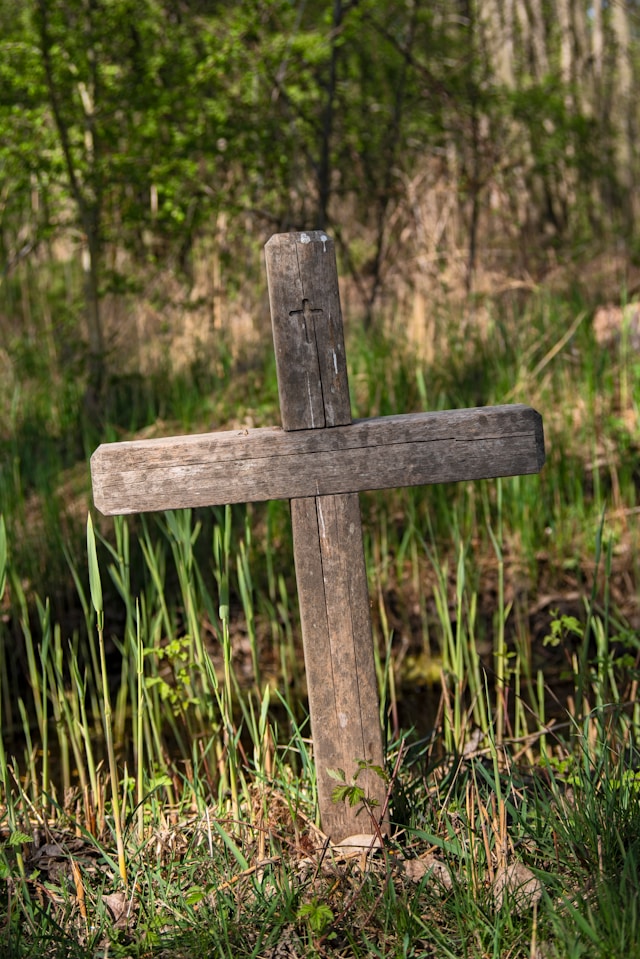
Hatty Sternberger poured the last spade full of dirt onto her husband Randall’s grave. She hadn’t yet bought a headstone with an engraving. The local Salinas men who volunteered to lower the casket into the ground had all left, and Hatty was on her own with her two children, Samuel and Patricia, and her younger sister, Deborah. Her bible was still open. Remember that you are dust, and to dust you shall return.  She never could find that part in the scripture. She hammered a cross in the dirty pile, which protruded from the earth like a man’s full belly after a meal.

“I might have to kill Jorgensen,” Hatty said to her sister. 

“You can’t do that,” Deborah said, almost yelling.

“Why not?” Hatty fired back. 

They walked through the dirt patch where they buried Randall. As they neared the house, they passed through fields of lettuce, cabbage, and potatoes. In the distance, they could see the cross sitting atop the grave. 

“The Sheriff, the judge, everyone would know it was you that did it,” Deborah said. “After they refused to put Jorgensen in jail, they’d know it was you for sure.”

“Still…I’m thinkin’ about it,” Hatty said.

Night fell, and they all sat down for dinner at a long wooden table that Randall had built himself. They left the seat at the head of the table vacant. Hatty passed the corn to her sister.

“Patty, make sure you eat some corn,” Hatty said to her daughter.

Patricia looked at her brother. 

“When’s daddy coming back?” Samuel said, staring at the corn. 

“Daddy’s not comin’ back, baby,” Hatty said.

Hatty, too, missed Randall already, and his voice played in her head–Ye need to know how to do things in case somethin’ happens to me. The thought of Randall not being around scared and confused her.  His soldiering in the Union army during the Civil War proved an asset. Before he was killed, he began teaching Hatty about horses and shooting and how to use different kinds of knives.

Before Randall and Hatty moved to Salinas, Randall recognized Jorgensen one day while they lived in Monterey. Years had passed since Randall last saw Alexander Jorgensen on Harald’s ranch in Yuma. Randall cursed to God through his teeth as to why they’d been brought together again. It prompted him to tell Hatty the story of how Jorgensen came into an ill-gotten sum of gold.

Jorgensen was a hardened man, and I knew it when I looked in his eyes. There was no life in them. They were stone, and the man was stone too.

You were so sure about him?

He seen war somewhere. I know it. Carried a pistol, too. Most men did, but there was somethin’ about him carryin’ one that was different.”

During the latter years of the gold rush, Mr. Harald Sternberger, a Prussian immigrant, purchased Randall from a Southern planter to assist him in his prospecting in California. Harald was successful with Randall’s help, and they settled in Yuma, Arizona, where he ran a ranch. The land eventually became Confederate Arizona, and when the war broke out, Randall went off to fight in the Union army. When he returned to Harald Sternberger’s ranch after the war, Harald hired Jorgensen, a ranch hand who’d recently emigrated from Denmark after the Second Schleswig War.

While working for Harald, Randall saw that any abrupt movement by the horses frightened Jorgensen, and that was what cemented his opinions. Cows were slow and had no effect. Randall tried to keep him working with the cows. He always gravitated towards the horses that needed breaking. It seemed to set off something wild in him. He survived a kick from one of them. Randall was amazed at the sight. A man that wouldn’t die, he thought. Maybe he couldn’t.

When Harald’s mother took ill, he traveled to say goodbye to her. He was gone for several weeks, and on the day he returned home, he entered the house to find Jorgensen going through his things while Randall was out with the horses. Jorgensen managed to find a small deposit box with pieces of gold.

Was that what you came for all along?

Jorgensen’s hand was faster than a light switch. The pistol’s hammer was cocked and released, hitting the back of the bullet primer, and Harald Sternberger’s body dropped. He lay on his bedroom floor, his shirt stained with blood. Randall sprinted toward the house after the shot rang. When he entered to see the body on the floor and Jorgensen standing over it, he ran towards him. Jorgensen’s quick hand cocked and fired dry. His only bullet left in the cylinder was spent on Harald. The two men tussled until Jorgensen grabbed hold of the .22 caliber pistol Harald Sternberger had been carrying on his person for his trip. Randall ran out of the house, escaping the three shots Jorgensen let off. Jorgensen disappeared with the gold he was able to find. Harald’s Will stipulated that the house be left to Randall. Given the tragic event, Randall sold the house and moved to Monterey, where he met Hatty. It was also in Monterey that Randall saw Jorgensen again.

“People fear that man,” he said to Hatty. “He quiet and stern with most folks. They don’t know what he’s like. Not like I know.”

They both saddled onto the single horse and looked at Jorgensen who was walking toward his house from the saloon with his back turned. Some of the Monterey locals couldn’t help but stare at the couple atop the horse. 

“We’re always afraid of what we don’t know,” she said, holding onto his waist. 

“Or when white men are quiet and have a lot of money,” he said.

“You ain’t makin’ a lot of sense,” she waved.

“Let me tell it,” he said. 

“Isaiah 54:17. You remember that one?” she asked.

“I think we can agree on that one.

“Good, I like it. Since we married, you should like it too.”

Randall smiled.

“You ain’t forgave him, have ye?” she asked.

“God’ll deal with him. It won’t be me.”

Matthew 6:15 came to mind, but she didn’t say anything. She knew he knew the Bible well, too, and she didn’t want to make their conversation about Bible verses at that moment.

“What you think about movin’ out of Monterey?” he asked.

“Why would you want to do that?” she asked. “I thought you liked it here.”

“Just think it might be safer. If Jorgensen sees me or finds out that I’m here, it won’t be good for neither of us.”

She paused.

“I’ve heard folks talk about how nice it is in Salinas. We could go there.”

“We could start a ranch.”

“And have horses, and cows, and whatever else. We’d have enough space to grow corn and such, too.”

“That’s right.”

“You got money for a ranch?” she asked.

“I’ve got my money from the army, plus what old Harald left me,” he said.

“You know how to run a farm?” she joked.

“Woman, I know my way around ranches and farms, back to front, east to west,” he said, smiling at her over his shoulder.

“If you say so,” she said, smiling.

After Monterey, Hatty and Randall moved to the farmlands of Salinas. They visited a Monterey bank to help secure an old house and land where Hatty had Patricia and Samuel. They grew their own vegetables and had cows, chickens, and some sheep, as planned. The house had three rooms, each relatively small, but the space was enough for all of them. It looked and smelled of unfinished wood, having been built not many years before they moved in. She never asked how Randall had the money to buy these things. She just thought that the army paid well enough for him to build a life. 

On a foggy morning, Randall made a trip to the bank in Monterey. Jorgensen caught sight of him coming out of the bank, and they both froze—four boot heels stopped in the California dust. They locked eyes. Randall thought of everything he’d been through to get to that point. The midday sun beat down on them on that summer day. Once a slave, gold digger, cowboy, husband, homeowner. He’d done a lot. In a flash, the town heard two shots fired at the same time, and Randall Sternberger fell to the ground, and the dusty earth comforted him like it were a quilt. No one was willing to testify—a negro man shot dead outside of a bank. The sheriff was the one to tell Hatty, saying several times that Randall fired first. That was the way the sheriff wanted to tell it, and no one protested. No one wanted any involvement, and one less negro, the better for them. Hatty was the last person Randall saw as things faded to black for him. She imagined him lying there, and she desperately wished she could have held him in her arms while he passed, no matter how bad the thought of it was. 

Hatty put her children to bed and went to her sister’s room to see that she was already asleep.  She went to her room and pulled out Randall’s lever action Winchester long rifle. Need to know about the different kinds of Indians out there too. They not all the same. Shouldn’t treat ‘em all the same. She tried to be quiet as she rummaged around for bullets. She found a box and fed bullets into the loading port, then grabbed a box of extra bullets. She put everything into a bag and slept for a few hours—long enough for it to still be dark when she awoke. Fog descended on the land, and she put on a jacket, loaded up on their horse, and rode to Monterey. 

She stopped at about the halfway point to rest, building a fire to stay warm during the chilly night. When she awoke, the chunks of firewood were white and gently blew in the wind. A native man stood over her as if he’d been watching her sleep for some time. She tried to get up, but another young native man crouched down to put his arm around her neck and put a knife to her throat. She thrust one boot heel against one of the large rocks used for the campfire, and the young man’s head struck a large rock. The older man, now standing farther back, took out his knife. Hatty quickly removed Randall’s old rifle and fired. She pulled the lever out, and returned, ejecting the hot shell, and delivered another bullet. The second of the two landed. Her heart was beating rapidly. The younger man’s eyes were open, and he was not moving. She walked to the body of the older man, and his breaths were shallow, with his eyes quivering. He was looking up at the sky as if it would give him answers to ease the pain. His head slowly turned to her, eyes still quivering. 

“I got no way of helpin’ ye,” she said to him. “Jesus God, I’m sorry.”

She knew he couldn’t understand her, but somewhere in the afterlife, she thought God would get her message to him. The blood from the gunshot wound leaked over the sides of his stomach, forming a small puddle. His eyes focused on the knife strapped to her belt. She pulled it out and knelt next to him, dragging herself closer and putting the blade to his smooth neck. He lifted it for her, and his hand followed to touch hers. Her hand began to shake. She thought of the minutes before when the young man had her hair in his hands, ready to end her life, and she thrust her knife into the old man’s neck and pulled the blade across. She stood up and looked at the life leave his body. The sun was still hidden in the mist, and she packed up her things with shaky hands and continued to Monterey. 

She settled into a small inn near the town square. The innkeeper was a stout negro woman that kept a shotgun at her desk for visitors to see. 

“Where’s ye husband?” the woman asked. 

“He’s dead,” Hatty said. 

The woman looked Hatty up and down—her dress, the bag slung over her shoulder- and leaned to the side to see her horse tied to the hitching post. She told her the cost and beckoned as she walked down the hall to the rooms. Inside, there was a small bed. She imagined Randall sleeping on a bed of similar size in the army barracks. There was one window with a see-through curtain over it. The floors were wood paneled and looked pale from wear. Hatty put her things down and returned to ask the innkeeper where Mr. Jorgensen lived, assuming he’d still been the known man he was. Hatty thought about how she would go over there. She could. She knew it. But she couldn’t just swing her rifle over her shoulder and knock on the door, stand back, and let Jorgensen have it. She left the rifle, wrapped in a quilt, and she left her revolver too, for she couldn’t carry it without anyone noticing. She took one of her knives and sheathed it, and took a lace from one of her shoes and put it through the belt loop of the sheath. She lifted her dress, tied the lace high on her thigh, and walked out of the inn. She crossed the town square and headed over to the Jorgensen house. It was a two-story house 30 paces from the town square. The sun came out, and the fog dissipated. She paused for a moment and looked around at all of the townspeople. No one suspected her while she walked, but the longer she stood there, unattended to, the more people stopped to stare at a negro woman standing alone. Of all places for a negro woman to be standing alone, she stood at the wrong house, in their eyes. She knocked on the door, and a woman answered. It was Daisy, Jorgensen’s caretaker.

“Mr. Jorgensen isn’t well at the moment, and he’s not taking visitors,” she said.

“What’s wrong with him?” Hatty asked. 

“Mr. Jorgensen is ill.”

“May I see him?”

“And what business do you have with him?”

“I was his caretaker once,” she lied. “He was my owner.”

Daisy stepped aside and allowed Hatty in. Her heart was bouncing around in her chest like when she fired a gun for the first time. She was tired, but she couldn’t rest. She was shown the room where Jorgensen was lying in bed with his mouth and eyes closed. She examined the expensive curtains over the large window and the decorative bedding—long posts that framed the bed, like Jorgensen was in a king’s chamber. There was a chair, a dresser, and a stool that the helper probably used to feed Jorgensen. Hatty asked if they could be left alone. His eyes opened.

“It’s all right,” Jorgensen said.

Hatty shut the door quietly behind her and pulled a small stool next to the bed. She noticed a pitcher of water and a large King James Bible on the bedside table and realized that she’d forgotten hers on this journey. How could she? She thought to herself. In the midst of all her packing, she’d forgotten it.

“I’m not hiring any help,” he said. “I’ve already got somebody, as you can see.”

“I’m not here for that, sir,” Hatty said.

“Do I know you?” he asked.

“No,” she said.

He looked at her, then around the room, confusedly.

“Then what do you want, exactly? Speak plainly.”

“You killed my husband not long ago. I put him into the ground myself. Put the cross on his grave, and now I’m here for you. I rode all the way from Salinas just to sit right here next to you.”

“I don’t have any fear anymore since I found out that I’m dying, so you can’t frighten me with anything,” he said. 

“Not even death?” Hatty asked, fixing her dress around her knees. 

“I was a different man then,” he said. “Of that I am sure.”

Jorgensen sat up in the bed as Hatty put her boot on the stool. She unsheathed the knife and grabbed the chair by the dresser, wedging it underneath the door handle. Jorgensen’s eyelids crinkled, showing the crow’s feet in his face. She came back to the bed and sat on the stool again with the knife on her lap so that he could see it. 

“You’re going to do this in my own house in broad daylight?”

She was shaking her head.

“I’m Randall Sternberger’s wife. He told me about you and how you came to get all of this. Those big windows, fine furniture in a big ole house,” she said.  “That gold sure did get you a lot.”

He recoiled in the bed when she said Randall’s name and mentioned the gold. His neck quivered as he tried to swallow but couldn’t. He reached for the pitcher of water, but Hatty stopped him. She poured him a glass of water herself. 

“You sit back,” she said. 

She handed him the glass, and he drank like a stray dog in the Monterey summer heat. Drops of water escaped at the sides of his mouth.

“Do you have any idea what it’s like, burying the person you thought you were going to spend the rest of your life with?” Hatty asked.

“I never married,” Jorgensen said. 

“Do you ever think about him? Not like I do, but because you killed him. Do you ever think about killin’ him the way you did? No punishment. Nothing.”

“I do,” he said. “It was something of a reflex. I admit I was scared to lose everything if people found out about my past.”

“And what about Harald Sternberger? Do you think about him?”

“I don’t. Not in the way I think about Randall. Old Harald was just a Prussian, and I’ve hated Prussians since I fought against them in the war.”

“Be that as it may, you’re a killer,” she said.

“And to you, that means that I deserve to be killed?” he asked. “I did things, those things, at a time in my life. And what do you know of me now, and what my life has been?”

She was silent. 

“You’ve come to my home to kill me. Is that right?” he asked. 

She nodded. 

“You’ve been witness to nothing and only come with accounts from your husband,” he said. 

“Who you killed. He did nothing to you but be there and exist. He wasn’t after you. He didn’t threaten you, and you gunned him down.”

There was a rattling and a thud at the door.

“Why is this door jammed? Are you all right in there, Mr. Jorgensen?” the woman asked. 

“Yes, Daisy. I’m all right,” he yelled.

“You’re not afraid?” Hatty asked.

“God has been witness to everything I’ve done, and it is he I will have to answer to.”

He took a sip of the water. He’d calmed down, and no part of him was shaking anymore. Hatty still sat with her hands holding the knife in her lap. She could not resist an occasional glance at the bible on the bedside table. It plagued her to think that she forgot hers.

“I don’t know that anyone deserves to die. That isn’t for me to decide.”

“Whatever is in God’s plan. And, I suspect you to be a god-fearing woman,” he said.

She nodded. 

“I do still think about Randall. We worked on the Sternberger ranch for some time. He was a good man. Did what he was told. Never gave any problems. I was in a rough time in my life, and he saw me do things I’m certainly not sorry for.”

Hatty could see the hate in Jorgensen’s eyes when he hinted at doing things in his past that he wasn’t sorry for. She supposed his hate for Harald Sternberger and Prussians was as bad as any white man’s hate for blacks in the deep south.

“It is a shame that I had to run into Randall again. I was afraid. That’s all. I really was afraid that he’d compromise the life I had right now.”

“I guess with Randall, you didn’t think about what killin’ him meant, what it would mean to the family he had. We have two children. He was a father and a husband. I bet you thought because he was a negro, that it didn’t matter that he’d be gone.”

“I didn’t think about it like that, I swear.”

“Well, whether you did or didn’t, that’s the way it looked.”

Daisy called again, and Jorgensen yelled again to tell her it was all right to leave them. Hatty pulled the chair away, and Jorgensen sunk into the bed as if he was ready to sleep. 

“I am sorry. I want you to know that. I wish I could go back to that day and not have pulled my pistol.”

“But you can’t,” Hatty said.

He shook his head no.

“And that’s the part that doesn’t sit right with me,” she said. 

She had nothing more to say, and she stared at the floor for a few minutes. She didn’t want to hear his voice either. The sound of him and his remorse irritated her. She could see Randall, as she remembered him, and their little spats when she threw bible verses at him when she felt like he talked a bit crazy. He would give his rebuttal verses until they were tired and silent. She always smirked when they went quiet. She would miss those moments when each of them, temporarily, thought they were right. At the same time, they know that neither was right, or they were both right. They were certain about who was always right and always witness to their love, their squabbles, and everything imperfect about them–God.

Hatty gripped the knife and stood up. Jorgensen’s eyes were closed, and she held her words again, just like she’d done so many times with Randall. She took her piece of lace and tied the knife up again. She showed herself out, and Daisy trailed behind, watching Hatty walk across the town square back to[1]  the inn.


Alexander Miller began writing while attending Florida International University. He loves writing because it helps him further understand what it means to be human through research, creativity, and examination of himself and others. He currently lives in New Jersey and is working on his first novel, as well as a collection of short stories that are exclusively Westerns.

“Ode to Lane Frost and the Bulls that Went to Heaven” by Chloe Rodriguez


Somewhere, a mother runs her hands
over a shirt she can’t bear to wash.
The scent of leather and dust still clings,
as if memory alone could keep a body warm,

as if a ghost could be stitched into cotton.
Somewhere, a wife stands at the edge of a
doorway, one hand on the frame, the other
resting where he used to sleep. The bed is

still wide enough to fit a dream, but too
empty for comfort. They say every cowboy
has a girl somewhere, wringing a dish towel
dry, watching the clock like it owes her an

answer. A mother pacing the porch, a wife
pressing prayers into the bones of her hands,
waiting for the phone to stay silent—
or worse, for it to ring. Lane, they say you rode

like a man who had already whispered in God’s
ear, who had already seen the gates swing wide
and still tipped your hat to the crowd. They say
you loved like a man who knew the weight of

waiting women, who kissed the tops of hands
and promised to come back whole. But the bulls—
Lord, the bulls. They never knew the wreckage
they left behind, never saw the rosaries twisted tight

in palms, never saw the tears salt the rim of a coffee
cup, the long nights spent listening to wind as if it
might carry your voice home. How, their hooves carved
heartbreak into the dirt, how a man could be both

unstoppable and so fragile, how the strongest hands
could never hold him down. Tell me, Lane, does heaven
smell of sawdust? Do the bulls run softer there, or do they
still shake the sky with their fury? Does Red Rock wait

at the gate, his great head lowered in some kind of prayer,
some kind of knowing? Tell me, Lane— do the bulls in
heaven run gentler? Do they know now what they never
understood then? Do they bow their great heads in apology?

Somewhere, a mother still watches the sky like it might bring
you back. Somewhere, a wife still wakes up reaching. And
somewhere, you ride on, no fences, no fear, no falling, just a
two hand wave. Just the wind at your back, just the endless open.


Chloe Rodriguez was raised on humidity, Catholic guilt, and the knowledge that even palmetto bugs outlive love stories. She writes poems like they’re survival manuals for the emotionally unhinged. In Tallahassee now, she’s balancing being a serious poet in a PhD with her side career as a mosquito buffet. She is also deathly allergic to food coloring.

“Thani’s Raid” (adaption)

by Sulayman Thani al-Dhiyabat al-Huwayti

translated and adapted by William Tamplin


You wanted to hear my story, so I’ll tell you. My name’s Thani al-Dhiyabat, from the Dhiyabat section of the Huwaytat tribe. In 1930, when I was around twenty-one, I went raiding for camels in al-Jawf, in northern Saudi Arabia, with some of my fellow tribesmen.

During the journey, my camel got tired. She had been injured a year prior. We came to a large black sandstone hill on the eastern side of the Nafud Desert called Thirst Mountain, and my camel began to sit down every so often. We’d be walking along, and she’d just plop down. So my camel and I were straggling and starting to get cut off.

One of my Dhiyabat kinsmen taunted me, saying, “Back home in front of the ladies, you passed yourself off as a big bad raider. And now you want to leave your camel behind at Thirst Mountain?”

“If I leave her behind,” I replied, “I wouldn’t be the first man to do so. And if I take her home, I wouldn’t be the first man to do that either. My father Salem died when I was just six months old, so it’s not like I was to the manor born. I’m the one who brought this camel along; she didn’t bring me. At the end of the day, whether I leave her behind or take her home, she’s just a camel. But I swear that from here on out, I can’t keep up with you.”

The leader of the raiding party was a man named Daghish Abu Tayeh, whose nom de guerre was Akhu Sanda: Sanda’s Brother.

We set up camp. That night, we met to deliberate.

“Daghish,” said a man named Zaal ibn Mutlag, “don’t get us Huwaytat tribesmen killed by exposing us to Ibn Saud, to the Ikhwan, while half our tribesmen’s camels are straggling far behind us in the desert. Instead, let’s set our course to the right, southward, where we’ll find the Hazem and Harb tribes.”

By the way, Hazem and Harb are the tribes whose camels are black. They’re good-quality mounts.

“Tomorrow I’ll be leading us through that pass over there,” said Daghish. “Whoever wants to follow me can follow me, and whoever doesn’t can go to hell.”

A section of Huwaytat men split off and went with Daghish.

Then it was just me and two others: a man named Juma from the Abu Smayyih section of the Huwaytat, and a man named Farhan we’d nicknamed Walad al-Dhalul: Dhalul’s Son, after his mother. Farhan was from the Abu Rashidah section of the Shararat tribe.

In the morning, we turned back.

By now, Juma’s camel was worn out like mine. Every so often, she’d plop down to rest. And the country we were in was a real wasteland.

Then the third day of our return journey came. We camped on the edge of an erg—a long sandy ridge about twenty miles long. In the morning, when the sun rose, Juma’s camel was still resting. Farhan’s camel and my own were up and grazing. We rousted Juma’s camel.

Then I heard voices. I heard the sound of hooves.

“Gents,” I said, “I hear voices coming from over there.”

Juma and Farhan told me that my fear was making me hear things. “That’s your fear talking!” Juma said. “You can’t even hold yourself together!”

“I’m telling you, man,” I said, “I hear voices!”

We ran up the side of the erg, and when we crested it, we saw men driving their camels ahead of them—camels they’d raided. They were laying into the beasts hard.

I recognized the riders: Alayan al-Flayo and Mislim al-Flayo – both of whom were Shararat – and a man named al-Hosni, who was half-Sharari and half-Huwayti. They’d been on the very same raid I’d been on, and by the look of it, they’d made off with some loot and were headed home. They were moving fast. They had in tow a young Sharari man named Hedayyan.

None of my comrades called out to them, so I did.

“Alayan!” I said, “Mislim! Al-Hosni! Don’t leave us behind! Our mounts are weak and straggling. Don’t abandon us!”

But the riders were whipping their mounts and spurring them on with their shouts. The riding song they were singing went like this:

The enemy’s camels—steal ’em away!

And if they can’t keep up—leave ’em behind!

They were yelling at their stolen camels and driving them hard. When they had gotten some distance from us, they stopped and turned.

“Alayan al-Flayo?” Alayan asked, feigning ignorance. “Who are you to claim to know him? Alayan is a brave and fearsome leader of raids. And Mislim, his nephew, is also a brave and formidable man.”

“Seriously, brother?” I said. “‘Who are you to claim to know him?’—lay off it! The whole world knows you, Alayan! I’m Thani. This is Juma Abu Smayyih, and that’s Farhan Abu Rashidah, Dhalul’s Son. Don’t leave us behind!”

“Then spur on your mounts and follow us!” Alayan said.

“Go on, brothers, follow those men,” I told Juma and Farhan, “and I’ll go back and get our mounts.”

I went back for our mounts and drove them hard.

We followed them. From sunup until the ghada tree is as tall as its shadow, we traveled. We kept pace with them, neither catching up with them nor falling behind. I was driving the camels on my feet.

The four men stopped their camels ahead of us. They had with them some camels who had recently given birth and been separated from their young in the raid.

We went about tying the camels’ noses tight so their udders would fill up with milk out of fear and pain. A camel generally won’t lactate unless her young’s around—or unless she’s forced to.

So we milked the camels and diluted the milk with some water. We had a bowl we put a measuring stone in, and when the mixture of water and milk covered the stone, we’d give it to someone to drink so that everyone got an equal portion.

Before the bowl got to me, the liquid left in the bowl was dwindling. There was barely any left. Then it came my turn. One of the Shararat offered it to me, but al-Hosni snatched it away.

“Brother, that man’s a slave whether he lives or dies,” al-Hosni said. “Give it here.”

If Juma had been as brave as I was, we could have killed them all over al-Hosni’s words.

We continued a little ways, and I began to lag behind. My rifle was strapped to my camel, and she was running on ahead with the rest of the herd.

“Hey there, killer,” I said to Hedayyan, “I want you to look after my camel and rifle for me. I can’t keep up.”

Hedayyan’s camel had been killed in the raid. She was one of those black camels, a good-quality mount. To replace her, Hedayyan had recently broken a bakra, a camel-filly, and tied a rein through her nose and a rein through her jowls. She was a solid camel. And long-eared, too.

“Alayan,” Hedayyan called out, “Alayan, al-Hosni, Mislim! Keep an eye on Thani’s camel for me. Let me take him to the watering hole.”

We had come to a watering hole called Gheran al-Banat: Three Girls’ Hollow. Hedayyan came back for me and mounted me on his camel. When Hedayyan got that camel going, she ran as fast as an antelope. We didn’t stay at the spring for long. We had hardly drunk and filled our waterskins when the rest of the group arrived to drink.

“Alayan, brothers,” I said, “I’m riding a camel called Geheiwa: Cappuccino. She’s an excellent camel who warns of raiders and returns the stolen herd. But even the best camels have their days. And she’s spent. Whoever has a camel for me to ride, let me swap her for Cappuccino, and name the guarantor of your choosing. Tribesmen of mine who’ll vouch for me are Refeifan ibn Dhiyab, Saleh al-Ghashim, and Muhammad ibn Munawer. And you know what, on top of that, you can consider Cappuccino yours. I just need a camel that’ll save me, that’ll get me out of here,” I said, “because our mounts and our men are far out in the desert.”

“If you’re real men with any sense of shame, any sense of manliness,” one of the Flayo men said, “you won’t accompany us from here on out. We’re being followed by Ibn Suayyid, who’ll kill a man and mutilate his remains. And you’re just a bunch of unlucky guys separated from your herds. Hedayyan, however, is our responsibility. We won’t leave him behind.”

“No, gentlemen, please!” I said.

Now, Hedayyan had two camels. An algaha – a heavily pregnant one – and a mouasher – only a few months pregnant. The mouasher was tan and bore the brand of the Rwala tribe.

“I have two camels,” Hedayyan said, “so choose one for the both of you.”

“Let’s take the algaha,” Juma said to me.

“Hell no,” I said. “She’ll just get skinnier and skinnier from all the riding and abort her fetus. Then she’ll tire out, and we’ll get left behind again. Let’s take the mouasher. She’ll be just fine.” A camel in the early stages of her pregnancy will run insanely fast.

I took the saddle off Cappuccino and started in on the mouasher. I sat her down and hobbled her. She was unbroken, had never been ridden before, didn’t even know her own name. I bridled her with a lahi, a rein you put through the jowls, and put a rein through her nose too. We tied our new camel to Juma’s old one, and I started whipping them with a bamboo cane.

Once we got a little distance, the others began to catch up with us—al-Hosni and the two Flayos, Alayan and Mislim.”

“Juma,” I said, “damn it, man, look at them catching up with us. They’ll want to take back the camel they just lent us. They’re driving Cappuccino with them. Juma, look, brother, the two Flayo men—they’ll be easy to take, easy as pie. What I need you to do is kill that bastard al-Hosni for me. Because if they take these mounts from us, we’re as good as dead. If they take our mounts, they’ll be killing us. So we’re justified.”

Juma started to act like a coward.

“You mean we’re going to kill our own brothers?!” Juma said.

I figured I could kill at least two of them on my own. But the third one would kill me. And I figured Hedayyan wouldn’t interfere.

They were catching up.

Later on, when my hands were tied and the shadow of the sword passed above my head, I didn’t weep like I did then.

Then they caught up with us.

“Brother Thani,” they said, “soon enough, your Dhiyabat kinsmen will force you to give us that camel back. They’ll see she’s an excellent camel – who warns of raiders and returns the stolen herd – and that you’ve made an unfair deal with us. And that you’re ruining her. So take your own camel back.”

Then they took her from me by force. I had no say in the matter. I put my bags and belongings back on Cappuccino. Farhan went along with the four men, who left me and Juma behind.

Juma and I hurried on.

Then it was sunset.

We had a bit of flour left, so I began kneading it. The loaf was so small it wasn’t even necessary to flip it in the fire to cook it on both sides. We only had a tiny bit of water left. But that was okay. It was a small piece of bread in a very hot fire. I divvied up the bread, gave one piece to Juma and kept one for myself. We ate it as we walked, driving our camels.

At this point, we were traveling by night. Just before dawn, it started to rain. Juma’s camel started getting tired again, and every so often she would sit down.

“Juma,” I called out, “let’s leave your camel behind, drape our water over Cappuccino and get a move on. Anyone could pick up our tracks, catch up with us in three days, and kill us.”

“I won’t leave my camel behind,” Juma said. “If you want to leave, leave.”

While his pathetic camel rested, Juma wrapped a shawl around his head and slept. I collected some firewood and made a fire. We were in a little hollow, where a campfire couldn’t be seen from afar.

When the light of dawn appeared and gave us enough light to aim a rifle, to see as far as we could see. It was then that I shook Juma awake. I smacked the camel with the bamboo cane, and she jumped right up. Juma and I walked on, driving our camels.

Off to our side was an erg, a long sand ridge. I didn’t know it then, but the enemy was encamped on the other side of it. The Ikhwan. We passed the ridge traveling two abreast. Juma was on my left, and I was on Juma’s right. We were driving our camels on foot. Juma had his rifle slung over his shoulder while I was holding mine in my hand like a staff. We were driving our camels hard.

In front of us, there was a little depression with a rock in it the size of a large bucket that was just smaller than a man sitting down. From where we were, the ridge was low, with a pass in it. And between us and the pass was a flat, open area. A plain. Cappuccino turned her head to the right. When I saw her turn like that, I turned and looked myself.

There were five men. One of the five men’s camels was groaning and twisting her head around behind her, so I could tell she had recently been separated from her young, possibly in a raid.

*          *          *

For background, we Dhiyabat had a craftsman attached to our tribe named Humoud. Humoud was always making duweiraat—decorative cloths of braided leather to drape over camels’ shoulders. And Humoud’s camel sported one such duweira. She was a light-colored racing camel, and her hooves were white. As I looked, I saw that the five riders had a light-colored camel with white hooves and a duweira draped over her.

“That must be one of our comrades from the raid we split up from,” I thought.

“Look, Juma,” I said, “it’s our buddies, look! They have Humoud with them. Look at them, they’re riding at us, on the attack, coming to take our mounts. Soon enough, when we’re all back home, they’ll make fun of us and claim that if we’d been their enemies, we wouldn’t have been brave enough to defend ourselves. So shoot, but don’t shoot at Humoud’s camel. Let’s kill one of the mounts and later on say we mistook them for the enemy.”

“I swear,” Juma said, “I’ve never met someone like you. Ruthless and cowardly. Why would we kill our own comrade’s camel? You’re a coward, vile and pathetic.”

I shaded my eyes with my hand and saw they were wearing turbans.

Juma and I scrambled over to take cover behind the bucket-sized rock. My rifle had five rounds in the magazine and one in the chamber. In those days, rifles were of German make.

“Gents, who are you?” I called out to them. “Tell me now, before there’s a misunderstanding!”

“Who are you, not to recognize the Ikhwan?” they replied.

As soon as they said that, the riders began driving their mounts at us as hard as they could. Their camels were sprinting.

From the cover of the rock, I shot the point man, who was riding Humoud’s camel with the braided leather gleaming in the sun. When I shot him, he fell backward off his mount as far as the length of his jadilah, the braided rope attached to the reins. The remaining four men jumped off their mounts and fled.

The wounded man still had some life in him. He was calling out to his fleeing comrades, trying to spur them on.

“Men,” he said, “men of the Jaafirah!” Then I knew that they were from the Aniza tribe. “It’s only two men!” he continued. “Don’t let two men defeat you and take your mounts!”

Juma sprinted over and grabbed me by the shoulders. “What the hell, man?! You’ve just gotten us killed!” he said.

Juma had attacked me when I was seated and at a disadvantage, so I reached for my dagger and brandished it. Then I heard the sound of gunfire. An army of Ikhwan appeared in the pass in the ridge. The sun was low in the sky, and there were so many Ikhwan that they blocked it out. The five men were just an advance party.

I slashed at Juma with the dagger, and he let me go. Then I ran.

The five men’s camels were still there, halted. I looked around, and the injured man’s camel – Humoud’s old camel – was turning around and around, circling him. Then I realized that Humoud’s camel would be the one to get me out of there. I scrambled over to her, grabbing the reins, but the injured man had wound them around his arm. I tried again and again to shake the reins free. Finally, the man let them go. Then I hit him in the mouth with my rifle’s buttstock.

I didn’t know where Juma had gone.

There were two men out in front of the approaching group of Ikhwan.

I hadn’t mounted her yet. I cut the reins with my dagger and threw them over the saddle horn. The Ikhwan weren’t going to give me the time to sit the camel down so I could mount her properly, so I jumped onto the bend in her neck to climb on to her back, and she set off.

The two men in pursuit were a graybeard and a young man with a black moustache named Ali ibn Deheim, from the Aniza tribe.

“Ali! Ali!” the graybeard said, “God bless the good woman who named her son Ali! Kill the no-account slave!”

I got a good distance on them, but I still hadn’t settled properly into the saddle. As for Juma, if I’d had any luck, God would have kept him far away from me.

Once I got situated in the saddle and began to steer my new camel properly, I saw Juma running west as fast as he could. He was right in my path, his rifle slung over his shoulder. I sped up.

“Juma, don’t worry, we’ll be back home before you know it,” I said, catching up with him.

But the graybeard had really put the fear of God into Ali, the little bastard. Ali fixed his feet in the stirrups, and he was straddling his camel to anchor himself. He fired, and even though the shot missed, it put a smoking hole in my clothes. The graybearded bastard was calling out to him, “Ali! Ali! God bless the good woman who named her son Ali! Kill the no-account slave!” I put Juma behind me, and we set off.

From sunup of that day, the Ikhwan pursued us. The main force of the Ikhwan fell behind, and only three men remained close behind: the graybeard and two other riders.

There’s a wadi in those parts called Muayy, southwest of the town of al-Jawf. From its highest point, Wadi Muayy splits into two channels.

When we began descending the wadi, I steered our mount down the channel on the left. That camel took us far, and fast.

The day started to wane. It was just after the ‘asr, the afternoon prayer. I sat the camel down next to a large ghada tree. Juma and I could just make out our pursuers, and the main body of the Ikhwan army started to turn back. I sat our camel down, and we drank.

Now we were in an area called al-Jilf. The ground was covered with black rocks. And there was a trail.

“Juma, brother,” I said, “take the reins from me and steer our camel down that trail. If anyone comes at us from behind, I’ll handle them, easy as pie. You cover our front.”

“Why don’t we go back to Gheran al-Banat?” I thought to myself. “We went raiding on two camels, and we’ll be returning on one. Our friends and family are going to laugh at us.”

Three times I put my feet in the stirrups, fully prepared to ride off and leave Juma behind. But I thought to myself, “If I claim that Juma was killed, and then Juma survives and returns, people will say, ‘You didn’t take care of your buddy.’ And if I admit to his family that I abandoned him, then shame on me.” So I was between a rock and a hard place.

Afterwards, I realized I’d made a mistake. I could have held Juma at gunpoint and driven him on ahead of me.

“I swear,” said Juma, “from here on out, I can’t go on like this.”

“Juma,” I said, “you ride in the saddle if you want us to go back and surrender to them.”

At this point, we could barely see. We began descending Wadi Muayy.

I looked up and saw a group of men on the ridge.

Up ahead there was a bend in the wadi covered with ghada trees.

“Juma,” I said, “look to your left. There’s a big group of men!”

“Man, what are you afraid of this time?” Juma asked. “That’s just a herd of gazelles.”

I was looking around like so, my head on a swivel. I saw a man’s head weaving in and out of the ghada trees up ahead.

“Juma, goddamit,” I said, “Look! There’s a man on your left! On your left!”

Then we entered a raised thicket. Juma spurred on our mount. The poor thing had been on the run since morning and burdened the whole time with two riders.

Then the Ikhwan fell upon us. In the end, we were up against fifty well-trained war camels. The smaller group of men we then faced were the same ones from earlier that day, whom we thought we’d left behind: Ali ibn Deheim and the graybeard.

This time they had with them a young black man riding a hamra, a light-colored camel, light as buckskin and fast as an antelope, the damn thing. But the young black man didn’t have a rifle. When he whipped his camel with his bamboo cane, foam came flying out of her mouth like a zaghrouda, an Arab woman’s ululations at a wedding. He was whipping her hard, and she was jumping over bushes and trees.

“Juma,” I called out, “rein in our camel and let me dismount so I can take a shot at that bastard riding at us. If I kill one, we’ll each have a camel to escape on.”

“No,” said Juma, “let me shoot instead.”

I leaned over to jump off the camel so I could shoot, and that bastard the graybeard from earlier called out, “Ali! Ali! God bless the good woman who named her son Ali! Kill the no-account slave!”

Ali fired and hit Juma in the back of his head, which split open like a watermelon. But I had never seen a dead body before, so I thought Juma might still be alive, might just be unconscious.

Juma weaved back and forth, and I grabbed him and steadied him so he wouldn’t fall out of the saddle. Our camel took us a little ways. I pushed Juma ever so slightly, and he fell off the camel. His head fell to the side. The camel took me a bit farther, but I turned her around and returned to Juma. When I got back to him, I jumped down on to the ground and straddled him.

So there I was, straddling Juma, his face turned toward the east.

Seeing as Ali was the most lethal of the Ikhwan, I told myself that if I could kill him, I could kill the other forty-nine of them with no trouble at all.

Ali and the graybeard had parked their camels to the west of my position, under the setting sun. The rest of the Ikhwan had parked their camels to the east. Not a rifle sounded from any of them. Not a shot was fired. And I sat there straddling Juma.

Then Ali fired at me.

When I shot back, the bullets passed through Ali’s clothes, leaving smoking holes. When Ali returned fire, his bullets did the same to mine. I was wearing a thobe and a kibir, and they’d begun to look like the ears of baby rabbits from all the bullet holes. The graybeard, the old bastard, was still calling out to Ali, “Ali! Ali! God bless the good woman who named her son Ali! Kill the no-account slave! Kill the no-account!”

One of Ali’s rounds struck Juma as I was straddling him and facing west. It hit Juma in the fleshy part of his hip. The bullet split one of his haunches open and caused Juma’s thobe to fly back. When I looked down, I could see white fat from below Juma’s skin exposed. He wasn’t stirring. And then I knew Juma was dead.

So I turned around and saw my camel standing not far away, her legs apart, grazing in the brush. I scrambled over to her. And then, faster than you could splash water on your face, I jumped on her back and dug my heels into her sides. Then I heard the graybeard say, “What a speedy camel, Ali! I wish I had one just like her! Dammit, Ali, God damn the breast you suckled from! That camel whats-her-name really has run off with him.”

The wadi took a turn. Off to the side, there was a pass in the ridge, a shortcut. If I had followed the longer course of the wadi, I would have come out all right. But I pitied my camel, who had been on the run since daybreak. So I went up toward the pass.

My camel took me up there just as the sun was setting. But there was a group of men looking down at me from atop the ridge, and they were the enemy. One of them had a Mauser rifle that he’d tricked out, a Gewehr 98, known as a sayyadah: a sharpshooter.

When my camel crested the ridge, the man shot her. The round entered her just where the tail meets the back, went through the length of her, and exited near where the neck meets the torso. I felt her shake, and I chided her, yelling “Gee up!” Her ears went flat against her head out of fear and pain. She ran a short distance, and all of a sudden she was dead. She started to go down, then hit the ground, and blood began gushing out of her chest.

At that point, night had fallen. I fell off her, jumped right back up, grabbed the bandolier, and saw that it had no rounds left in it. I did a quick brass check and saw there were only two bullets left: one in the chamber and one in the magazine. I’d been fighting, riding and running all day. And as soon as that camel fell, my strength ran out such that I was dragging the rifle by the barrel.

The small team following me turned their mounts around, and the main body of Ikhwan met them at around the time of the ‘isha, the evening prayer.

Someone from the main group asked, “Where did that group go, the one you were chasing?”

“One was killed and the other escaped and is still alive.”

“No way.”

“His camel’s somewhere over there,” one of them replied. “We shot her and she fell.”

“Well, if that’s the case, go back and look for him. He’s severely dehydrated, so you’ll find him.”

Then they turned back toward me. As they were approaching, I could hear the voices of the graybeard and Ali.

The graybeard said, “Ali, Ali, God bless her who named her son Ali—those are Huwaytat men. We pay them visits and seek their protection when we need to. But we Aniza prey only on the weak and helpless—at least we have ever since we took up with the Ikhwan. The man is nearby, and he’s severely dehydrated, so take him prisoner in the Huwaytat manner—kindly, that is.”

I was concealed in a stand of ghada trees, and the approaching men began to hesitate and pussyfoot out of fear.

Ali approached and said, “Come on out! Give yourself up, and you’ll be under my protection. I swear to God, no one will lay a finger on you.”

“Whose protection?” I asked. “Who are you?”

“My name’s Ali ibn Deheim,” he replied. 

“Then treat me as civilly as the Huwaytat treat their prisoners, with God as your witness,” I said. “I’m a dead man walking, and with the ammunition I have left, you could very well die before me.”

“You’ll be under my protection, and that of Ibn Saud,” said Ali. “As long as you’re with me, not a fly can harm you.”

I emerged, dragging myself out of the thicket. I handed over my rifle.

The men tore my clothes off and divvied them up among themselves. They only let me keep my headscarf. They had a kid with them, an adolescent boy. And the kid – the little punk bastard – whacked me with a bamboo cane three times.

“Ali,” I said, “God damn you! You didn’t protect me like you said you would, and you didn’t let me get revenge with my own hands.”

Ali walked over to the kid and hit him with the butt of my rifle. The kid lost his balance and staggered off. “God curse you bullies,” Ali said, “who prey only on the weak and helpless.”

The men fell upon me, tied me up and put me on the back of a camel behind the little punk. The camel was black and bore the brand of the Najadat, a branch of the Huwaytat. She was bare – with no saddle or trappings on her at all. If only my hands had been free! By her stride and pace, I could tell she was fiercer and faster than the one I’d ridden all day, and she could have ridden off with me under the night sky. I could have strangled the boy and gone off with her. But I was tied up. As far as I was concerned, I was a dead man.

A few hours later, we arrived at the Ikhwan encampment, which was at a spring called al-Shuayyireh.

At al-Shuayyireh, there were too many people to count.

Our raiding party had originally set out from al-Fukouk, the wadi to the east of Wadi al-Hasah in eastern Jordan. In al-Fukouk, we Dhiyabat had horses and camels, and it was where our families and relatives lived.

When the Ikhwan took me down off the camel, I caught a glimpse of their campfire, blazing high as a Bedouin’s goat-hair tent. When I looked around, I saw camels I knew to be my family’s. I could see the Dhiyabat’s camels, the Dhiyabat’s horses. I could see the mares of Refeifan, Milhi, and Muhammad ibn Munawer. All the Dhiyabat’s horses—and all of them here!

“And to think I’d been worried about myself!” I thought. The Ikhwan hadn’t brought along my family and relatives with the camels and horses. “They must all be dead,” I thought.

Then the Ikhwan took me and presented me before their amir, their commander. He was from the craftsman class and from the town of Shagra, which is southeast of Hayil. His name was Ibrahim al-Nashmi.

I looked around and saw a man from the Abu Tayeh section of my own tribe sitting there—Mad’hi al-Ghamawi. He had been raiding with the Ikhwan, but now he was their prisoner.

A Sharari man came running. “Amir, sir, and may God prolong your life,” he began, “do you see this son of a bitch here? If there had been five more like him, not one of our fifty men would have survived to tell the tale.”

I looked at the Sharari.

“To hell with you and your petty little insult, son of a bitch,” I said. “I’m no different than you are. I’m Akhu Thanwa – Thanwa’s Brother – and that’s no mean thing! And if my hands were free, I’d show you something else! Son of a bitch … the real son of a bitch is the one who turned tail and ran scared like a hyena, earlier today when I was armed and free.”

“Go,” al-Nashmi told the Sharari man. “Off with you.”

Al-Nashmi patted me on the chest, right over my heart, to comfort me.

“It’s a lucky man who has the Huwaytat on his side in battle,” al-Nashmi said. “But God damn you Aniza,” he said to his raiders. “I’ll send fifty or sixty of you out, and you won’t bring me back a thing—no news, no intel!”

I could see a grayhaired man sitting down. He had Daghish’s rifle right there in front of him—a cavalry gun with a decorative hook near the end of the barrel. Daghish’s camel was sitting nearby. And the man was wearing Daghish’s cloak.

“You there!” al-Nashmi said to me. “Bring me news of Daghish the camel-raider. Is he dead or alive?”

God gave me an unprecedented courage.

“Amir,” I replied, “and may God prolong your life—if Daghish is dead, then so have many men died before him. And if he’s still alive, you’ll hear about him.”

“Are you a slave or a freedman?” asked Mad’hi al-Ghamawi, the Abu Tayeh man.

“I don’t know what you’re talking about,” I replied. “Whoever wants to buy a slave, that’s his business.”

“Amir, sir,” Mad’hi responded, “that black camel over there belongs to him, as does this light-colored one. The Huwaytat’s blacks have houses and property.”

“What the hell?” I exclaimed. “I don’t know this man. I’ve never seen him in my life! Where’s he from anyway?”

“He’s an Abu Tayeh man,” al-Nashmi replied.

“We Dhiyabat are about as friendly with the Abu Tayeh as we are with you lot,” I said.

“So what brings you to these parts?” al-Nashmi asked.

“Amir, sir, and may God prolong your life,” I said, “it’s not right, and it’s not fair, that your women ride on the backs of camels, drink milk, and have houses and furniture while our Huwaytat women have to walk around on their own two feet.”

“Hot damn!” the amir exclaimed. “I knew it! I knew you were out raiding! Just as I said earlier, it’s a lucky man who has the Huwaytat on his side in battle.”

“You’ve taken everything we own, left us down and out,” I said.

*          *          *

There was a Dhiyabat woman named Jidaya. She was the sister of Auda, the master horse trainer. And God be praised, Jidaya was beautiful. She was also barren. Whomever she wanted to marry didn’t want to marry her. And whoever wanted to marry her, she didn’t want to marry. Then along came a man from the Bani Sakhr tribe named Matar al-Shagawi. Matar married her, carried her off, and fell in with the religious nutcakes, the Ikhwan. He became a kind of secretary to the amir, Ibrahim al-Nashmi.

While I was still in al-Nashmi’s presence, the graybearded Anizi man from earlier – Ali’s companion – said, “Amir, sir, and may God prolong your life—our brothers-in-arms died out there. May God have mercy on their souls. We buried them on the top of that ridge,” he said, pointing.

In other words, the graybeard was asking al-Nashmi to have me executed for killing his buddies. 

The amir wasn’t a boorish man, so he picked up on the graybeard’s meaning.

“You’re an upstanding man,” al-Nashmi replied. “So I know you’ll understand the proverb: you win some, you lose some. And this man here and his comrades,” he said, pointing to me, “wasn’t sneaking around like a thief. He was out raiding, openly and nobly.”

At this point, Mad’hi al-Ghamawi got up and started pleading with the amir for mercy.

Al-Nashmi told him, “To hell with you, you traitor. No one feels sorry for you. One might feel sorry for this young man and his comrade, for Daghish and his men, and for the men buried atop that ridge, may God have mercy on them. But you? You came to us and gave us your word, with God as your witness, that you’d recruit the shaykhs of the Northern tribes to the cause of the Ikhwan. And to that end, we kitted you out. We gave you three camels. The thobe and jacket you’re now wearing were from us. The shawl and Jawf-style cloak you’re wearing were also gifts. And on top of that, you turncoat, you’ve betrayed your own comrades. You’ve mobilized the people of the North against us! Years from now, I hope it’s never said that you were slain in battle, that you died an honorable death. Killing an innocent, defenseless woman would be worthier than killing you.”

*          *          *

“Summon so-and-so for us!” the men at the council said. “Let him punish his brother.”

I didn’t know what the word punish meant in their dialect.

The men kept calling out, “Hey, so-and-so, present yourself, present yourself!”

After a while, a black man appeared, blacker than a whip snake you’d find in a wasteland. In his hand hung a sword, gleaming like a whip snake’s tongue.

“At your service, amir, sir” he said to al-Nashmi, “and may God prolong your life.”

“Punish your brother,” al-Nashmi ordered.

And then I understood that by punish they meant cut my head off.

The executioner sized me up. As he did, he said, “Amir, and may God grant you long life–you might as well kill me first. It’s unheard of for one brother to kill another. If he were white like you, even if there were fifty men like him, I’d cut off all their heads—as long as the decision and responsibility lay with you, of course.”

“God damn your father!” al-Nashmi said. “God curse him! You’re from Najd, and he’s from the North. What do you two have to do with each other?”

“My brother amir,” the executioner said, “my blood and his are one. We look alike. And my flesh and his are one.”

“Off with you, then,” al-Nashmi replied. “Let the young man keep his fellow prisoners company tonight. He’ll appear before Ibn Suayyid tomorrow, and then the matter will be decided.”

It was then that I saw Matar al-Shagawi in the majlis. I recognized him. But neither one of us could reveal that he knew the other because al-Nashmi might have suspected collusion.

Matar stood up to go home. He and his men mounted up and rode off.

*          *          *

When Matar got home, his Huwaytat wife Jidaya asked him, “Were there any Huwaytat slain in the battle?”

“May God protect you from their evil,” Matar replied. “Not one of them is left alive save Thani. Daghish and his men – thirty-six in all – were killed. Thani and Mad’hi al-Ghamawi, that is.”

That night, Jidaya set out, taking with her a large group of people. She also took with her a little girl named Tarfa, who was only ten years old. Tarfa’s father – Jidaya’s brother – had died, and little Tarfa’s mother had remarried. So Tarfa was Jidaya’s niece.

When the sun came up, the group – a caravan, really – approached the Ikhwan camp. There were around sixty camels in the caravan, with men, women and children—all of them come to beg favors from the amir. The people were starving, thin from hunger. To some al-Nashmi gave one camel, and to others he gave two, and so on and so forth.

They loaded me onto a camel and strapped me to her. I was still tied up, fettered. Their intent was to send me to Ibn Suayyid’s executioner, who might have fewer qualms about beheading me. They did the same to Mad’hi Abu Tayeh.

Then the amir and his retinue stopped their camels to greet the caravan.

When Jidaya and the caravan stopped and sat their camels down, I saw that she was covered in an abaya with only the upper part of her face showing. She held a bamboo cane, a camel whip. Despite her foreign dress, and despite the fact that I didn’t know it was her, she stood out to me as a native of my country. And I saw that she had a child with her. I was sure it was a little girl, and her head shone with blond hair.

At the time, I was reflecting. Not about my death, but about my family, my people. My kin must have all died. They wouldn’t have given their camels and livestock away without a fight, not as long as one of them were still alive. I figured the Ikhwan must have raided our camp at dawn and overrun them. How ironic! My people went out to raid, and it was our camp that ended up getting raided. I wondered who of my people had died and who had lived. There was no doubt in my mind that, had any one of them survived, he would have fought to defend his people and property. So the Ikhwan must have killed them all.

When Jidaya arrived, she went immediately to al-Nashmi with Tarfa in tow. I’ll say again, Jidaya was beautiful, too beautiful even to be a Dhiyabat girl, one might say. She had a very long neck. Jidaya was talking and gesticulating with her bamboo cane, shaking it.

“Amir, sir,” Jidaya said, “I’ve come to you for those two Huwaytat men. In my family, we were seven sisters and seven brothers. But now there’s no one left whose protection I can flee to, except for God Almighty and that boy there—Thani. So please don’t finish us off, please don’t cut off our line.”

“You can have the black one,” al-Nashmi replied, “but the white one won’t see dawn tomorrow.”

But of course, I didn’t hear any of that.

*          *          *

A man named Muhammad Ibn Zarea, a swordsmith and al-Nashmi’s retainer, came bolting toward me. Ibn Zarea was wearing a flimsy thobe, and his heels were black with dirt. He was riding hard, fast as a bullet. He came right up to me, still strapped to the camel.

“Hey, you!” he said. “What’s your name?”

“What do you want with my name?” I said.

“Tell it to me,” he said. Then he turned around. “Come on, tell me,” he said. “Tell me your name.”

“My name’s Thani,” I said, “and may God not return you to your people alive.” God gave me the courage to speak those words.

Ibn Zarea went off, riding hard. He stopped and talked for a while with al-Nashmi, and he came running back. Then I knew something was up.

Now, I hadn’t seen Jidaya for seven years, and I didn’t know she’d taken up with that ragtag group of bandits, the Ikhwan.

Ibn Zarea came back and asked me, “Do you have any kin in these parts? The amir wants to know. Do you have any kin in these parts?”

“I have a relative named Jidaya, the wife of Matar al-Shagawi,” I said. “But I haven’t seen or heard from her in seven years. I don’t know if she’s alive or dead.”

Then Ibn Zarea spun about and rode off. And again, he talked with al-Nashmi, and talked, and talked some more.

This time, both al-Nashmi and Ibn Zarea came back. They took hold of the camel I was strapped to and sat her down. Ibn Zarea leaned over me.

“Thani,” he said, “rest assured, you’re safe now.”

“This doesn’t seem too safe to me,” I said.

When I approached them, I saw Jidaya. She greeted me with tears streaming down her face, which wasn’t covered in the manner of the wives of the Ikhwan.

“Don’t cry,” I told her. “I’m no better than those men of ours who died.”

“Brother Thani,” she said, “I can’t hug you. If I were to show you any affection, they’d cut my head off.” So she took my hand.

I was wearing my headscarf as a loincloth. Save for that headscarf, I was naked as the day I was born. And my feet were shackled in irons.

Then they carried off the Abu Tayeh man, Mad’hi al-Ghamawi.

*          *          *

When the caravan of beggars arrived, so did five riders. The five came from the north, riding hard. They claimed to have come across enemy tracks, possibly those of raiders, and they had come to inform the amir. They’d picked up the tracks near Aweisit, also known as Tabarjal, a three days’ ride from al-Shuayyireh by camel.

The raiders who had made the tracks were from the North, from tribes bordering the settled areas of the Levant. They had left behind oak tannins when they were cleaning out their waterskins, and oaks only grow in the North. So the five riders came to inform al-Nashmi of this incursion and ask for his help.

“Let’s camp here in al-Shuayyireh until we track down those enemies,” al-Nashmi said.

We camped there for seven days.

On the eighth day, we set off, and they moved me to the town of Dumat al-Jandal, also known as al-Jawf. I was imprisoned in a castle—Qasr Marid, an ancient clay castle with a mosque where they cut people’s heads off.

The night we arrived, the executioner had his sword strapped to him and kept asking, “Where is he? Where’s the infidel? Where’s your prisoner, the infidel?”

“Ibn Suayyid,” al-Nashmi said, addressing the amir of al-Jawf, “we’re your guests tonight. This man here, Thani, has been with us for seven days. He’s become like a brother to us. If you kill him tonight, you’ll really ruin our mood. So why don’t you feed us dinner, and then we’ll have some coffee, and soon enough – I mean, Friday’s execution day, and it’s staring us in the face! Then we’ll bring him to you, and God willing, you can cut—”

“I have to cut his head off tonight,” Ibn Suayyid said.

“Well, whether you cut it off or not,” al-Nashmi said, “look—”

They began to argue.

“By God,” al-Nashmi said, “don’t cut his head off. We don’t want your dinner or your coffee.”

“If we were up North, I’d have to kill him,” Ibn Suayyid said.

“If you cut his head off, I’ll cut off yours, I will,” said al-Nashmi.

They continued to argue.

Meanwhile, Jidaya snuck over to Ibn Zarea.

“Ibn Zarea,” she said, “go speak with Ibn Suayyid. Tell him that if he pardons Thani, this little girl here, Tarfa, who’s only ten years old—well, when she comes of age, there’ll be no one left responsible for marrying her off besides Thani. I’ll have Thani give her to you.”

And Tarfa was beautiful, by God. Ibn Zarea, however, was an ugly, useless, one-eyed man. And a townsman to boot.

The morning came, but God didn’t decree that I be executed that day.

*          *          *

For seven months I was a prisoner there. Every Friday, they would bring me out to the town square to cut my head off, but the blade never swung for me.

The thirtieth Friday was the day our Lord failed to guide Ibn Suayyid.

I knelt there, and the executioner poked me with the tip of his sword, saying “Your shoulders are wide, like the shoulders of camels from the North.”

I knew I was going to die, so I said the shahadah, the Islamic profession of faith.

“You know the shahadah, you little infidel?” asked the executioner in surprise. The Wahhabis assume that all their enemies are godless infidels.

The Wahhabis are also forbidden from executing anyone until after they pray. So after that day’s prayers, the first group of worshippers left the mosque, then the second. Al-Nashmi and his retinue, which included Matar al-Shagawi, were part of the second group.

Again the executioner poked me with the tip of his sword. While I was kneeling there, I could see the shadow of the sword on the ground as the blade rose above my head. I didn’t cry out to anyone for help or attempt to speak to al-Nashmi. I was facing south, toward Mecca, and out of the corner of my eye, I could see al-Nashmi looking at me.

“Ibn Suayyid!” al-Nashmi said. “Stay your hand! If that executioner raises his arm to strike him, I’ll cut your head off.”

Everyone there in the square began clapping for al-Nashmi, shouting, “Well done! Good on you, sir! God reward you!”

“But I have to kill him!” Ibn Suayyid said.

“Ibn Zarea! Take the prisoner away,” commanded al-Nashmi. “Set him free.”

Then the two amirs had words.

People came and freed me from my chains.

Once they had, they said, “Come on, now, get up! Run away! Flee!”

I tried to move my right leg, but it might as well have been pinned to the ground with a tent peg. Then I tried to move the left one, and the same thing happened.

“Men,” I told them, “I’m a dead man. Leave me be.”

Then al-Nashmi was standing there with them. “Carry him to the water,” he ordered.

Nearby there was a spring called Ayn Arous: Bride’s Spring. It has three palm trees and a tamarisk. There’s also a little rock ledge nearby. Its water is clearer than kerosene, and pure.

They took me to the water so I could drink. I cupped some water in my hands, but I couldn’t swallow it. It came out of my nostrils. I tried a second time, and the same thing happened. The third time I tried, al-Nashmi was there, standing over me.

“Carry him to the tent,” he ordered. “Melt some butter, and drip it into his nose to help with the dehydration.” This was according to traditional Bedouin medicine.

*          *          *

The two amirs – Ibrahim al-Nashmi and Abdulrahman Ibn Suayyid – took their dispute to Hayil and argued my case. Jidaya, too, traveled the two hundred miles from al-Jawf to Hayil to plead my case.

When they appeared before Ibn Musa‘id, the amir of Hayil, he asked them, “How many months has Thani been with you?”

“Seven months,” they replied.

“Has he betrayed you?” Ibn Musa‘id asked.

“No.”

“Has he done you any harm?”

“No.”

“Beforehand, had he come to you, agreed to work with you, and then betrayed you?”

“No. This young man was out raiding, openly and frankly.”

“Brother,” Ibn Musa‘id said, “you have every right to treat as an enemy whoever first treats you as one. But if you attack people and take their property, then you can expect them to attack you and take it back! Ibn Saud didn’t appoint you to kill whomever you catch. He appointed you to be an agent of his authority, to keep alive whom you keep alive and kill whom you kill. The decision about Thani is yours to make. I’m not here to bear the burden of every decision, to micromanage you. If you execute him, it’s not as if the women of the North are going to go barren, give up sex, and stop having babies who’ll grow up to be our enemies. But if you save his life, well, you, Ibn Suayyid, are an amir, and this young man might bring you more amirs from up North.”

After the case was heard, I was pardoned.

Then, Jidaya told me, “Go and kiss the amir on his forehead in thanks for pardoning you.”

“I swear to God, and as I am your brother,” I said, “I won’t debase myself by kissing his head. But I will perform the bayadh ceremony for him—stand outside his tent with a white banner and proclaim to the world what a great man he is.”

“Good on you, brother,” Jidaya replied.

So the Ikhwan released me after seven months.

*          *          *

When they released me, al-Nashmi told me, “Thani, you old rogue, apart from you, I can’t recall anyone who fell into our hands and survived. The only reason I kept you alive was your manly virtues and your good character.”

Al-Nashmi offered me the opportunity to stay on with the Ikhwan, but I refused. So al-Nashmi called on me for a favor.

“Thani, listen up,” he said.

“Yes, sir,” I said.

“I need something from you. I want you to give me the names of the amirs of the North, the leaders of the townspeople and the Bedouins alike.”

“Amir, and may God prolong your life,” I said, “we Huwaytat and the Bani Sakhr are at war. But I can give you the names of all the amirs from here to al-Karak.”

“Very well,” said al-Nashmi. “The amirs of your lands—amirs of the Bedouins and the townspeople.”

And I named them. Shaykhs of the Majali tribe, of the Bani Hamida, and all the rest. Any and all shaykhs south and east of Mount Shihan and all throughout the muhaddar—the slope that extends south from Ras al-Nagab to Aqaba in southern Jordan.

Al-Nashmi gave me enough official letters to fill my camel’s saddlebags. Every letter came as a bound volume with the name of the shaykh in question printed on the front of it. The letters claimed that whoever came to the Ikhwan alongside me would do so safely and under God’s protection, and that if he left his family an unjust man, he would return to them safe and well after swearing allegiance to Ibn Saud.

Back then, in Jordan, folks were ignorant and politically inexperienced—simple folk.

I took the letters and gave them to Refeifan.

“I’ll go with you, Thani, and help deliver them,” Refeifan said.

But Refeifan destroyed my plan. He lit a fire, tore the letters up, and burned them all out of hatred for the Ikhwan.

If not for Refeifan, you’d find southern Jordan in northern Saudi Arabia.


Will Tamplin is a communications officer in the US Marine Corps. He is also a literary translator from Arabic with a PhD in comparative literature from Harvard. This is an adaption of a tale he recorded in the desert of Jordan in the summer of 2018.
“Death on a Camas Prairie” by Dana Quinney


This is a story told to me by my grandfather, Orla Hicks.  He told me this story several times.  I first wrote it down when I was eleven.  That was a long time ago. 

Gramps, little Orly, was born on and grew up on Camas Prairie, near Soldier, Idaho, where his parents, Robert and Anna, homesteaded a 160-acre farm.  Orly had several siblings, all much older, but he found a playmate, a boy about his own age, on a farm ten miles away across the prairie, near the foothills on the other side.  He told me that this boy was family, a cousin, I think.  I have forgotten that boy’s name, so I will call him Johnny. 

Those ten miles between their homes meant that Orly and Johnny didn’t see each other very often, but when the boys were about 8 years old, that changed.  By an arrangement between their families, the boys would spend several days with one family.  Then, riding an old white mare, both would make their way across the prairie to spend several days with the other family.  Wherever the boys were at a given time, it wasn’t all play.  They did family chores, too.  As soon as winter began to close in, the arrangement would end until after snowmelt in the spring. 

Both boys were happy with this, and they were especially happy on the days that they spent crossing Camas Prairie when going from one house to another.  In spring and summer, Camas Prairie is a 50-mile-long meadow filled with wildflowers, patched with fields of alfalfa and wheat, and dotted here and there with farms and ranches.  The hills on both sides of the prairie are still wild. 

Orly and Johnny would take their time crossing the prairie.  They would fish, look for arrowheads, or simply lie in the willow-shade and watch the clouds sail by. 

The boys were told by both sets of parents, however, to be wary.  The Iron Bit Outfit (I will call it), an enormous cattle operation, was waging a hit-and-run war against farmers—“squatters,” the Iron Bit boys called them.  Squatters were fencing their fields, “ruining the open range.”  The rumor on the prairie was that the Iron Bit Outfit had hired gunmen to run out the squatters, at first using cheap buy-out offers, and if those didn’t work, resorting to violence and fire.  Several settlers had already been burned out and forced to leave the prairie by the Iron Bit Outfit, or so Orly’s and Johnny’s parents had heard, and they warned the boys to keep a sharp lookout on their journeys across the prairie, and to hide if they saw any strangers.

On this particular early-summer day, Orly and Johnny had started the trek from Johnny’s house to Orly’s, and they had been lazy.  They had “dinked around the creek,” as Gramps put it, for quite some time.  They had eaten their packed lunches and had fallen asleep.  When they woke up, shadows had grown long in the tall grass, and to the west, great thunderheads were piling up over the hills.  Soon, there would be a storm.

“We’re not much more than halfway across,” the boys thought.  “We’ll never make it to Orly’s before that storm hits.” 

Across the meadow to the northwest, there stood a barn.  They knew that barn.  They had stopped to play inside more than once.  Though abandoned, the barn was sturdy, with hay still stacked inside, a loft with a big hay-lift window, and a well-made roof.  A small shed had been tacked onto one side, a shady place to tie a horse for an hour or two while exploration was happening.  The settler’s home had been burned to the ground several years before and the farm abandoned, but the barn remained.  No one would be around.  “Let’s spend the night in the barn!” they decided. 

In these days of cell phones and phone tracking, it’s not easy to imagine, but, of course, the boys’ parents wouldn’t have known on which day the pair of boys would show up on that old white mare.  There was no regular schedule for their back-and-forth movements.  How long they would stay in place depended upon chores and the weather, among other things.  At one or the other of the homes, the boys would simply show up every few days. 

No one would be worrying if they didn’t make it to Orly’s until the following day.  

They took the mare to the creek and let her have a long drink.

The barn was less than a mile away.  If they hurried, they could get there just before the storm.  Light was fading.  Behind the clouds, the sun was going down.  They climbed onto the mare and made it to the barn before the storm.

They tied the mare to an upright support beam in the side-shed.  Then they dug into the stack of hay in the back of the barn until they came to stuff that smelled right, and supplied her with feed for the night. 

The boys decided to sleep in the loft.  The handmade ladder was still in place.  The boys had brought a can of beans in addition to the lunches they had already eaten.  They climbed up the ladder, opened the can with a pocketknife, and had dinner while looking out the open haylift window.

The storm came in rapidly.  Dark-bottomed clouds rushed across the meadows and fields.  The barn creaked and groaned in the fitful winds, and in the early twilight, the first drops of rain came smacking down.

“Look, Orly!”  Johnny said suddenly, just as they were finishing the can of beans.  He pointed out the window.  “Riders!”

Indeed, from the east, two riders came galloping.  They were aiming for the barn.

“It’s going to start pouring any minute,” Orly thought.  “Just like us, they are heading to the barn to get out of the storm.”

“What if they’re Iron Bit boys?”  Johnny said.

“The mare is out of sight,” Orly said.  “With all the noise from the storm, maybe they won’t hear her.  Maybe they won’t go back into that shed.”

“What if they come up here?” Johnny asked.  Orly could tell that he was scared.

Orly ran for the ladder and pulled it up, then buried it under a few inches of loose hay. 

The barn doors swung wide and the boys crouched behind the hay, listening.  By this time the barn was dark inside.  They could hear the hollow steps of horses on the wooden floor, and voices, but they couldn’t make out any words over the sounds of the storm.

Then there was a brightness, centering in one corner below.  Orly knew that brightness.  His older brother, Marion, always carried a little miner’s lantern in his saddlebags.  Carefully, Orly pushed aside some hay for a look. 

There below were Marion and one of Johnny’s brothers, young men who worked on the family farms but also hired out as ranch hands now and then.

“Let’s keep low,” Johnny whispered into Orly’s ear.  “In the middle of the night, we can make spook noises and scare our brothers to death!”

Orly thought that was a great idea.  The boys stayed hidden in the loft as the two below rolled out their bedrolls on the floor and laid out food from their saddlebags.  Then the storm came in proper, pounding the roof with waves of hard rain.

Something else came in as well.

The barn doors burst open, and in the dim light of the miner’s lamp, Orly saw two men, rain-slicked, standing in the open doorway.  The men nodded to each other and came in, leading their horses. 

Orly looked at Johnny.  Johnny looked at Orly.  “Iron Bit,” Johnny whispered.  “Iron Bit brand on one of the horses.”  The men tied their horses to an upright and walked over to the two young men. 

As the boys watched from the hayloft, one of the men pulled out a gun and shot both young men.

“Squatters,” the murderer said.  He laughed.  The Iron Bit men dragged the bodies to the back wall and proceeded to unsaddle their own horses.

“We were afraid to move,” Gramps told me all those years later.  “We were terrified that they would hear our mare in that little shed.” 

The boys lay motionless in the hay as the storm raged outside.  Orly and Johnny watched as the two men made themselves comfortable on the bedrolls already rolled out and ate the food that the two young men had carried in their saddlebags.

Orly paid particular attention to their faces. 

Eventually, one of the men blew out the lamp and the two men went to sleep.

The boys didn’t sleep that night, but lay in the hay as if paralyzed, watching. 

By dawn, the storm had blown itself out.  The two men saddled up their own horses and, leading the horses of the two dead men, rode away.  Orly and Johnny watched them from the haylift window.  They didn’t venture down until the men were out of sight.

The boys ran to the bodies, but it was much too late.  Both young men were cold, long dead.

The rising sun sent splinters of light through cracks between boards, light splinters all across the floor of the barn, across the bloody floor, the miner’s lantern, and the white faces of two young men who would never ride again.

“We’re going to swear.  We’re going to swear on their bodies.  We’re going to swear a blood oath,” one of the boys said.  I don’t know which one. 

A pocketknife came out and two swift cuts were made across the palms of two small hands, hands that were then clasped in oath, just as knights of old had done hundreds of years in the past and thousands of miles from Camas Prairie, Idaho.

“We swear,” said the boys together, “that if we ever see those two men again, we will kill them.”


Part 2

Years came and passed, and Orly was on his own now, eighteen years old, a man. 

He had been hired to ferry a wagonload of bar furniture from Boise to the first bar to open in the small mining town of Jarbidge, just across the border into Nevada.  And he had been warned.

“The guy who hired me told me to watch myself,” Gramps said, settling back into his armchair.  “He said that a lone bandit had been holding up people going in and out of Jarbidge.  He told me that on a narrow part of the track, a place with a steep drop-off on one side, this outlaw would fell a tree across the road and sit back in the shadows with a rifle until someone showed up.  Then he’d rob them and take their horses.  So the guy who hired me asked if I had a gun and I showed him mine, and he said, ‘OK, the job is yours.  The money is waiting for you at the bar in Jarbidge.  They’ll feed you and put you up for the night, too.’  So we loaded up the bar stools and such,” Gramps said, “and I headed southeast out of town with my wagon and team.”

Orly was four nights on the road before he got to the Jarbidge country of steep hillsides, narrow canyons, and rocky streams.  Today in a modern vehicle, that trip takes four hours.  Orly had been to Jarbidge before; he knew how to pace his team and where he would find water.

When he was close to the steepest part of the trip, not far from the narrow canyon of his destination, Orly tied his team to a tree.  He took his pistol and climbed the slope away from the road, up into the pines. 

Below, he could see the thread of dirt road bending through the rocks, a sharp drop-off on the downhill side.  Across the road lay a fallen tree.  And uphill from the road in the shade, with his back against a pine, sat a man with a rifle across his knees.

Orly watched the man.  The man watched the road.  Orly couldn’t see his face.

After some time, the man turned his head.  Ten years had aged that face since the night Orly had seen it in the dim light of a miner’s lamp in an abandoned barn on Camas Prairie.

Taking careful aim, he shot the man.  Only one shot was needed.

Orly found the outlaw’s horse tied to a tree in a draw back from the road.  He led the horse back to his wagon and tied it to the back. 

He drove his team to the fallen tree, sent it crashing down the mountainside, and took the bar furniture on into Jarbidge.


Dana Quinney grew up in Ketchum, Idaho. She is an Idaho outdoor biologist, having spent most of her career monitoring vegetation, re-seeding after wildfire, and studying small mammals. As a girl, she began writing down the stories her parents and grandparents told, and Death on Camas Prairie is one of them.

Cowboy Poetry by Ron Secoy


Bushwhacked

He heard the crack of the rifle
The burning low in his back
Hands reaching for the saddle
Grip failing, reins going slack

The 44 slug ripped through his body
Tearing its way into the bone
Crumpled face first into the dirt
Bushwhacked on the trail and all alone

His pony only a few feet away
Pain now causing nausea in waves
Night and day, coming and going
Brilliant sun bursts and deep, dark caves

And horrible, evil laughter
He couldn’t even describe
Worst than the war whoops
Of any known Indian tribe

Unconsciousness took over
In a place he couldn’t tell
Nowhere and everywhere together
Wasn’t heaven, had to be hell

Every inch of his body was infused
With a pain he just couldn’t bear
Maybe death would take him soon
And he could be taken away from there

Laying in his own vomit
Horse just grazing away
Legs too numb to move
Reckon, this was his last day

Fingernails clawing the ground
Fingers inching forward a bit
Face being dragged along
Being etched by stones and grit

Elbows digging into the earth
Dragging him along
Every movement torture
Strength almost gone
A hour and he was a foot closer
To the horse he had ridden
Bloody dried on the saddle
In shadows partially hidden

His back wet and sticky
His life’s blood still flowing
How much farther he could not tell
Just knew he had to keep going

“Lord kill me right now
If that’s your plan
I’m not invincible
You know, I’m just a man”

By sunset he had scratched
His way up to his mount
Blood coated and too weak
Once more down for the count

Moon was high over head
Awakened by the cold
Pressed himself against a rock
A stirrup he took hold

Pain screaming through his legs
Arms as weak as a rubber band
Somewhere between cursing and praying
He found the strength to stand

An hour to crawl upon a rock
To get himself into the saddle
Slumped forward barely alive
Horse moved out with him a straddle

“The Lord is my shepherd”
Kept coming to mind
“The valley of the shadow of death”
Time after time

“You may be down
But you are not defeated”
The phrase he heard it
Again it was repeated

Opened his eyes slowly
Focusing on what was around
And old adobe cabin
Someone kneeling on the ground

“You are awake my son”
The padre smiled at him
“Welcome back
To the land of the living again”

Fatigue overtook him
Leaving him without the power
To know where he was
Or even the day or the hour

As he regained consciousness
Through a heavy state of fog
Into a reality
Of a padre, an adobe and a dog

Seconds trickled into minutes
That slid into hours and days
As he fought through the pain
And the slowly receding haze

“Found you on the trail
Your pony standing guard
Shot and bloodied
From him you had fallen hard”

“The doctor got the bullet
Buried deep into your spine
Left recovery to the Father
Your spirit, guts and time”

The cowboy screamed
As he tried to move around
Couldn’t live his life crippled
But he crumpled to the ground

“God is still with you
And that’s more than talk
But you’ll have to crawl first
Before you can learn to walk”

“You’re desire is real good
One day you will walk tall
For now, my son, rest
And trust in the God of all”

He got to like tortillas
And tolerated the beans and rice
But told the padre
Biscuits and gravy would be nice

“Be grateful
It’s all I can give
Be happy
For now, you live”

Lying became sitting
Sitting gave way to a crawl
Knees to legs with help
And over and over a fall

“Every time I go down
There’s that evil laugh
From the day I was shot
Left to die on the path”

“He laughed the day
They put Jesus on the tree
He no longer laughs at him
So he terrorizes you and me”

“Let your mind dwell on Jesus
Not on what you want to do
He directs every step
That’s attempted by me or you”

With time the falls were less
He progressed to a step or two
With his eyes fixed upon Jesus
Listening for the cue

The seasons had turned
He ventured out into the cold
Upright and making strides
Though his back felt bent and old

Spring found him on horseback
His bones healed in the summer sun
He knew it was time to leave
His days of convalescence were done

One morning the old padre
Before him set a platter with steak
Taters, biscuits and gravy
In no time he cleaned his plate

“Where did the money come from
For this feast of a meal
I’ve become fond of beans and tortillas
You didn’t have to steal?”

“No, the padre said
Something I have done
In the market today
I sold that notched gun”

“You weren’t saved
To continue your killing ways
The trail you need to follow
Will be made of different days”

“I knew you were an outlaw
When I nursed you back to health
What’s in your heart, not in your hand
Will be the secret of your wealth”

“Your only enemy is gone
No longer do you hear his evil cry
Get on your horse and Vaya con Dios
Go with God, my friend, goodbye”


If You Live by the Gun…

It was the Doolins and Daltons
Desperadoes and thieves alike
Ridin’, raidin’ and stealin’
‘Til fate met ‘em in the Territory

Most of them Daltons
Grat, Bob and Emmet
Fell in Coffeyville, Kansas
Trying to rob two banks

Grat and Bob shot down
Emmet was wounded
Recovered and then
Sent off to prison

Bill Doolin and Bill Dalton
Sat out the foolish ploy
Forming another gang
Bent on all kinds of crime

But laying low
In Ingalls, Oklahoma
Proved to be
Their undoin’

With Red Buck Weightman.
Bitter Creek Newcomb
Charlie Pierce
Arkansas Tom Jones
Tulsa Jack Blake
And Dynamite Dick Clifton
They lounged at cards and drinkin’

Put up at the city hotel
Frequenting the Ransom Saloon
They entertained the town
Through money and might

Could be they stayed put too long
Or just got lazy
Wasn’t long before US Marshalls
Got wind of their hideout

Lead by Evett Dumas “ED” Nix
27 marshals and Indians police
Planned a visit to Ingalls
On a tip from a youngster

But the kid also warned the outlaws
Who prepared horses for a get away
But decided to finish their poker game first
Which was interrupted by the melee

Red Buck, Bill Dalton, Dynamite Dick
And Charlie Pierce slapped leather
Ridin’ hard outta town
Though some were wounded

Deputy Lafayette Shadley and
Deputy Marshall Richard Speed
Were gunned down in the street
Bystander Young Simmons, too

Arkansas Tom, who put up a gallant fight
From a second story hotel room
Finally, was cornered like a rat
Ending up in federal prison at Guthrie

On September 1, 1893, in Ingalls
“Bitter Creek” was first to fall
And a marshal didn’t make it
In the gun battle

Bill Dalton met death in 1894
Shot near Ardmore Oklahoma
While trying to escape the law
Ending a lawless career

Red Buck also died by the gun
Shot down by a deputy
Who hunted the $150
Assassin for hire

Bill Doolin died in 1896
Just outside Lawton
In Oklahoma Territory
Livin’ and dyin’ by the gun


Ron Secoy, a retired Army Officer, lives in rural Oklahoma, not far from the Chisholm Trail, spending his remaining years writing inspired cowboy poetry.

“The Mirage” by Jenean McBrearty


            Connie saw him, sitting tall in the saddle two hundred yards from the road shoulder, hat in hand, his face weathered, his clothes dust-covered, his hair tinged red by the setting sun. He wiped his face with his sleeve. She’d stopped to check her left front tire. Had that jagged-edged hubcap torn the tread of the used tire her father told her to buy in El Paso? “It’ll get you to Las Cruces, and I’ll use the warranty for a new one,” he promised.

Why the hell did her father retire in the desert? There’s nothing to see except empty space and, occasionally, the bleached bones of cows and coyotes. Now, on the roadside, was the Marlborough Man watching her suffer from mechanical ignorance. She waved. She had a portable inflator. Maybe he had a tire gauge. Sure, for his horse.

            She knelt down and inspected the damage. Well, glory be, the tire was fine. Maybe she hit an oil slick. She’d heard it can cause a car to slide like black ice does.  

            She waved again and shouted, “Helll-oo!”

            He waved back in slo-mo and put on his hat, but his pony didn’t move toward her.

            Disgusted, she got int the driver’s seat, and revved her Camaro convertible. Momentary concern gave way to chronic frustration. She’d show his cranky-ass real horsepower! She glanced to her right. He had moved closer to her. She could see him smiling. He turned his pony right, and trotted away. She caught up to him, and the pony broke into a lope. She kept pace as they headed westward. 10 mph —20 mph —a full gallop at 30 mph.

But my car can run farther and faster on a tank of gas than your horse can on a bag of oats. And your horse will tire and die someday, while I’ll be showing this baby at classic car show when I’m sixty.

The pony jumped a corral fence without a stumble. Alright, her car couldn’t jump. She heard a snap! and fishtailed again. Damn it! She’d call Triple ‘A’ and flirt. It was better than  playing the fool in a new car … in a stagnant water ditch … with a blown used tire.

The cowboy was a quarter mile ahead.  “Come back!” she yelled to him. Can’t you see, I need you?”

 She shaded her face with her hand. He was riding towards her. When he got to her, he said nothing, and she … she couldn’t speak. He wasn’t a young man. His eyes squinted at her as he leaned forward, resting his hand on the pommel of the saddle. He seemed to be questioning what he was looking at. He rubbed his eyes with a dirty fist. “C’mon, Eliza,” he said, and slowly rode off into the sunset.

An old rider of the purple sage.

Somewhere in space, OnStar’s four satellites were calculating her location and sending help. But, until help arrived, she was alone, a damsel in distress armed with a can of mace, watching as darkness revealed a cloudless, star-sequined sky. Vast and silent. Like God. Limitless beyond comprehension, so we rub our eyes and marvel. Maybe this was why her father, Edward Dearborn, chose to retire in the desert. It was an astronomer’s dream come true, far away from city lights that obstructed the view, the only competition being the white globe that seemed to hover above the horizon.

Edward wasn’t an astronomer, but his heroes had always been cowboys. He loved bleached bones. Shiny arrowheads. A turquoise studded hat band. Hand-tooled boots. Dancing the two-step at a country-western bar. Her friends would always ask if Ed was home before they visited, fearing Hank Williams Jr. would be wailing about somebody’s cheatin’ heart. Or Marty Robbins warning about ghost riders in the sky. Yippy-yi-ayyyyy. Or the one about the stampeding cattle, and how lightning showed the face of Jesus. It was possible to hear the Master call your name …

“Someday this will all be yours,” her father said about his vinyl record collection. She’d roll her eyes. “They’re the songs of America’s youth,” he said to himself as held the record by the rim and slipped it into a plastic sleeve. Reverentially. “My Grandfather said the whole family would gather ‘round the radio to hear broadcasts from the Grand Ol’ Opry. Imagine that, Connie.”

When she was ten, she prayed he wouldn’t get dementia. Imagining can lead to all kinds of problems. Delusions. Hearing voices of non-existent people. Dreaming in the daytime. They spoke less and less or … maybe, she stopped listening. The last time he called, he said little except, “I’d like to have you visit.” That was Wednesday night.

She reached into the back seat for the sweater she kept folded on the seat. The hostile heat was evaporating quickly; the shadows on white sand as stark as the shadows of the backyard walnut trees on snow. Was the cowboy safe in the bunkhouse? She imagined him pulling the saddle off Eliza and filling her feedbag and treating her to an apple, hearing the steps creak as he climbed the stairs to a drafty cabin, and keeping his gloves on as he added kindling to the fireplace grate. Only when the fire crackled strong would he takes off his yellow-leather gloves, and rub liniment on hands aching from hours of plain ol’ hard work.    

“He’s drinking coffee after washing the dust off his hands and face, Connie,” she heard her father whisper. “He’s looking at the sky, as we are. Together with our music, our memories and our mistakes. Maybe he’s thinking about the prettiest woman he ever saw in Abilene, Wichita, or Omaha  ̶  and saying no to them all because around his neck he wears a locket that holds his dead wife’s hair on one side and a little girl’s ringlet on the other. He’ll hold the heart-shaped metal in his fingers, and bring to his lips for a kiss. For the last time in his life.”

It was her father’s voice, wasn’t it? Or maybe it was just the wind flooding the air with the scent of bitter-sweet sage. Does it ever rain in the desert? “Yes,” he said, “when you least expect it. You’ll feel a drop or two on your cheeks.”


Jenean McBrearty is a graduate of San Diego State University, who taught Political Science and Sociology, and received her MFA from Eastern Kentucky University. Her fiction, poetry, and photographs have been published in over three-hundred print and on-line journals. She won the EKU Award for Graduate Creative Non-fiction in 2011, and a Silver Pen Award in 2015 for her noir short story: Red’s Not Your Color.

“Freakish and Tragic” by Sharada Vishwanath

After Penelope Pelizzon


He has always been freakish and tragic,
especially here, among the scowling birds

of the slow-frying boonies. Freakish were
the eyes, one blue, one green, and the floater

darting about the left field. Tragic is the increasing
fray of already gauzy pockets. Freakish

was the echoing racket from the poltergeist
behind indifferent red hills. His attempt

to make its acquaintance was tragic,
staggering about and calling out to the rocks.

Freakish is the first car to round the bend
in four days. Tragic, the emerging yellow

paint of a Pontiac. Still, he jerks his
thumb in freakish fashion. What is tragic

are the barrels of dust sent by engine revving away.
Freakish was chasing after, shoelaces beginning to unravel.

Because he is so freakish, he looks into beady black
bird eyes and thinks yes, yes, I’ll cook ‘em.

Freakish, tragic, freakish, and tragic, he gazes out
into the simmering heat waves of the dessert pan.


Sharada Vishwanath is an undergraduate student at Johns Hopkins University studying Public Health and Writing. From Central Massachusetts, she loves gardening, rock climbing, and anything else outdoors.

“How to Tell a Sociopath” by James B. Nicola


I’ve learned that one will never say ‘I’m sorry,’
And rarely ‘please’ or ‘thank-you.’ Who knows why?
If you know someone like that then learn to do the math:
No doubt that someone is in fact a sociopath.

If you love someone like that, I have learned,
There’s not a lot to recommend you do
But learn to be aware, apply the rules of math,
And pray for those who know and love a sociopath.

I’ve lately learned that there are other terms
For sociopath, and other ways one acts.
For one, he’s always right. If you should prove one wrong,
Then be prepared to duck. You seem to know that song.

A sociopath butts in for your own good
Then tells you he is good for doing so!
Bullies are likewise blind to the havoc they wreak,
Like the narcissist and the so-called control freak.

A sociopath, I’m learning, can be trained,
However (best to start before age seven):
If he has parents, aunts, or (later in life) you
Who have patience and love enough to see me through.


James B. Nicola is a returning contributor to True Chili and the author of eight collections of poetry, the latest being Fires of Heaven (2021), Turns & Twists (2022), and Natural Tendencies (2023). His nonfiction book Playing the Audience won a Choice magazine award.

“Buried Treasures” by Bryan Grafton


The village priest, Padre Puebla, was in a panic. The Bandit General was on his way to ravish his village. It was but a poor village consisting mainly of downtrodden poor peasants and a few equally destitute shopkeepers and mechanics. But that would not stop the Bandit General any from stripping them all bare of what little they had. Strip them bare of their souls as well as their property all in the name of The Glorious Revolution.

    Oh he will come to the church alright thought Padre Puebla  and demand of me what little treasures the church has. All his church had by way of treasure was a pair of golden candlesticks, a silver chalice, and less than thirty pieces of silver from last week’s collection. So he gathered together these few treasures and locked them up in a big old battered chest of his and decided he’d bury it somewhere. 

    But now he had two problems. First the chest was too big and too heavy for him to carry by himself and second he had to find a place to hide it. So he prayed to the Lord for help and the Lord answered his prayer for as he was praying the front doors of the church blew open and in burst the thief Paco.

     Paco was a regular customer of the priest’s. Like clockwork he would always come in on the first of the month and confess to all his ‘misdoings’ as he euphemistically called them from the month before. That way he reasoned he kept his slate clean, up to date, with a zero balance owed the Lord. Padre Puebla would of course always forgive this poor misguided soul. First because in a funny odd kind of way Paco was a likable scamp.  And second for the reason that it was his job to forgive people for their sins. And when he forgave Paco for his sins, he would always say unto him,  “Go forth  and sin no more my son.” But sin more the son would do and Padre Puebla could do nothing but forgive him again and again and smile.

    “Paco, I am so glad to see you.  Welcome my child. Please come in. The Lord has need of your services, my son.”

    Padre Puebla knew that if anybody knew where to hide a treasure it was Paco. After all that’s how he made his living finding other people’s hidden treasures to steal. Therefore it only stood to reason that he would know where to hide the church’s treasures now wouldn’t it. Hide it where the Bandit General would never find it for sometimes it takes a thief to do the Lord’s work.

    Beckoning to Padre Puebla’s call, the thief about to go on the cross, came forward. Padre Puebla warmly engulfed him in a big old bear hug. He was a much bigger and larger man than the diminutive Paco for he was well fed at the church’s expense. The proof of the pudding being that he was a little flabby and had a slight paunch. Padre Puebla finally released his hold on Paco after Paco told him he was squeezing the life out of him. But Padre Puebla  did not release the church’s hold on Paco.  He looked heavenward and uttered, “Help us Lord in what we are  about to do.”

    ‘We Father?” questioned Paco. “ What are we about to do? I didn’t come here to do anything. I came here for my monthly confession just like I go to my barber for my monthly haircut.”

    “I will hear your confession my son but first you must help me hide the Lord’s treasure chest here,” replied the priest pointing to the chest.

    Paco’s eyes lit up upon hearing the words ‘treasure chest.’

   “This here treasure chest Father?” he asked, going over to it, laying hands upon it, rubbing his hands over it, his eyes lighting up.

    “Yes the Lord’s treasures my son. I need you to help me carry the chest and bury it somewhere where the Bandit General will never find it. You as a thief certainly must know of a good hiding place. Help me do this and you will be granted a thousand pardons provided of course that you do not come back later and steal it. For if you do, you will burn in Hell forever.”

    There thought the priest that ought to put the fear of God in him.

    A thousand pardons that’s a lifetime pass thought Paco.

   “I will help you Father but I have no shovel. I will have to steal one first from some poor peasant. Give me a few minutes and I will be back with two shovels, one for each of us.” Paco didn’t care that much for physical labor and he’d be damned if he was going to do all the digging himself.

    But just then God intervened for the second time and in walked the poor peasant Pablo.

    “No you won’t,” said Padre Puebla, “for God has just given us shovels. Pablo here will provide them.  Won’t you my son?”

    Pablo came forward, nonplussed by all that, went straight up and away to Jesus on the cross hanging on the wall in the front of the church and knelt before Him. Then he crossed himself, mumbled something known only but to himself and God, and rose.  “What is all this about shovels Father?” he asked.

    “I need you to help us hide this chest,” he said pointing to it. “For it contains the church’s treasures and we need to bury it. Bury it somewhere where the Bandit General will never find it. Paco here is going to find a place for us to bury it.”

    “Oh but you don’t need Paco to find a place for you Father. You may bury it at my farm.”  Pablo was anxious to earn some points with Padre Puebla for he came here to ask a favor of him.

      Padre Puebla looked at Paco for his approval, for after all he was the expert here in hidden things, not the peasant Pablo.

    “Well Paco does that sound like a good idea to you? It does to me.”

    “That will work, Father,” said  Paco, not wishing to contradict  his priest but mad at Pablo now for stealing his thunder.  “The Bandit General  would never think of looking for it at the farm of a poor impoverished peon such as Pablo here.”

    Pablo was insulted by that remark and was about to insult Paco with a derogatory comeback about his profession but Padre Puebla cut him off.

     “Good. It is settled then. We will bury the chest at Pablo’s. We will go along the river. It is the quickest way there. Hurry now my children pick it up and let’s go.”  

    But Pablo did not move. He stood his ground. “Father?” he asked.

    “Yes my son, what is it?”

    “I came here to ask a favor of you.”

    “Well what is it my son?” asked Padre Puebla, visibly frustrated now by the delay.

   “I seek sanctuary for my three  daughters here in the church. You know what the Bandit General and his men will do to them if they find them.” Pablo was a widow and saddled with the responsibilities of solo parenthood. His wife having died giving birth to their third daughter.

    “Granted my son,” Padre Puebla answered quickly as he waddled to the church’s back door and held it open for Paco and Pablo.  “Come now my children, hurry, hurry, bring the chest, and follow me. I’d help but my back has been bothering me again.”

    The holy yet unholy, anointed and appointed, trio trudged along the river to Pablo’s farm and when they got there Paco suddenly stopped and set down his end of the chest, the rear end.

     Padre Puebla and Pablo were nonplussed. They were in the middle of Pablo’s barnyard.

    “Here is where we will hide the Lord’s treasure,” said Paco pointing to the corn crib.  Paco wanted credit for picking the spot to hide the treasure.    

    “There in the corn crib?” questioned the priest.

    The corn crib was small, approximately ten by ten and it was only about half full of corn to the height of about five feet.

      “Yes there in the corn crib. We will bury it in the middle and pile the corn on top of it,” answered Paco. “No one will ever think to look for it there. Burying a treasure in the earth is not a good idea. People will see that the earth has been disturbed and therefore figure that something’s buried there and start digging. But no one would ever think to look in a corn crib for treasure now would they? Besides there isn’t that much corn in there and it will be easy for all three of us to bury.”

    Though the plan appeared to be ingenious, another reason Paco chose the corn crib was that it was easier moving some ears of corn around than digging five feet into the hard compacted earth. And this way Padre Puebla could help too.

    “Okay,” said Padre Puebla, “it is settled then. But remember that each of you has made a covenant with God. So do not forsake Him oh my children for if you do, He will rain His wrath down upon you forever,” he added, throwing in the wrath of God again for good measure.   

      So they all three went into the crib, took out the corn, placed the chest on the floor in the center, and then covered it over with ears of corn.

     “There,” said the priest when they were finished, “it looks the same as before now doesn’t it?

    “Yes Father,” echoed his children.

    “Good. Go about your business now and when the Bandit General has left the village, I will come get you and we will retrieve the treasure. Okay?”

    “Yes Father,” jointly chanted his children.

    The priest left and went back to his church to tend to his new flock of three lambs, the daughters of Pablo.

    Paco slinked back to his lair.

   And Pablo remained at his farm guarding the treasure as he worked his fields.

   The Bandit General was in the village now and paid Padre Puebla a visit at the church. Padre Puebla had sheltered Pablo’s daughters in the church’s choir loft, with the other angels he joked, but the Bandit General was not concerned about them even though he knew they were there.  No what he was concerned about  was where was the gold and silver. So he questioned Padre Puebla at length but Padre Puebla did not cave and told him nothing and after a while the Bandit General’s patience began to wear thin. So he told Padre Puebla that he had other ways of finding out things. Like how he found out about Pablo’s daughters being there in the church. So he left.

    The Bandit General’s other ways of finding out about things were not all that subtle and he found out in no time at all from the priest’s parishioners that Padre Puebla, Paco, and Pablo had been seen together yesterday down by the river carrying a chest. That transformed the holy trio into the guilty as hell alliance and they were immediately rounded up, taken into custody, and thrown in the calaboose.

     There cramped together in a small smelly cell the Bandit General issued his edict. “You three were seen together carrying a chest down by the river yesterday. You will tell me where you buried the treasure and tell me now before the Federales get here or I will kill you, all of you. So who wants to tell me where the church’s treasures are hidden.”

    “If we could have but a few minutes please sir,” begged Padre Puebla ever so politely.

    Padre Puebla had a plan.

   “Granted,” said the Bandit General. “For let it not be said that I am an unreasonable or ungenerous man. I will leave now but be back shortly. Back with baited breath.” he laughed, his chest jiggling his phony medals.

    Padre Puebla had a plan but it was not a good plan.

    “Look,” he said, “here’s what we will do. Since we were seen down by the river, I will tell him that we buried  the chest along the river. He will ask me to take him to it.  I will take him to the river but not find it of course. I will tell him then that whoever saw us must have dug it up. Hopefully he will go after that someone and that will buy us enough time until the Federales get here.” Padre Puebla knew that would bring the Bandit General’s wrath down upon some poor innocent soul, but he could not help himself. He had to save the Lord’s treasure. So silently he asked God to forgive him as Jesus had forgiven Judas.

    “Well what do you think?” he asked his compatriots.

     Paco and Pablo both sat there with their mouths open not believing that a man of God would do such a thing.

     “Agreed then,” said Padre Puebla, “that is our story and we’re sticking to it in the name of our Lord. Okay?”

     His children nodded their heads affirmatively for one does not dare disagree with one’s priest now does one?

     The Bandit General returned.

      “So are you ready to tell me?” he asked.

     Padre Puebla answered for them. “Yes I will take you to the river to where we buried  the treasure.”   

    “Good. Let us gather at the river then,” joked the Bandit General as he smiled, a smile missing a canine tooth.

     Padre Puebla then led the Bandit General to the river and pointed to a spot on the river bank. “Here,” he said. “Here is we buried it.”

    “Dig it up,” the Bandit General ordered.

   “But I have no shovel,” pleaded Padre Puebla.

   “It is but mud and ooze. Get down on your hands and knees and dig it up, priest.”

   So Padre Puebla got down on his hands and knees and scooped up the muck and the guck  of the river. But of course the earth regurgitated no treasure. And after digging a few more places, the Bandit General’s patience had expired.

    “Some one must have dug it up, General,” said Padre Puebla. “The someone who saw us.”

    “Yah right,” growled the Bandit General.

    “So since you refuse to disclose the treasure to me, I have no choice but  to keep my word and kill you. Hopefully the peasant, once he knows you are dead, will tell me.”

     But the Bandit General had no intention of killing Padre Puebla. He already had enough troubles with the Federales on his tail and he didn’t need to be bringing the wrath of God down upon himself for killing a priest. So instead he took him back to the jail and placed him in an isolated cell deeper in the bowels of the jail far away from the other two. Then he said unto the priest, “I will take the poor peasant now to the river for his baptism under fire. And if he does not find the treasure for me, I come back with him and kill the both of you then. Then I will take the thief and if he doesn’t tell me, I will kill him also.

     So much for the plan of Padre Puebla.

     Underneath all that huff and puff the Bandit General also had a plan and it was a somewhat  better plan than the priest’s.

    He had his men, for a Bandit General does not do physical labor, create a fake grave of the good father by piling  some loose dirt about a foot high in the shape and length of a grave and place a cross upon it. Then he got Pablo, took him to the priest’s faux grave and showed it to him.

    “Here is the priest’s grave mi amigo. This will happen to you too if you do not tell me where the treasure is. For iI I can kill a priest, then certainly I can kill a peon like you now can’t I?”

     But that did not scare Pablo. In fact it embolden him for he thought that if Padre Puebla did not break, did not lead the Bandit General to the corn crib, then he too would not break.

    “Well what say you?” asked the Bandit General. “Are you going to tell me or not?”

    Pablo did not answer. Instead he lifted his chin defiantly in the air.

    “Do not think I do not know where your daughters are mi amigo. Tell me where the church’s treasure is or I will let my men loose upon them.”

     Certainly a father could not be that deprived thought Pablo and certainly the Bandit General was a father for it was rumored that he had fathered many daughters and sons too. Perhaps he will listen to me if I appeal to him as one father to another thought Pablo.

    “Do you have a daughter?” he asked the Bandit General gambling on the answer but pretty sure it was a safe bet.

    “Do I have a daughter?” laughed the Bandit General slapping his thigh. “Well none that I know of anyway.” He in fact knew of at least four. It’s good to be Bandit General and have women at your disposal. 

    “Well if you did and someone raped your daughter what would you do?”

    The Bandit General without hesitation blurted out, “Why I would kill him of course. Kill him especially slow like.”

    Then the Bandit General paused. He felt a pang of guilt about letting his men rape this man’s daughters and decided to spare Pablo, a fellow father like himself, from all that. So he said unto him, “I think I must think about this a little more mi amigo.”

    So he took Pablo  away to another subterranean cell and left him there. Then he had his men create a second  fake grave next to the first fake grave. Then he had them dig  a real grave,  next to the second fake grave. For as said it is beneath the dignity of a Bandit General to do physical labor. And then he got Paco and took him to the now three graves, two fake, one real.

    “Do you wish to join your two compatriots here Paco?” he asked him. “For as you can see I already have a grave prepared for you.”

    Paco looked into the abyss of his grave to be and thought if this man can kill a priest and poor peasant, then certainly he will have no trouble killing a low life thief like me. Paco weighed his options. What the heck he thought, go ahead and tell him, ain’t no skin off my nose now is it, and with these two gone there’s no one here to rat me out now is there?  On the other hand this mad man will probably kill me anyway on principle alone because I am a thief. Therefore it is better to not tell him. It is better to redeem my soul, he thought.  At least this way I will die an honorable death even though I did not live an honorable life. God will forgive me, maybe. He said a prayer and crossed himself.

    But before he could say another word the Bandit General spoke up  ‘I promise you that if you tell me where the treasure is, I will spare you.  For I am a man of my word am I not? I told the priest and the peasant here that I would kill them if they did not tell me and when they didn’t, I kept my word and killed them didn’t I? So I will keep my word and free you if you tell me. After all that is only logical now isn’t it?”

    Somehow that kind of convoluted thinking hit home with Paco for that is how his muddled brain worked. So he decided to give it up. “I will tell you where the treasure is,” he volunteered, sure now that his life would be spared, “if you promise not to kill me.”

    “I promise. I promise. I promise,” promised the excited Bandit General.

     So he told him the treasure chest was buried in the corn crib on Pablo’s farm and led him to it. But  when they got there the five foot pile of corn had shrunk some. Now it was only about three feet high, not five.  That was because the Bandit General’s troops had taken some of the corn to feed their horses. Paco panicked, crossed himself, tilted his head heavenward, and prayed to God for deliverance. The Bandit General saw all this and said, “I hope you are not lying to me Paco for if the treasure isn’t here, we will return to the grave that I have dug for you.  Now go in there and get me the treasure chest.”

    Paco went into the crib and began digging through the corn with his hands. Thank God the chest was still there. They had  buried it deep enough.

     “Well Paco God has spared you and therefore so shall I. For as said I am a man of my word am I not? You are free to go. So go now before I change my mind and decide to kill you.”

    Paco scurried like the rat he was from the corn crib and out of sight into the world of underbrush, mesquite, and cacti. But then he stopped after going a short distance and watched as the Bandit General hoisted the chest upon his shoulders, for he was a big strong ox of a man, and walked away with it.

     Paco followed the Bandit General, unobserved of course, back to the faux graveyard. There he saw the Bandit General bury the treasure in what was to have been his grave, put a cross on it, and leave. Sometimes a Bandit General will dirty his hands and do physical labor when it is in his own best interests to do so.

     The Bandit General’s plan was to come back for it later, when it was safe to do so, and claim it for himself and not The Glorious Revolution.

     Paco was thinking the same thing. That he would come back later and claim it for himself. He was already counting his money as he quietly slipped away and disappeared into the desert night with a smirky smile upon his haggard face.

    Come morning the Bandit General and his men left. The Federales were only but a mile away. His men were either too drunk or too hungover to put up much of a fight and they knew it. But the truth of the matter was that his men were cowards.

    By noon the Federales were in the village. They found Padre Puebla and freed him. He returned to his church. A little later they found Pablo and freed him too. He took off for his daughters and when he got to the church the first thing he saw was Padre Puebla. His jaw dropped.

     “I thought you were dead Father. I saw your grave. Have you risen from the dead like Lazarus?”

    Padre Puebla laughed and assured him that yes he was alive and that no he had not risen from the dead.

    Then Pablo told him what the Bandit General had told him and that he pointed out his grave to him.

   Then Pablo’s daughters upon hearing their father’s voice came out of hiding and there was a tearful and joyful family reunion. Finally after a while Padre Puebla said, “Pablo let us go now and see this grave where I am supposed to be buried for if there is a soul buried there, it is my duty as a priest to say a few words over him.”

    So Pablo kissed his daughters good bye and they went back into hiding for Federales were known to commit atrocities too.

    When they got there to Pablo’s surprise there were three graves now, not one. Pablo pointed to the first grave and said, “There that is where the Bandit General said you were buried Father. He said he killed you because you would not tell him where the treasure was.”

    “He was just trying to scare you, my son. That’s all. This first grave is probably the grave of some poor soul he had killed for God knows what reasons.”

    “But what about the middle one?”

    “The same except the middle one was probably to scare Paco into thinking he had killed both of us.”  

     “Then the third grave is Paco’s grave Father?”

    “I am afraid so my son, for I have not seen him since the Federales got here. Go get a shovel so you can dig him up and then I will see that he receives a proper church burial in hallowed ground for if there ever was a soul in need of a proper church burial, it is our Paco.”

   “Just one shovel Father?”

   “Yes, my son. I have a bad back and shoveling would only make it worse.”

    So Pablo left and came back with a shovel. He dug and dug the grave he believed to be Paco’s until he hit paydirt, the church’s treasure.

    “The Lord moves in mysterious ways sometimes now doesn’t He my son,” smiled the priest grabbing the shovel from Pablo, cracking open the chest with it, and finding the church’s treasure intact.

    “Yes He does,” said Pablo. “Now if He will only tell us where Paco is.”

    “Well get busy digging then,” commanded Padre Puebla. “Maybe he is in the middle grave.”

    “Yes Father.”

     Pablo shoveled away the loose dirt on top of the middle grave but when he came to the hard compacted undug earth underneath it, he realized there was no grave there.

    “Try the other one,” ordered Padre Puebla.

    Pablo did and found the same thing again.

    “Now what?” asked Pablo.

    “Don’t worry my son. I am sure Paco is alive and well and long gone by now. The Federales probably have an arrest warrant out for him. He will come out of hiding when the coast is clear when the Federales are gone. Just you wait and see. The Lord will bring our Paco back to us.”

    But the Lord did not bring their Paco back. The lure of the treasure did. After three days and nights in the desert Paco came back to life.  He saw that the Federales had left the village after they had stripped it, in the name of The Glorious Republic, of anything of value left by the Bandit General. So he stole a cart, a donkey, and a shovel and returned like the thief in the night that he was to to the faux grave yard to claim the treasure, not for himself but for the Lord, and return it to Padre Puebla. Return it to redeem himself, to save his soul , for Paco felt guilty about having betrayed the Lord and giving up His treasure. For after all he had given his word now hadn’t he? There is honor among thieves now isn’t there? But when he got there, lo and behold, he found that his grave had already been robbed. He stared into the empty black hole and cursed himself for not getting there in time.

     “Please forgive me Lord,” said Paco, “I shouldn’t have waited so long. The Bandit General has gotten it after all. I have failed You Lord. Oh well I will make it right Lord,” said Paco refocusing. “I will do a thousand and one penances now.” And he left and returned the cart, the donkey, and the shovel back to the place from which he had stolen them. The first of his thousand and one penances.

   The Bandit General never did get back to retrieve the treasure. He was in such a hurry to leave the village before the Federales got there that he didn’t have the time to dig it up. He figured he’d come back and get it later. But the Federales got to him first. Didn’t even line him up against The Wall, blind fold him, or offer him a cigarette. Though they did have him dig his own grave first. And no matter how hard he pleaded with the Federale General to spare his life in exchange for a fortune in gold and silver buried in a place known only but to him, the Federale General did not bite. He had heard all that many a time before. All that went in one ear and out the other of the Federale General. Just like the bullet that went in one ear and out the other of the Bandit General.


Author is a retired attorney who started writing for something to do in his rusting years.