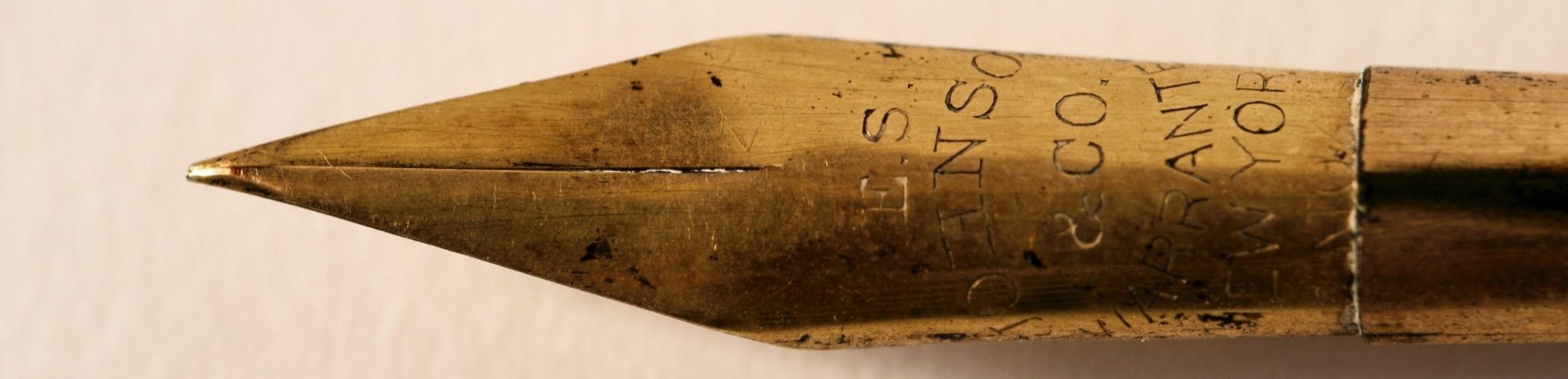
“The Week Awaits” by R.H. Russell


Dust packets drop from smoky sky
In streaks that etch the windowpane
And lens the iron balcony—
Drab ornaments to rime a tree
And stupefy the weather vane.

(The skater slides to slush-pooled stop
Convinced that metaphors must drop
Away from what was first supposed:
Rainy Monday’s rippling prose.)


R.H. Russell grew up in New England, which he continues to call home. One of his poems recently appeared in Touchstone, the journal of the Poetry Society of New Hampshire. Russell says: “I write poems because of the way the creative process totally eclipses my political anxieties, while connecting to a world of beauty that seems both distant and imminent.” In his professional life he focused on environmental advocacy and policymaking.

“Memories of You” A selection of Haiku by Jennifer Gurney


almost every
memory of you
happiness


I thought we had years
decades, even
instead … only days


even my cat
knows my heart is shattered
she’s trying to purr me back together


saying out loud
every time, gutting
hospice


honoring your wishes
to not see you like this
hardest thing I’ve ever done


letting go
gets harder each day
as the end looms close


this morning when I woke
in that millisecond before I remembered
my heart breathed


it is fitting
I rediscovered passion tea
in the days just after you died
all tang and zest
just like you


our wedding song plays
I brace my newly raw heart
What A Wonderful World
only five days since you died
for a brief moment, it is…


too sick to make the journey
for our boy’s wedding
you traveled in my heart


Jennifer Gurney lives in Colorado where she teaches, paints, writes and hikes. Her poetry is widely published, two of her poems have won international contests and one was turned into a choral piece. Jennifer has four books of published poetry, My Eyes Adjusting (2024), Liquid Sky (2025), Love’s Echolocation (2025) and Light Matters More (2025, forthcoming). In just over two and a half years, more than 1,500 of Jennifer’s poems have been published. She is also delighted to be a guest editor for Haiku Girl Summer.

“AD – The beginning” by Lawrence Ullian


So much confusion,
yet limited – and limitless time.
So many random thoughts
undermining my mind.

So many potential causes’
For one’s memory losses:
old age or a family history
are possibilities.

or a long-forgotten head injury,
or a chromosome 19
that hosts
an APOE 4 gene.

There are several causes of delusion
that confound the diagnostic conclusion,
that in turn, leads to treatment confusion
as the disease slowly proceeds.

I can’t or won’t accept this diagnosis,
but I need to be honest with myself –
some kind of rot in my mind
is going to undermine my mental and physical health.

Until that day when I won’t know better,
it won’t matter how much I fought.
My irrational mind will block my ego
So I won’t be able to experience what I ought:

A diminishing control
over my mind and heart,
which the absence of each,
will tear me apart.

My mind will go out of my head
like a balloon in the air
as relatives and friends
grasp at what I feared:

a mind that flies high
into a fully cloudy sky.


Larry Ullian is retired and has written a lot (mostly unpublished) poetry for more years that he cares to recall. This is one of his first efforts at seeking publication. He was a Training & Development designer for various public, private, and non-profit organizations.

“Labels and Piety” by Ann Grogan


Some might say I’m a polymath,
Some, a dilettante,
I think I’m both, and you are not?
The both you do not want?

But why the one and not the other?
Do easy you fall prey
To how others wish to label you
Or think you then, to be?

A narrow line you really walk,
Not fat nor adventurous
But pulling in and shutting down
With absence of all lust

And glee, and general insanity
Plus the joy of letting go?
But hurt resides in limiting
The feelings that you show

Or feel, or how you think of self,
And also what you say
Or do or play, dance, draw or act,
And what you might display.

Let go say I, you’ll manage well
Inevitable anxiety;
That never killed a fly it’s said –
The killer’s piety.


Ann Grogan is a new poet, pianophile, attorney, and octogenarian residing in San Francisco, California. She promotes the unequivocal permission to pursue one’s passions at any age. Since most stress in life is caused by taking oneself too seriously, she likes to reflect humorously on her struggles after retirement in 2020 to re-learn to play the piano and write about her long-standing feminist-humanist values.

“Do Us Part” by Alaina Hammond

           
The groom looked handsome, even though his suit was a full size too big. But naturally most of the focus was on the bride. Her hair, her makeup, her heart rate, her fluid intake.

            Her nurses doubled as her bridesmaids.

            Because both sets of parents had signed the consent forms, the marriage was legally valid. It was a formality, a kindness, to allow these teenagers a “real” wedding. It imbued the event with a genuine sense of gravitas. “See, children? You’re not just playing dress up! No, of course not! You’re legally married, in the eyes of the state!” Such was the subtext, which everyone understood.

            No one—least of all the bride and groom—expected the marriage to last a month. The vows were real, the way a rain shower is real.

            But then the experimental drug did a remarkable thing.

            Two years later, he asked her for a divorce. But because they shared a sense of humor, he did it in public, offering her an empty ring box and a pen.

            “Yes, oh yes! A thousand times yes!” The onlookers clapped and cheered.

            You had to admit, it was a badass way to celebrate beating cancer.


Alaina Hammond is a poet, playwright, fiction writer, and visual artist. Her poems, plays, short stories, philosophical essays, creative nonfiction, paintings, drawings and photographs have been published both online and in print. @alainaheidelberger on Instagram.

“Looking for Marie” by Gregory E. Lucas


On a Hilton Head Island beach, I almost
give up looking for her. It’s October, one year
after her death. The hues that sunsets leave
in the sky on most days are absent.

I stop my stroll, stare
at the colorless sky’s reflection
in the ashen ocean.

Pipers stir the damp sand with their bills.
While ospreys dive, the seascape
becomes more of a thing I feel
than merely see, possessing an inner life
with complications. The surf moans.
Seagulls circle overhead and cry
as if they, too, have suffered losses, live
with melancholy and longings
as persistent as my own.
There ought to be some comfort in this.
The horizon should reveal more than a drab bend.

I expect clouds to shift, think
the half-moon might appear, then wait
for her invisible presence

and her touch in a breeze, a voice
among hushed waves, as soft
as every time she said goodnight,

but there are only the voices
of strangers,
all of them wondering,

Who is he looking for?
What is he seeking?

Gregory E. Lucas lives on Hilton Head Island in South Carolina. He loves to swim in the ocean and he plays classical guitar every day. He is a caregiver to his ninety-year-old mother.

“Awakened Resolve” by Louisa Prince


After two years of it being vacant, they’d posted the position online.

The one I’d been unofficially performing since 2021 when my responsibilities expanded to cover its duties.

My first warning? They made no announcements. It popped up during my normal Saturday morning ritual of surfing the net—another random add on a website. My trembling hand reached for my mug, but my grip faltered, sending my coffee clattering to the floor. Surrounded by the hum of my laptop, I mopped up the mess.

Once finished, I peered back at the monitor.

I applied that day.

I remember preparing my resume, updating the document with the tasks I’d performed over the past two years. Memories of group huddles, the hours preparing business cases, writing and re-writing recommendations to achieve the business goals.

One week later, I paused before the boiling kettle when heavy footsteps approached. “You’ve done a spectacular job,” a voice said.

I turned to face my manager. “Thanks … and just so you know, I’ve applied for the role.”

“That’s fantastic. I’m sure you’ll do well.”

A fortnight later, the call arrived. I’d secured an interview—Monday at 10.30am.

Monday came. My gut churned, and palms sweated while I dialed into the online meeting.

Following the interview, I buzzed with electricity. In a departure from previous weeks, interactions with my manager took on a collaborative approach. “Lyn, I’d like you to sit in on the finance meeting,” he’d announced.

I began to hope—until Friday at 4:30pm when my next warning arrived via incoming message in Teams.

I guess I should have known things were way too quiet. I clicked on the icon and answered the call.

“I’m glad I caught you before you headed out,” a velvety voice said. Her image filled my screen. “I’m guessing you know what this is for?”

I swallowed. “Yes … I think so.”

“We appreciate your application and congratulate you on an impressive interview. Unfortunately, you’ve been unsuccessful …”

Her lips moved, but my mind drifted back to early starts, navigating frost covered pathways, and the wheezing cough that rattled my bones amid the chill of Melbourne’s winter. I recalled preparing reports, how deep shadows formed under my eyes. Three years of toil—all for nothing.

The call ended, and I sat there, engulfed in silence.

Tears did not come, instead heat coiled within my chest, before igniting into sparks that surged forward to sweep away that passive part of me that accepted less. In contrast to my habits, when five o’clock came, I logged off.

With a deep breath, I opened my resume—the one that hadn’t existed three weeks before.

Lyrics to a feminist anthem pulsed in my head, repeating in a loop while I opened my laptop to the employment website. I smiled, reading the position displayed on my monitor, and my resolve solidified.

Ten minutes later, I clicked send. Let my roar erupt.


Louisa Prince is a self-proclaimed late bloomer, living in Melbourne, Australia who’s writing often focuses on family and health. An active member of The Society of Women Writers Victoria, her work is forthcoming in Certain Age Magazine, appeared in CaféLit Magazine, New Plains Review and was longlisted for SWWV’s Margaret Hazard Short Story Award.

“Again” by Jack Borden


In the beauty of this morning
Let me find You again
Though my sins are many
Let me find You again
Though I’ve been a fool
Let me find You again
Though my darkness is great
Let me find You again
Darkness isn’t dark to you
Let me find You again
In this place that we used to meet
Let me find You again
Under these blue skies, beneath these trees
Let me find You again
Meet with me, your broken child
Let me find You again
Please find me where I am
Please find me again.


Jack Borden a writer and who lives in rural Texas. He enjoys spending time in nature, spending time with his family, and trying to practice the presence of God. He is also the author of a children’s fantasy series.

“The End of Grand Things” by John Brantingham

   
When Wanda tells everyone that she’s going to visit her parents for the weekend, she’ll leave on a Friday morning, but not get to their place, which is only 100 miles away, until a Saturday morning. Six times a year, she has a day to herself, just her and her station wagon in the rolling hills of New York and all the money she’s hoarded for the past two months so she can stay in a motel under the name Alexandra Whetstone. She likes to sit in the hotel room without any sound or chore and listen to the silence while she reads detective novels.

            In October, when she gets back home from her folks’ place, she finds Henry and Charles oddly quiet, oddly distant. Charles, her husband, is always distant, but Henry is usually excited because she brings him liquorice. When she hands him his candy, he doesn’t look at it, doesn’t eat it all in one sitting the way he always has before. “What’s wrong?” she asks.

            Henry frowns at her as though she should now. “Grandpa died,” he says in the whine that 11-year-olds can achieve as though it’s obvious, and the weight of his words backs her up, makes her grasp the kitchen table to keep her from falling. “Dad called you and told you.”

            And Wanda knows that he must have called Friday. He must have spoken to her folks but gave nothing away because they didn’t even mention the call on Saturday morning. He must have been very good with his words because they didn’t say a word. When Wanda finds Charles in the living room reading the newspaper, a highball glass full of bourbon, he doesn’t even look up. He says, “He was out back with Henry checking that bat house they built, shining a flashlight up into it to see if they had any visitors.”

            “What happened?”

            “Heart attack.” He still doesn’t look up from the Sunday paper.

            “Right in front of Henry?”

            Now, he looks up at her. “Yes.” He takes another sip from his glass. He is not a man to speak to his wife. He’ll get loud with other people, whoop it up at a baseball game or yell at someone driving stupid, but he always speaks to her with his eyes. Now, his eyes are asking a question.

            Up until now, she wasn’t really worried that he’d catch her. It’s easy to fool a drunk man. “I’m not cheating on you. I go to a little motel halfway between here and there just to get a little time for myself.” Charles’s eyes quiet themselves, and he nods, at whatever peace he finds in himself in these years after the war. He came home a hero, a part of Patton’s cavalry, and hasn’t said one word about his time there, at least not to her. “Do you believe me?”

            Now his eyes tell her that he’s confused. “Of course, I believe you.”

            “Would you be angry if I were lying?”

            He puts down the paper and grabs the armrest of his chair. “You wouldn’t lie,” he says. “Not to me about that. If you did, I’d understand.”

            “Why?”

“I’m not the easiest person to live with,” he says. He takes another long sip and goes back to his paper.

In the days ahead, there will be planning and cooking and phone calls and all the million details that go with arranging a funeral, and that will take up her mind and his. There will be time to ponder the meaning of her marriage, and she wonders if he will too. She doesn’t think he will leave though. He did that years ago. He left her for Patton’s war, and she doesn’t think he’ll ever come back.   


John Brantingham is the recipient of a New York State Arts Council grant and was Sequoia and Kings Canyon National Parks’ first poet laureate. His work has been in hundreds of magazines and The Best Small Fictions 2016 and 2022. He has twenty-two books of poetry, nonfiction, and fiction. Check out his work at johnbrantingham.com.

“Nowheresville” by David Sydney


“Talk about being lost, Frank.”

“What’d you mean?”

“I mean, we must be in the middle of nowhere.”

He didn’t have the strength to say ‘nowheresville’.

Frank pushed himself up from the hot sand.

“We’re crawling in the desert, Ralph. If we don’t get some water soon, I don’t know what’s going to happen to us.”

The Sun was a pitiless furnace in a cloudless sky. A few buzzards circled above.

“The desert? So you mean, we’re in the middle of the desert?”

Their clothes were burnt, tattered shreds.

“Yeah, as far as I can see.”

“No kidding?”

Frank tossed away the empty canteen.

“Thanks for telling me.”

“Huh?”

Ralph looked from the canteen to the endless sand.

“For a moment there, I didn’t think we had any idea where we were, Frank.”


David Sydney is a physician who writes fiction in and out of the EHR (Electronic Health Record).