“Apple Road” by Carey Jobe


March’s balanced sun,
and over a dashboard map
a bald orchard freckling white,
a subtle scent resuming
the countryside contours,
a windborne whiff of apple,
inebriates the tanked-

up Maverick tracing the idling
asphalt which tethers city
to city, a fixed intent
bewildering through this country
of white scent, an everywhere
to which his driven brain’s
alacritous abandon

assents, as morning’s drudge
befuddled amid a freedom
of greening lawns, sky new-blue
(having just quit his job)
loses himself in choice:
wishes scatter like pollen,
every mood renews.


Carey Jobe is a retired attorney who most recently worked as a federal administrative law judge. Prior to starting his legal career, he was a classical student specializing in Latin and Greek literature. He served in the army for three years in Germany and has traveled widely. He attributes his love for writing poetry to drinking from the Castalian Spring at Delphi during a trip to Greece.

“Sylvia Plath shaped Writer’s Block” by Gabija Kertenyte


It’s better to not do
perhaps
your rhythms rake my brain
my eyes leak wine
I learn your head became a stew
I lapse
dissociate a mile from the sublime
it’s better to not do
perhaps


Gabija Kertenyte is a person who lives in Philadelphia but she has lived in other places and they have all become her. She is now made up of disparate pieces that yield the fragmentation of modern migrations and is trying to reconstruct herself through language. She is incredibly interested in psychology.

“How It Is” by Laura Shell


Hello. I am an essay. I could have been another short story, another dark flash fiction tale of less than one thousand words, something involving the demise of something, because that’s what happens in the end, everything dies, but it’s the discovery of that demise—to discover it, having it careen straight into your field of vision and demand attention like a spoiled child in a dirty diaper, which is a good description of the dead one. But I don’t want to be another fictional story about that situation because there have been many fictional stories on that subject. I want to be an essay about the time since that demise, how liberating it has been without the dead one and the guilt that accompanies that liberation.

The writing has only been around for four months in this particular decade, and stories have been accepted (not the ones about the dead one) as well as a book because this writing thing has been all-consuming, an all-day endeavor, like an addiction, and the dead one was an addict, so it’s been passed on. It’s the main thing, other than the dog and the husband, and they don’t require much attention because they are both male and males are simple creatures.

There has been so much writing and reading and submitting, not submitting as in a slave submitting to a master, maybe, but submitting to them, and then checking emails, and then checking emails, did I mention checking emails? There will be more NOs than YESs, and that is okay, because NOs aren’t as bad as finding the dead one and touching the dead one and feeling the cold and the rigidity. And in spite of that bastard of a moment there has been enjoyment in doing this writing thing because of the euphoria in such a short span of time and because that heavy, heavy, heavy burden is gone.

But there is guilt, so much guilt in doing what she wants to do instead of doing what she has to do for someone who had no idea of the sacrifices she made throughout her adult life for the dead one’s benefit, so she shouldn’t feel guilty for all that is happening right now… Wait, now I’m a she and she sounds like an asshole and she can’t get her mother’s dead body out of her thoughts—

She doesn’t think she wants to be an essay either.


Laura Shell started writing because her mother told her to. She will be published in Calliope, Chiron Review, WINK, Literally Stories, and will have an anthology of horror stories published in 2024. When she isn’t writing, she watches horror movies with her dog, Groot.

“Louie’s Interview” by David Sydney


After two minutes and thirty-nine seconds into the first round, it was all over. Bonecrusher Rocco had knocked out Leftie Louie. The sports reporters flocked around Rocco. They were like pigeons around a large canister of popcorn, except pigeons are polite. Mel Bromley, from a local radio station, had a free lane to Louie.

“How are you, Louie?”

“Huh?”

“I mean, after almost three minutes in there?”

“What time is it? Is that the time?”

Louie’s manager, Al, told Mel to take it easy.

“He needs more smelling salts, not an interview,” said Al, motioning to Stan, the corner man.

The reporter looked to Stan. “Is he hurt bad?”

“I’ve seen worse. Another round would’ve been a lot worse.”

Mel kept questioning and recording. “Louie, was it the right to the body and left to the head that did it?”

“Head? What?”

“When he knocked you down for the third time?”

Twice down was bad enough.

“Wasn’t it a left to the body and right to the head?” said Al, correcting the record.

“I was worried about Louie’s head,” offered Stan, squeezing a wet sponge.

“I plan to hit him with a left to the body, then a right to the jaw,” said Louie.

“It’s over, Louie.”

“You’re right. Once I finish with that right…”

“Leftie,” said the reporter. “It’s over.”

“I told you we need more salts.”

The boxer’s eyes started to focus. He looked better with his eyes uncrossed.

“Al,” he said. “Let’s get this thing started.”

Mel motioned to Stan. “Maybe it’d be easier for him to remember if you bandaged that cut over his eye?”

Leftie Louie wiped away the blood. “Where is he? Do you think Rocco’s going to fight? Or even show up?”


David Sydney is a physician. He writes fiction in and out of the EHR (Electronic Health Record).
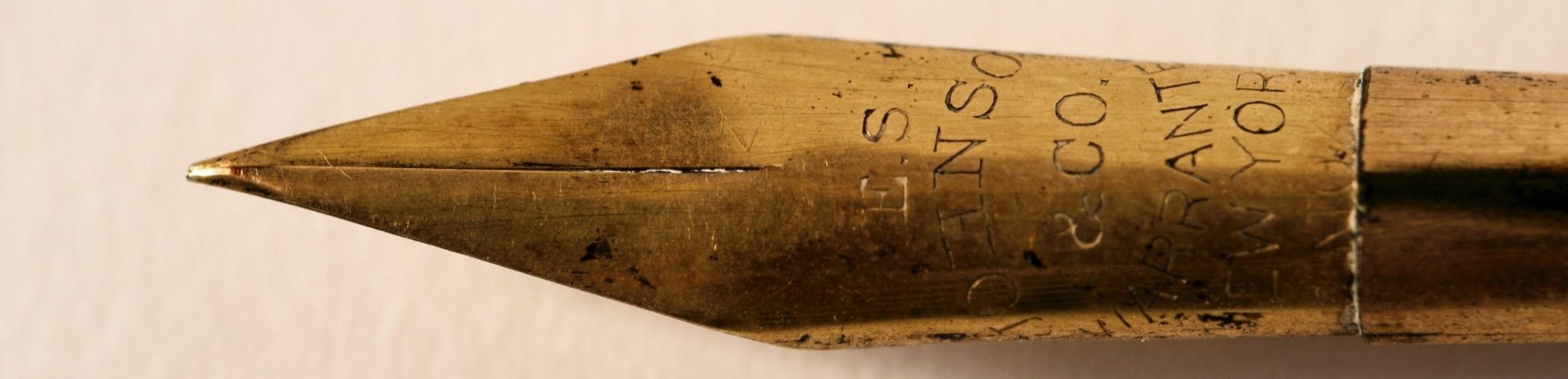
“Sabastian’s Cat Eyes” by Terry Brinkman


Fat-Tire drinking at Liquid Joes
Sitting next to a Questar gas man
Three ghost women on the table doing the Can-Can
Sabastian’s cat eyes glowing in the low light
New gray haired bar maid is from Utah
Drinking Irish Rum from a condensed milk can
Hearth sitting cat Sabastian purring under the fires glow
Looking for a pot of gold under the rainbow, no joy
Bar tender almost forty with hair color of tin
Pouring whiskey over steams of coffee Ah
They say the clock is from Berlin just rang midnight
Fire-works just outside the east window
Old Tanner’s trying to play the Violin like carrying in a pine tree


Terry Has been painting for over forty five years; now he paints with words too. Poems in Rue Scribe, Tiny Seed. Winamop, Snapdragon Journal, Poets Choice, Adelaide Magazine, Variant, the Writing Disorder, Ink Pantry, In Parentheses, Ariel Chat,

“ABCs” by Maurice O’Sullivan


To learn the ABC’s,
at least to learn them all with ease,
demands a kind of mind
now growing rare in humankind.

With thoughts now fossilized,
and eyes and minds all colonized
by cells’ and tablets’ spells,
most children huddle in their shells.

Once words become extinct,
how will our lives and minds be linked?
Emojis may seem fun
until we see the world they’ve spun.

Once simplified, that world,
now clipped and stripped, all curled and furled,
will make us think, “That’s all.”
And, once again, will Adam fall.


Maurice O’Sullivan, a former teamster, jail guard and pub owner, found a way to combine those skills as an award-winning teacher, editor, columnist, and film maker who lives in Orlando, Florida. His most recent book, Have You Not Hard of Floryda, surveys 300 years of Florida’s colonial literature. www.MauriceOSullivan.com

“Excuse Me While I Generalize” by Thomas Salvatore


People walk around this city
As fragments of larger pieces
(Imagine chips fallen from ice blocks adrift)
They have no idea
I only know because I have been
Many fragments from many wholes
Many times before my current fragmented state
I am not smarter than anyone else
I have just come together and apart more often
Quietly with no dramatics
(Imagine this scenario involving a work break and people)
It was ninety-three degrees yesterday
A suited man orders a coffee and two donuts
Hot? Yes, with two sugars
I bought a manilla folder from a rundown office supply store
Cashier tells me to enjoy the folder and hands me seventeen cents
Rounding the corner I lock eyes with the often over-dressed deli clerk
I just haven’t connected with yet
One of us nods and we both move on
I sip the grape slushie I couldn’t resist and develop instant brain freeze
Simultaneously thinking about Afghanistan


Thomas Salvatore is a regular person who has been writing for over thirty years; college educated but had to work so did not move on to post graduate studies which he often regrets but still has lots to smile about. Thomas is a New Yorker, born in Queens, home of the Ramones.

“In Decline” by David Sydney


It was rough being a Christian in the Coliseum in ancient Rome before Constantine declared Christianity the state religion. Pagans fed Christians to the lions. After Constantine, it was the other way around. Then, the lions dined on pagans.

It was a Sunday afternoon, and little Marcus was at the Coliseum with his grandfather. It was a beautiful day. There were plenty of lions and pagans to go around. The Empire had not yet fallen. But even little Marcus could sense a kind of decline. He followed the action. Gladiators hacked at one another. In his box, the Emperor turned thumbs down time after time. Then came several of the lions.

– Grandpa, was it like this in the old days?

– Come again, Marcus?

– Well, do things seem to be getting a little worse?

– I guess it was better back then. I suppose you’re talking about the decline that everyone mentions.

– How about it, Grandpa?

– Well, thinking back, I guess it was better… I know the lions seemed to enjoy eating the Christians a lot more than eating the pagans now.


David Sydney is a physician. He writes fiction in and out of the EHR (Electronic Health Record).

“Mel and the Waiter” by David Sydney

Mel was irate. He called the waiter over.

“Look at that.” He pointed to the bowl with his soup spoon.

“What?” The waiter’s glasses needed lens wipes.

“There’s a fly in my clam chowder.”

What kind of place was this, Mel wanted to know. Flies in his clam chowder?

“I’m sorry. You’re mistaken,” said the waiter.

“That’s a fly floating there. That’s disgusting.”

“You ordered the shrimp bisque.”

“I thought I ordered clam chowder. But there’s a fly in that soup.”

“The world’s full of flies,” said the waiter, now irate with Mel. “But I’m sure it was shrimp bisque.”


David Sydney is a physician. He writes fiction in and outside the EHR (Electronic Health Record).

“Cured Of” by David Sapp


At seven I was cured
Of fast boats – Ned
Of Ned and Eileen
Had a quiet heart
Attack as if he fell
Asleep in the stern
It wasn’t the conveyance
Or speed that killed him
He simply happened to be
Roaring over Pleasant
Hill Lake at the time –
Still the stark association
And the depth of bodies
Of water fixed my resolve

At nine I was cured
Of smoking after
Two timid drags
Burning sucking in
Burning coughing out
From my neighbor’s
Mother’s unfiltered Kools
(Which eventually wrecked
Her lungs and killed her)

At ten thundering
Flying headlong down
Quarry Chapel Road
I was unequivocally cured
Of motorcycles – a little
Boy precariously astride
Uncle Gregg’s Honda 450
My skinny arms clinging
Wrapped around him
I screamed into his back
Certain I tempted death

At thirteen
A bit more courageous
I was never quite
Cured of kisses –
Girls girls girls
No matter how capricious


David Sapp, writer, artist, and professor, lives along the southern shore of Lake Erie in North America. A Pushcart nominee, he was awarded Ohio Arts Council Individual Excellence Grants for poetry and the visual arts. His poetry and prose appear widely in the United States, Canada, and the United Kingdom. His publications include articles in the Journal of Creative Behavior, chapbooks Close to Home and Two Buddha, a novel Flying Over Erie, and a book of poems and drawings titled Drawing Nirvana.