Day One.
California Pacific Railway.
“Goddamn you, Thomas,” O’Nally had said. “That shipment was worth a fortune, and you let the coppers nab it.”
“I’m sorry, boss,” Okie replied. “I’ll make it up to you.”
“I know you will. Every red cent. Luckily there’s money to be made out west, and you’ll bring it back to me if you ever want to come back home again.”
Okie jolted awake. On his left was the empty train car. On his right he tried to not to look out on the deep blue Pacific Ocean that trundled past. He was glad there was a window separating them. Everyone told him it’d be beautiful. But he didn’t believe them then and he certainly didn’t believe them now. He’d seen seas before back east. Seas of tall grass and wheat swaying in the breeze, shimmering an emerald green or bright gold depending on the season. No one gawked at fields the way they did with water. He didn’t understand it. There may be ticks, but you couldn’t drown in grass. Why take the chance?
Beneath his seat he could feel the railcar wheels rhythmically spin on the track. He folded and unfolded his list of contacts over and over again with every bump of the rails. Beyond him the tide foamed white on the blue waters of the Pacific, rolling in and out as it always had. Everything was in rhythm, except for Thomas “Okie” Graff, whose life had spun out of control.
When they reached Purissima, Okie, hat on his head and coat under his arm, stepped off the platform into the dusty, coastal air. His first task was to stop at the telegram office and send a message to Boss O’Nally.
ARRIVED – STOP – WILL START SEARCH – STOP – NEWS SOON – STOP
His second task was to speak to his local contact. He unfolded the piece of paper in his pocket and looked at the address as he had a hundred times before on the train. Glancing up and down the dusty streets he wondered if they even had addresses here. The new century could almost walk, yet Purissima languished in the last one. Modern convenience was a fairytale out here, while the faded memory of the eighteen hundreds was reality. Everyone told him that Frisco was the center of civilization on the west coast, but travel a few miles south to Purissima and you traveled back in time.
Okie’s contact ran a small antiques store in a dead corner of town. The interior was filled to bursting with odds and ends and sundry junk, but there seemed to be an emphasis on bent and burnished brass instruments. The air was an acrid musk. Just smelling it invited moths to chew on Okie’s clothes.
“Howdy, fella,” Okie said to the small man behind the counter. “You Matteo? I believe we have a mutual friend in a man named O’Nally.”
“Si, ciao,” the owner replied, small eyes peeking through heavy brows. “O’Nally? Lo conosco.”
“Ehh…” Okie hesitated, vaguely recognizing only a few words and unsure how to continue.
He’d hoped he could walk in, ask his questions, and leave town quickly. But that wasn’t how life worked these days. Instead he leaned in conspiratorially, dropping his voice so the trombones couldn’t hear.
“Listen, I’m here on a job thanks to our mutual friend. I’m looking for the del Solano’s fortune. Gold? You understand?”
Matteo looked Okie over before he burst out laughing. The acrid musk drifted from his open mouth forcing Okie to step back.
“Quella storia esiste da sempre!” The antique man said. “Tutti vengono in città aspettandosi oro o pesos. Ma e una bugia. La famiglia ha fatto fortuna con chiodi placcati d’oro per sigillare le loro bare. Pazzi.”
Okie, not knowing where one word ended and the next began, couldn’t cut in. He felt as if he was standing in a storm back home, caught between the wind of the man’s lungs and the rain from his lips. For the first time he noticed the large flag pinned on the far wall half obscured by mountains of books. It was a tricolor; green, white, and red.
“Damn,” he mumbled. “You’re a genuine Italian, aren’t you? D’you even have an English word in your head?”
“Voi americano venite a fare le stesse domande e io vi dico la stessa cosa,” Matteo continued, giggling with every word like a broken reed. “Avrai più fortuna con gli scarafaggi e dei morti.”
“I don’t see what’s so funny,” Okie said, shaking his contact note in the man’s face. “One last time: O’Nally; del Solano; Gold. Anything?”
“Vai a giocare nella terra con gli altri bambini,” the Italian taunted. “Vedrai che ho ragione.”
Okie turned on his heels and stalked out of the shop. Scratchy laughter echoing after him like a rusting trombone.
Stepping out into the afternoon sun of Purissima he decided he already hated this town. His tongue was dry as he ran it across his lips. Clearly, his third task here was to get himself a drink.
#
Day Two.
Kern’s Barroom.
The first evening in Purissima had slipped by under the cover of night. The next morning continued much the same with its revelries trailing into the afternoon. This was how things were done back east and Okie hoped to soothe his anger at the situation with a little cup of home. Several cups actually. Thirteen shots of whiskey, five beers, a jug of hard cider, and a
bottle of tequila to be exact. A kind stranger had offered a sip of their imported Chateau Latour, but in his drunkenness Okie confused France with Italy and, remembering the antique store, roundly refused. To anyone else this might seem an absurd amount of alcohol, but Okie never kept track of his drinks before, so to him it felt quite reasonable.
“I’m a made man,” Okie mumbled, head on the counter. “Y’know that?”
“Sure, fella,” the bartender replied. “Made of what?”
“Muscle. Respect. Status with Boss O’Nally. Booze, opium, girls. I made sure it all flowed smoothly. At least ‘til I found the bottle.”
“Then maybe you should muscle your way through those doors and go home where you belong.”
Okie watched the afternoon sunset through the dirty westward windows, golden light transitioning into a deep orange. Without even stepping foot in the Pacific he felt like he was drowning himself here.
“Can’t,” he replied, pulling himself up from the bar and tossing whatever coins he could find in his pockets. “Not ’til the job’s done. Nothing’s waiting for me ’til then.”
Walking was a better idea when Okie was sitting down. From a barstool he could imagine going anywhere. In reality crawling was ideal, but even he had standards – which was stumbling. Distance and staying in a straight line was harder to attain. Night was surprisingly cold in California, forcing Okie to button his coat up tight. Everyone talked about how the west was warm and comfortable, but go far enough west and it got cold again.
From the bar Okie wandered through Purissima, watching lampposts glowing in the dark, their flames flickering in the breeze. If the town was sleepy during the day, he wasn’t sure what to call it at night. Comatose? Okie would’ve loved to be comatose right about then, but he’d picked up a lead about gold at the bar between glasses of whiskey. It was a dead lead, but it led him north to the edge of town where the lampposts ended, leaving him alone in the dark with the ruins of the del Solano hacienda.
The low wall had collapsed in some places, the cream-colored stucco had begun to crack, and the wooden gate had disappeared entirely. Esto tambien pasara was written on what remained of the front archway, framed by bullet holes. A large coastal oak grew through the roof and windows of the main villa. Smaller, dilapidated buildings still stood arranged in a ring, tiled roofs scattered in some places, replaced by bird’s nests in others. The scene swayed in Okie’s vision; with each uncertain step the walls and rubble rolled from left to right and back again. He was sea foam, drunkenly drifting along with the flotsam of the past century.
Okie let himself in through the front door – which was gone anyways. He lit a match as he stepped through the empty doorframe. The interior of the villa was a mess. The roof sagged, the walls leaned, and the paint peeled. Every single drawer, shelf, desk, and table had been knocked over. Okie hadn’t been the first person to come looking for the fortune. He’d sometimes wondered what it was like to search through someone else’s investigation or dig through someone’s trash as though it might reveal something new. Now he’d find out.
He didn’t know where to start or what to look for that might relate to gold. So he meandered, trying to make out generational detritus in the dark. It was what he imagined walking on the seabed might be like. All blacks and purples, with a glint of light that reflected the moon, and the crushing weight of his drunken stupor. He’d found another spot to drown himself besides the Pacific. It was here, at the bottom of the ocean, that he understood his issues with alcohol had mixed with a childhood fear of the sea to create something new. To him, the worst fate that could befall him was drowning no matter where he was. The second worst was to be in Purissima.
In some rooms it looked as though everything of value had been lifted in search of the fortune. Some chairs even missed their nails and there were the remnants of enough broken locks to surmise anything interesting had been taken long before. Other rooms looked untouched; their scavengers had been precise and thoughtful. The family portraits had been freed of their gilded frames. It looked like a swarm of romantics had descended to arrange the ruin just so.
Okie didn’t consider himself a romantic. He thought he was an idiot, but only admitted as such when inebriated.
Something crunched beneath him. Glancing down, he saw a cracked mirror and in it a reflection of the off-kilter drunk who’d screwed up so badly in Chicago that he’d been sent west to chase ghost stories.
“Shhh!” he hissed at the drunk, finger to his lips.
The reflection froze.
Above the mirror, hanging from the wall was a family portrait. Prying it from its hook Okie looked the faded photograph over. A note revealed that it had been taken at a celebration for one Amador del Solano taking the cloth at the local mission. His family, all gone now, gathered around him laughing. The young initiate smiled out from better days. The back dated the photograph at fifty-eight years. Maybe, Okie wondered, there was a del Solano still kicking around in town who had the truth to their fortune that he needed.
#
Day Three.
Mission Santa Serra.
The labyrinthine hallways of the local mission were never meant to be navigated with a hangover of the magnitude that pounded in Okie’s head. The walls were a featureless white that blended together to hide every turn. Small wooden crucifixes sat at measured regular intervals. The only difference to be found was the odd window where sunlight and shadows spread across the opposite wall in varying shades of white which were all there in their redundancy.
Nuns wandered through the hallways with suspicious eyes and curled frowns peeking out from underneath their habits. Okie initially smiled and nodded, but the more he encountered their stares the more he simply avoided them, walking on like he had somewhere important to be. Which wasn’t a lie exactly, though it wasn’t a truth either. Okie simply hoped for the divine providence that he hadn’t passed Amador del Solano in the graveyard on his way in. Wasn’t such faith the point of a house of God?
Okie made his way to a small dormitory door labeled “A” and knocked lightly. Finding it unlocked, he peered in.
Seated on the small bed was an even smaller monk shriveled into his cassock. He stared at a small window at the corner of his room where a small family of thrushes had made a nest. Okie took a step in. The old man’s eyes didn’t twitch or move in the slightest; his irises had a grey film like the morning fog that rolled off the Pacific.
“’Scuse me, padre,” Okie said.
“Hola?” The friar replied, barely turning his head. “Is it dinner time already? God bless.”
“Naw. I had some questions for you.” Okie peeked out the door before closing and locking it. He sat down in the nearby chair. It was too small for him. His knees came up to his shoulders. “You wouldn’t happen to be Amador del Solano, would you?”
“Si. I was that man long ago.”
“Don’t take this the wrong way, padre, but I’ve come looking for your family’s fortune. What can you tell me about it?”
“Gringos have asked me that question so many times before and every time I bury it. But like Christ, it always rises three days later. Give it up. Save your soul.”
“I can’t do that,” Okie replied. “I can say my Hail Marys if you’d like, but y’all have enough nuns as it is.”
“Greed is such a terrible sin. But we of the west are damned with it. The snake told Sutter to pluck gold from the river and we tore Eden apart looking for the source. Even my family worshipped it like God’s own light.”
“What’s done is done. The entire world came here looking for their fortune. Someone has to find it. Might as well be me.”
Amador sorrowfully shook his head.
“What about your family?” Okie continued. “D’you have any idea where they might have put it?”
“My family? Gone. I entered the mission before the gringos arrived. Next time I looked out my family and my country had vanished. Do you know the theory of immaculate de-conception?”
“What’s that?” Okie asked. “Is it gold?”
“Where God puts good onto the Earth with one hand, he wipes it away with the other. It’s happened many times before. Sodom and Gomorrah. Noah’s flood.”
“And now the del Solanos? That’s a mighty long stretch and I’m barely following you as is.”
Amador turned to look at – and through – Okie for the first time. His grey eyes never wavered, the mind behind them half gone.
“Who are you? An angel?”
“No.”
“A bird?”
“Naw. Just a man.”
“What sort of man?”
Okie glanced around the room, trying not to meet the blind friar’s gaze. The thrushes twittered. The shadow on the wooden crucifix grew a little longer.
“A drunk,” he replied. “An easterner…”
He wasn’t sure how to explain that he’d come here to get back into the good graces of Boss O’Nally several states eastward. A terrifying man who could make him disappear with a snap of his fingers. In truth, Okie had been set free when he was sent so far away. Like the thrushes, he could fly wherever he wanted if not for the golden cage he sought to reenter.
“Are you a bad man?” Amador asked.
“Mediocre more so.” Okie replied.
“And if you don’t find this fortune?”
“Dunno.”
He would drown himself. Again.
“A shame. I can’t help you because I’m no longer Amador del Solano. My tongue took an oath to the church, my eyes no longer see this world, and my hands can no longer write in Spanish. A shame, I would’ve loved to speak to a bird.”
Amador fell silent, receded further into his cassock, and turned back to the thrushes on the windowsill.
Okie remained in the tiny chair. The wood squeaked with every slight motion he made and every sound was thunderous in such a quiet space.
“God dammit,” he grumbled under his breath.
#
Day Four.
Grizzly Square.
Okie watched the sun glow through the rolling paper as it curled in his fingers. He didn’t like to admit it, but his talk with the padre, short as it was, had left an impact on him. He admitted that he’d been a drunk for a long time now, stumbling from one bottle to another. He’d been drenched with the stuff physically of course, but now his very being and dare he say his soul had taken on a dampness that only frayed with time. Okie would rot away soon if he wasn’t careful.
He’d found two solutions to combat this. The first was drying himself up, which is why he’d settled on the small park bench next to the broken fountain. The second was to find a
different vice to interest him. He couldn’t just drop the bottle and walk away with no substitute. He’d soon be crawling back under the cover of night. Instead he turned to smoking, which is why he was rolling his own cigarettes as he contemplated his next move. The pleasing scent of dried Virginian tobacco lingered around his nose while he sprinkled it in the paper, twisted each end tightly, and ran the tip of his tongue along the crease as though it was a letter.
Holding the cigarette up in the sunlight, Okie couldn’t help but admire his creation. His child. It had a little bit of him in it; like his rail-thin constitution. This was his fourth attempt. The first three sat snugly in his breast pocket waiting for their brother.
“Vagrant!” Shrieked a voice next to him, high pitched and authoritative, like a crow choked out of a rooster.
Okie jolted in surprise, knocking his head against the bench’s armrest and juggling the loose cigarette between his hands. For a moment he was truly fearful that he would drop it in the dirt.
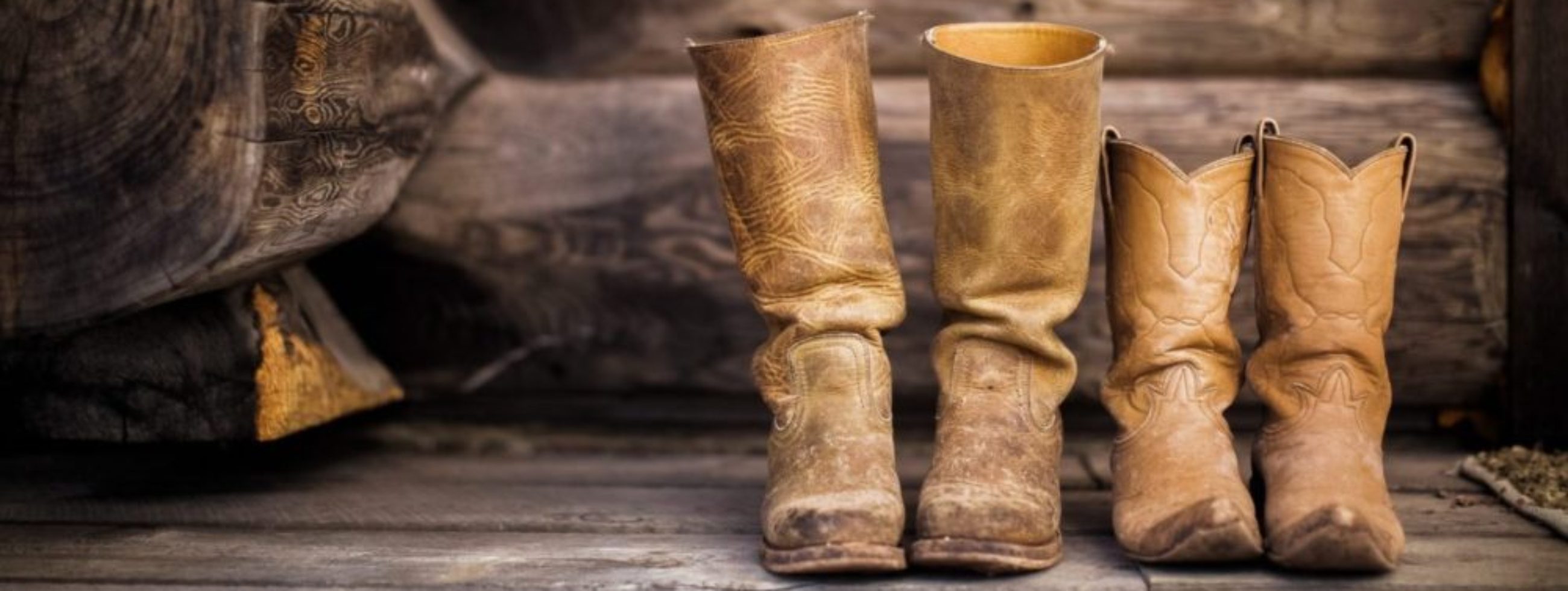
“Answer me, vagrant, what’re you doing?” The voice came from a child, one of three who stood inches from Okie’s seat. None of them looked a day over ten. The speaker wore oversized cavalry boots polished to a noon-day shine and carried a metal fireplace poker over his shoulder.
“I’m sitting,” Okie replied. “That a crime now?”
“It is when there’s work to do! When there’s a war on!”
“There’s no war on.”
“Maybe to a vagrant like you, but to us, there’s always a war on.”
“I’m no vagrant, boy. Where are your parents?”
“My mama’s Columbia and my daddy’s Uncle Sam, hobo. They’re busy.”
“That doesn’t make sense. How can your daddy be your uncle?”
“America’s the land of liberty, he can be whatever he wants. Not that a tramp like you would understand.”
“Well it’s my liberty to sit here and you’re bothering me. Go play somewhere else.”
“We don’t play. We fight.”
“You should join us, mister,” the second child said. He wore a military parade jacket far too large for him. Coattails and sleeves dragged in the dirt.
“Where?”
“Mexico,” the first child noted.
“Mexico!? Who are you?” Okie asked, thoroughly annoyed at this point.
“Lassen,” the leader of the troop replied, before motioning to the second boy. “That’s Stanislaus. And lastly, Glenn.”
Glenn, the smallest, wore a crumpled shako on his head with a white feather twice his size. Slung from his shoulder was an empty can of peaches on which he tapped rat-tatatat-tat for good measure. Okie had to admit the boy had good rhythm.
“Captain Fremont told us to wait here for his return and watch for the enemy.” Lassen said. “But it’s been too long. We march for Vera Cruz!”
“We did that already,” Okie replied. He hadn’t of course. But his grandfather had gone to Vera Cruz and all that came back was a sad little portrait which collected dust in his mother’s
house.
“We did?” Stanislaus asked, despondent.
“Yep.”
“You wouldn’t be lying to us now, would you?” Lassen growled. “That’s subversive behavior.”
“Why would I lie to you? At this rate I might be face down in a Frisco’ saloon dreamin’ you little giblets to life.”
Okie truly hoped that wasn’t the case. He was trying to be better.
“If you ain’t lying, then what’re you doing here?”
“Looking for gold,” Okie snorted. Saying so felt like telling a dog he was looking for salvation. All they could do was bark in response.
“Gold!?” Lassen snarled. “You’re interested in gold when liberty’s at stake? You really are a subversive.”
Ratatat went Glenn’s little can in affirmation.
“My mama always talked about gold too,” Stanislaus mused.
Okie sat up instantly.
“How much?” he asked.
“Shut up about your ma!” Lassen snapped, “You’re a soldier now. You kissed her goodbye and now you belong to dear, sweet Columbia.”
“How much?” Okie asked again, leaning in.
“She’d talk about it in her sleep when she worked at the Mission,” Stanislaus replied nervously.
“Where can I find her?”
“Don’t listen to him, soldier! He’s trying to make you soft! Make you wanna go home!” Lassen shouted, waving his poker before turning on Okie. “Vagrant! Tramp! Hobo! Transient! Vagabond! Drifter! Beggar! Subversive!”
Glenn drummed along in agreement. Ratatatatatatatatatatatatatatatatatat.
“Boys, boys,” Okie chuckled. “I may be a bad influence, but I’m certainly no subversive.” He reached into his breast pocket and grabbed three of the cigarettes. “If you can tell me your mother’s name and where to find her, I might just have a few children of my own who’d want to sign up for your little war.”
#
Day Five.
King’s Washhouse & Laundry.
As evening fell Okie peered over the wooden fence at the back of the washhouse. A sign at the front door said they were closed for the day, but Okie felt he was close to the gold and his desperation drove him to trespass.
He’d never gotten around to smoking. Nor had he touched a drop of alcohol in the day and a half it’d taken to track down Stanislaus’ mother. It seemed she’d worked every conceivable occupation someone could in a town this small. Some of those jobs didn’t even exist anymore or locals never knew they existed in the first place.
On the other side of the high wooden fence he found a wide courtyard with a large
communal washtub filled with suds and soap. The scent of lye was suffocating and inescapable. At the other end of the clearing were numerous rows of clotheslines draped with drying attire. Among them were crates and bags of more garments folded, jumbled, or stacked. What was to be washed and what sent home? There was too much stuff and no structure. In the middle of it all was a washerwoman; her hands submerged in water, her dress drenched, and a rhythmic whistle on her lips.
“Barbara!” Okie hissed.
The woman stiffened and glanced around the yard. Finding no one she slowly began to crane her neck skywards to stare at the starry night.
“Over here.” Okie said again, clambering over the fence.
Barbara paled at the sight of the strange man. She took a step back and grabbed hold of the washboard should she need to hit him with it.
“Who are you?” she asked. “Do I owe you money?”
“None of that. Name’s Okie. I’m a friend,” Okie replied, thinking for a second before adding: “Of your son.”
“Oh, I’ve heard about you sniffing around.”
“And I’ve heard you have answers about the del Solano gold.”
“What about it?” the woman asked, taking another step back.
“Please,” Okie sighed. “I just want to know what you know. What’s it gonna cost me?”
Barbara’s eye twitched at the word “cost” before glancing between the door to the laundry and Okie who offered his friendliest smile.
“Help me with the wash,” Barbara said, offering up a bundle of clothes.
Having never washed clothes in his life, Okie feared it was a monumental task.
“Fine,” he replied.
He rolled up his sleeves, stepped up to the washtub, took the garments, and paused. Between the suds the water was black in the night. He couldn’t see the bottom or his own reflection. Menial labor was one thing, drowning was another, but it was all a means to an end. He swallowed his fear and submerged his hands. It looked cold, but the water was warm to the touch and the clothes were soft on his skin. He wondered if this was what the Pacific felt like.
“Start talking,” Okie said, catching his wavering voice and watching the woman from across the tub.
“I worked at Mission Santa Serra back in the day,” Barbara replied. “Organized mail for the monks, including Amador del Solano.”
“You were a nun?”
“No, a runaway. I broke with some no good vaqueros and took shelter with the monks hoping they wouldn’t turn me over. Eventually I had to move on.”
“What about the gold?”
“Amador had several unopened letters he got after he joined the church. But he didn’t want them nor did he open them. I assume news about the gold is inside.”
“Did you open them?”
“No,” Barbara said, shaking her head. “Figured they’re worth more unopened. At least I hope so.”
“The rumor’s been around fifty years and you’ve been here a decade, yet you haven’t sold them. Why?”
“Maybe it’s my punishment for stealing the letters in the first place. Now I’m reduced to odd jobs. Folks either don’t trust me or figure they’ll have a target on their backs once the gold’s theirs.”
“You mean like me?” Okie asked.
“Sure. I thought you were coming to collect from me when I first heard about you. Eastern criminal mastermind and all that.”
“Ain’t no mastermind.”
“Then why do you want the fortune? Why put faith in unopened letters?”
“Gotta’ buy my way back home. Back into the good graces of a man I failed.”
Barbara nodded, pondering words and laundry in equal measure.
“It won’t work. Money doesn’t buy love, it only buys you a night and you have to keep paying for each night afterwards. I should know.”
“How so?” Okie said, squeezing suds from the laundry. “Working job after job, stuck here, always looking over your shoulder. What do you know exactly?”
“You’ve got to put your faith in change. Big or small. That’s what the west is all about. I’ve moved past the gold, maybe you’ll get something out of it. Who knows.”
“You’re starting to sound like a nun.”
“Maybe I stole more from them than just letters.”
Okie sighed,
“You have ‘em, then?”
“Always do.”
“What’ll it cost me?”
Barbara’s eye twitched at that word again. She seemed to watch it roll off Okie’s tongue the way he sought the smell of alcohol at the bottom of a bottle.
“How much you got?” she asked.
“Not as much as you’re hoping for that’s for sure.”
“The rest of the wash, then,” Barbara said before pointing at Okie’s breast pocket. “And gimme that.”
Okie glanced down at his last cigarette. Carefully, almost mournfully, he took it from his pocket and handed it to the washerwoman. He wouldn’t be the one to smoke it after all. Barbara plucked it from his fingers, stepped back, and lit it. Okie wished she’d treat it more gently, but he should’ve known better by the look of her kid.
With no more cigarettes to weigh him down, Okie worried that the water would grab hold of his hand and drag him down to the bottom. Or maybe, with nothing else holding him back he would leap in. The bubbles looked more and more like sea foam under the lantern light. He could almost imagine the telegram sent back to Boss O’Nally.
OKIE DROWNED IN WASHTUB – STOP – BURIED AT SEA – STOP – LAUNDRY ON SALE – STOP.
Yet there he remained on solid ground, breathing of his own volition.
Barbara rummaged through a satchel hanging from the wall and pulled out several old, crinkled envelopes. She held them up in the flickering light and smelled them for a moment before placing them snugly in Okie’s breast pocket. He wanted to believe the new weight would ground him, or just touching the envelopes would lead to a stroke of enlightenment, but instead the paper only crinkled against his chest.
“What if nothing changes?” Okie asked.
“You can’t think like that,” Barbara replied. “Not until you’re dead.”
#
Day Six.
Purissima Cemetery.
Dearest Amador,
Father finally passed last night. We missed you at his bedside, but I know you were praying for him. He spoke to you in his final moments as though you were there. He’s to be buried in the family cemetery, mother wants you to nail his coffin shut and conduct the funeral. It would be good to see you again, your family misses you.
The spade bit into the dry earth with a soft crunch. Okie placed his foot and his full weight onto the step and felt the metal slowly sink lower and lower into the dirt. Wiggling the handle, he put his strength behind it, pried up a clod of poppy covered soil and tossed it aside onto the pile growing next to him. It was slow work for one person.
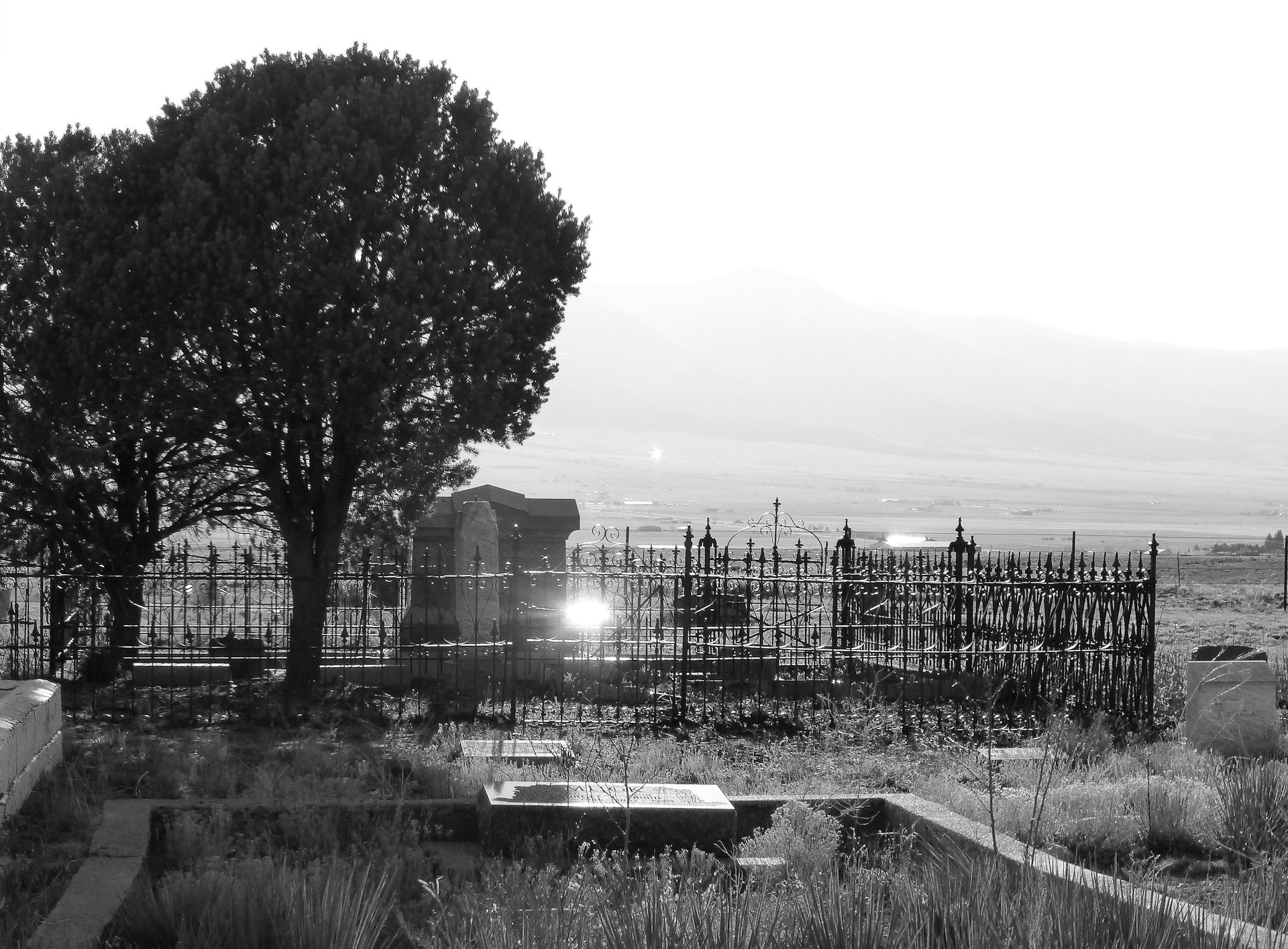
As the ocean fog crept in, his only company was the marble angel that topped the Del Solano family tomb. The statue’s outstretched arms were meant to welcome mourners and family, but now it only welcomed Okie and his grave robbing. He’d set his hat and coat on her before he started; hell he’d even brought flowers. Felt like the right thing to do. The angel didn’t care. Nor did the dead.
Everyone says there’ll be war with the United States; some of our anglo neighbors already eye us with suspicion. Rumors of our gold have begun again. Mother insists we should
move south once father is buried. Each piece of bad news feels like one of Christ’s nails in my heart. You should come with us and help, but I know you won’t.
Surrounding the main tomb were headstones and busts of del Solanos. Extended branches of the family who’d come back home to be buried together. Okie couldn’t help but notice the deaths in the family had ceased after Eighteen Forty-Six. Either they’d bought immortality with the last of their fortune or no one had been around here to die since then.
He stared at the angel again. The marble face was half illuminated by the moon and half by his lantern. Scattered shadows cast strange, unreadable expressions across the emotionless stone. It was up to Okie to decipher them and he preferred not to. At this moment he preferred not to think or worry. Especially when he was so close. He kept his gaze downwards, watching the dirt break and sift away, grubs and worms crawling free, until the wooden face of the casket was revealed as though floating to the surface of the grave. Most identification had long since worn away, but the family surname was still visible under the moon.
Every time I talk to Mother about the gold, she always says: “The moment our ancestors found it, and the rumors got out, it was the nail in the coffin of this family.” We have so little now. Father’s death and our impending move has hit her hard. The family feels smaller than ever, and sometimes I think you’re dead when you don’t write back. It would do us all some good if you came home.
Nail in the coffin. The phrase had lodged in Okie’s head and led him to this hill overlooking the Pacific.
Okie hopped down into the open grave. The coffin was heavier than he’d expected, forcing him to descend into the yawning earth, submerged between dirt walls on either side. For
a moment he worried the walls would crash down and drown him. His chest heaved at the thought, but he shook his paranoia away. He’d come so close, he couldn’t – he wouldn’t give in to his fears now.
The casket remained still. He placed the metal tip of his shovel at the joins of the coffin and pushed. The blade cracked through, splintering wood and prying the craftsmanship apart.
Okie tossed the shovel aside, fell to his knees, and reached into the broken joins of the casket. He could feel what he sought. Cold metal against his skin. With worn hands he took hold of it as best he could, wiggled the prize loose, and held it in the light.
A gold plated nail. Each join in the coffin was sealed by one. Each coffin in the cemetery held a dozen. Okie stood among the mother-load. All he had to do was take it from the dead.
With gold in hand, he began to pry the coffin apart board by board, like plucking pearls from a clam. Each nail came easily enough from the rotted wood and Okie could feel his palm grow heavier and heavier with each new addition. Squeezing his hand, the golden points pricked his skin. Each nail was a ticket, a meal, and a room for the long trip back east. He plotted out his path as he worked. He could come home a dime store cowboy, a real adventurer, a success. He could return to his made man status like nothing had ever happened, maybe even with a bit more respect and a grateful welcome by Boss O’Nally.
Okie paused. Something nagged at the back of his mind. It wasn’t until the left side of the casket was opened that he finally noticed the smell: damp sod and sea breeze mixed with rot and decay, punctuated by the chemical scent of formaldehyde. Okie had been so focused on the gold, he’d forgotten there was a dead man inside. Or maybe he’d preferred to ignore that from the start.
Peering inside to find more nails, Okie couldn’t help but stare at the corpse for the first time. Half illuminated under the moonlight; the skin was long gone leaving only pale bones dressed in a fine suit. As the living man reached for another glint of gold the dead man’s skull wobbled and rolled to the side to stare at him. Okie froze. He’d told himself that he needed this fortune. The dead had no use for it. According to the letters they’d had little use for it in life either.
Things could go back to how they’d been. That’s how this all started. Okie could go home to serve in the shadow of a man he feared, buying back his life at the price of golden nails until they became the joins in his own coffin. He could be banal, content, and unchanging, trying to recreate the past before he’d come west. He could waste away as Purissima personified. Or – he glanced at the corpse, the skull almost smiling – he could take what he’d found, leave, and start anew far away from Boss O’Nally. Free as a bird. No one cared where he was now, why should they care where he went from here? His handful of nails was more than enough to support him wherever he went. They seemed to jingle in agreement.
“Sorry, fella,” Okie said, rolling the skull back into place. “I guess we’re gonna’ have to share.”
The coffin was sealed up as best he could manage without carpentry skills. He reburied it, and bade the angel one last tip of the hat and a fond farewell.
Standing at the coast that night, he hurled a single golden nail into the Pacific as payment for the water not drowning him when it could have so many times before. Where to next? Even Okie wasn’t sure, but he made sure he didn’t stay to see the seventh day dawn in Purissima.
Marsden Lyonwahl lives in his head. A graduate from the University of Washington, he currently resides in his small hometown of Los Angeles. Out there he is inundated with cowboys – most of them from New York. This is not the last you’ve heard from him.