
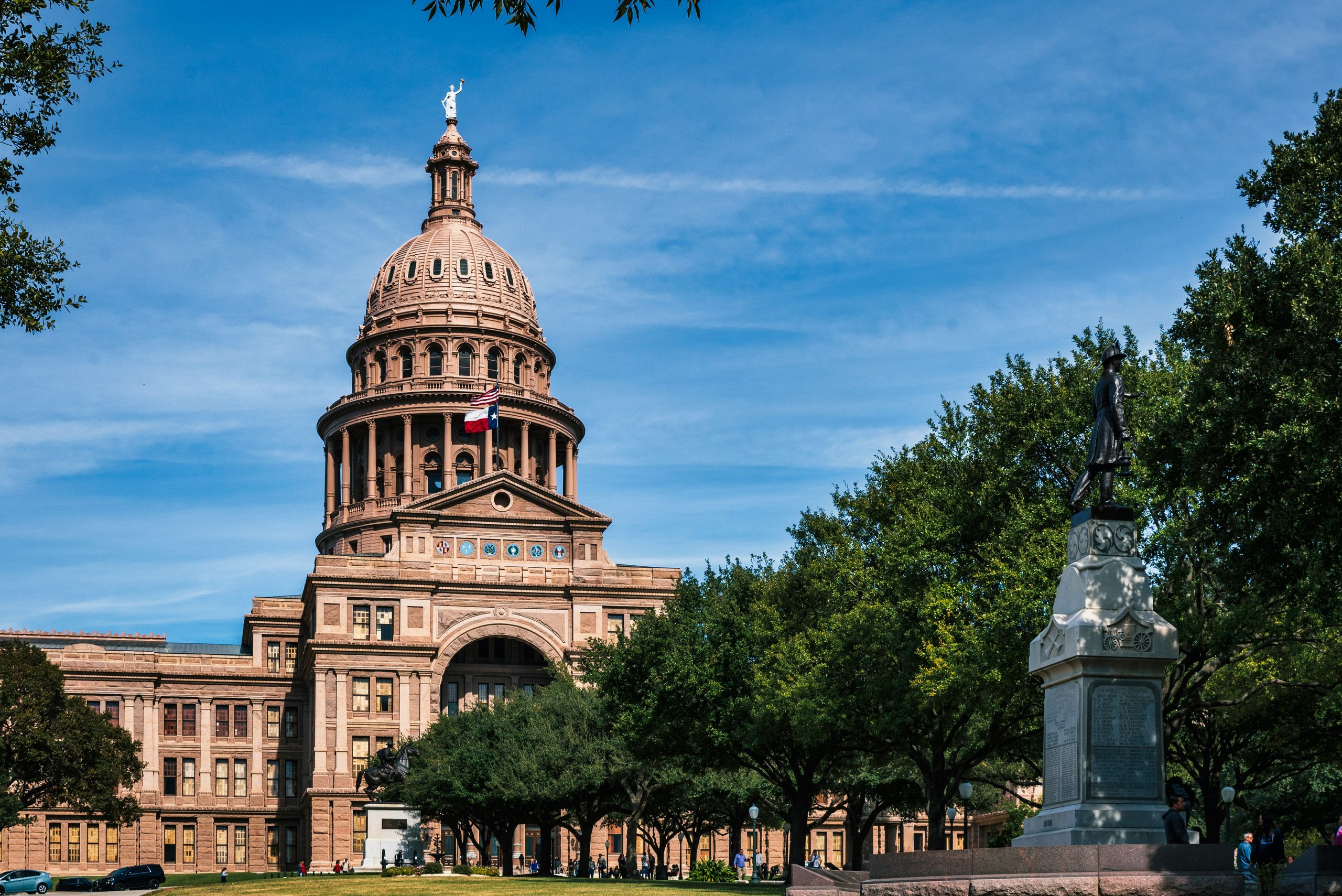
When I was young, my father enchanted me with stories that the Capitol building was a palace, and I was a princess there. The Capitol building does look like a palace, high on a hill with decorative red clay tile floors, marble staircases, and gorgeous murals in the rotunda, House and Senate chambers, and the Governor’s office. One mural, the Apotheosis of Pennsylvania, in the House Chamber features distinguished state residents including William Penn, Benjamin Franklin, and Daniel Boone. When Teddy Roosevelt dedicated the Capitol in 1906, he called it, “the handsomest building I ever saw.” It is a grand and elegant building, full of history.
My father worked in the State Capitol. He received his PhD from the University of Pennsylvania at a time when the new governor was looking for academics to fill his administration. Before he graduated from Penn, my father accepted an offer to direct and modernize the State Bureau of Statistics. At the Bureau, he compiled and calculated population, employment, and other economic data for the State and its local governments, and created the first statistical abstract for Pennsylvania. Now, what was once a valued life’s work has become superfluous, as all that information is compiled by the Pennsylvania State Data Center at Penn State Harrisburg and available online.
On Sundays, I accompanied my father to Quaker Meeting for Worship, held in the YWCA building, a simple, plain building, since replaced by Strawberry Square, which stood across Walnut Street from the Capitol. After Meeting, my father and I walked around Capitol Park and fed the squirrels. Occasionally, we went to my father’s office on the second floor of the State Capitol, which was furnished with bulky, bureaucratic desks and metal file cabinets, and could have been the decor in Atlas Shrugged. His office, restored to its original opulence 50 years later, now houses the Senate Appropriations Staff.
In the 1950s, my mother conducted a demographic survey of state legislators whose desks were then on the floors of the respective chambers. When I started to work for the State House in 1978, most of the representatives had their own office, but shared a secretary with two or three other representatives. Since then, their staff has grown exponentially, and the Legislature has taken over two other state office buildings and expanded into the Capitol Annex, which was built in the late eighties.
I worked in and around the Capitol for over 25 years. In my first position, I was an intern for and then hired by the House Republican Research Staff in the Gannet and Fleming Building, now housing the Pennsylvania AFL-CIO. It was four blocks from the Capitol. After three years, I was hired by the Pennsylvania Chamber of Commerce (now the Pennsylvania Chamber of Business and Industry), which was located across Third Street from the Capitol in a building that is now a parking lot. The Chamber moved to a new building on Walnut Street around 1995.
Eventually, I worked for the State Senate in the Capitol. Now I, too, was working in the palace as a drudge. First, I toiled in a cubicle in the basement, later in a windowless office in the middle of the Capitol Annex. That office had mahogany veneer file cabinets and thick, dusty rose carpets with little keystones, reminding me that I was laboring for the Keystone State. That office felt like a luxurious cave.
As I walked the halls of the Capitol over all those years, I marveled at the high ceilings, the Victorian décor, the gold-plated ornamental chandeliers, the classic architecture, and the marble staircases in the rotunda sweeping to the second and third floors. I enjoyed examining the maroon, blue, and green Mercer tiles underfoot on the first floor that illustrate the state’s history, animals, industries, occupations, and modes of transportation from the early 20th century and before. My favorites still are the insects such as the butterfly, the dragon fly, and the honey bee. The halls on the first floor are lined with portraits of past House speakers, three of whom I came to know personally. Most, but not all of the time I spent in the Capitol, I was too busy to slow down and appreciate its magnificence
Life is full of uncanny coincidences. In 1997, I started a job with the Department of Community and Economic Development, formerly the Department of Commerce. The first office I was given was the exact office in the Forum Building my mother had occupied when she had worked for Commerce in the late seventies and early eighties. After a few months, I was assigned to another office. When I cleaned out the old metal file drawers, I was astonished to find the very first Statistical Abstract with my father’s handwritten notes in the margins, the same handwriting that wrote to the princess from the palace. When I shared these coincidences with my folks in the late nineties, they were stunned.
Lucy Sage began writing poetry at a young age. Born in Philadelphia, she subsequently lived in the Philippines and Nigeria while her father worked for the United Nations. She attended boarding school in England in the mid-sixties but dropped out of high school in 1969 to live in San Francisco. After waitressing and finally earning her degrees, she worked for politicians for 30 years. In addition to poetry, she likes riding her bike, painting, and exploring cities. Her poems have been published in Underwood Press, The Closed Eye Open, Writing in a Woman’s Voice, and Quail Bell, among others. She currently lives in Harrisburg, PA.