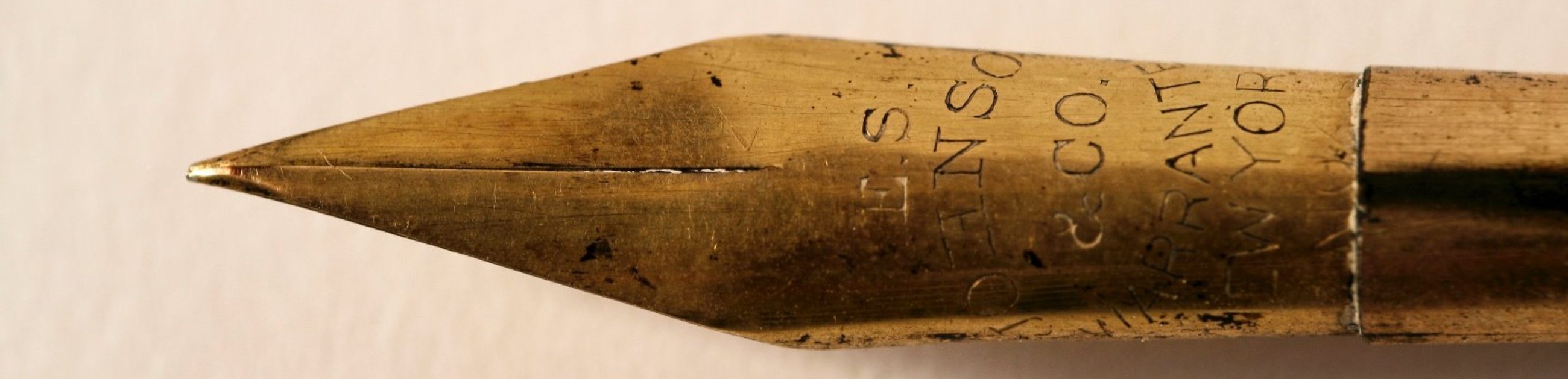
“Sharp Knife” by Dorothy Johnson-Laird


I stand with a sharp knife in my hand
Unnerved by its cool, shining blade

I am at the sink helping my cousin cook
in her bright, spacious, kitchen

I am enfolded by the light,
but I do not know about measurement, saucepans, mixes

I am one of those few women who did not learn to cook in her mother’s kitchen

I only know how to work with words, phrasing, stillnesses
Where to begin?

I scrape at the potato slowly,
It is rough and unwilling

I would prefer to be outside in the large garden,
Making a slow dance by the pink petunias

or sitting near the birch tree under the still sun
feeling its light shift over my shoulders

Or at my old manual typewriter
hearing the tap of the keys, spaces, possibilities

Yet I am stuck with this knife, chiseling away at the potato
Not sure If I am making progress or skimming too close to its core

While working, I picture my great grandmother in rural Ireland
The cold wind whirling by her house

Out on a hill, far from town
a rural shack with a great fireplace at its center

How she tried to keep warm in that place
A gathering of cows in a nearby field

She was a widow
turning withered pages of the Bible over in her firm hands

With small, thin frame,
a black shawl gathered around her shoulders
She stood bent over in the kitchen for hours,
shut in

I do not want my great grandmother’s life
The kitchen’s heat stifling her

I would rather take in the orange sun outside
the cool fresh air, the still sparrow standing in the shifting breeze

I want to step into this summer day of ease
unfolding orange petals

Yet I am stuck here trying to cut a way out of a rough vegetable
Trying to get through this task, so that it will come to an end

so that I will be able to put this knife down
and return again to the sounds and rhythms of words.

to the melancholy stories of my great grandmother
That have found their way into this pen


Dorothy Johnson-Laird is a poet and social worker who lives in New York City. She received an M.F.A in creative writing from Sarah Lawrence College. Dorothy also works as a music journalist with a passion in African music. She has published journalism with www.afropop.org and www.worldmusiccentral.org, among others. More of Dorothy’s poetry can be found at https://www.facebook.com/Dorothy-Johnson-Laird-Poet-106451582140735

“Shootout” by Zach Thomas


Soon I’ll have no shadow left
to throw.
As he stirs, I wonder who,
what I am tonight.
Air gun in hand, he goes pyew pyew
at Mom, mutters
I’m gonna kill, then glares my way—
Fix your eyes
when I’m talking to you, boy.

He snaps
at my glasses and we find
each other
for a moment. His hawkish blues
return to glass
and I kiss his forehead in the dark.


Zach Thomas is a writer from Richmond, Virginia. When not teaching college English, he writes poetry sparked from various locations in Appalachia, the American South, and Latin America. These poems tend to revisit grief, loss, and other topics that he realizes are hardly uplifting.

“Firstfruits” by Lydia Kuerth

Pale peaches
plucked before dawn
sunset flesh shrouding
pebbled hearts,
their juice barely bleeds
at cutting teeth
—dreams snatched
like unhatched eggs


Lydia Kuerth is a freelance writer from South Florida, where she edits the Living Waters Review and serves as a peer mentor at her university’s Writing Central. As a lover of reptiles, rainy days, and role-playing games, when not burrowing into books, she enjoys hiking and observing small creatures.

“Dental Work” by David Sydney


Mel went to bed with the uncomfortable knowledge that he had an 8:30 morning appointment with Dr. Bromberg. A dental visit is bad enough. But he would get up early and skip breakfast, as though a day without coffee might make his teeth more presentable.

For a while, he was gripped by massive pliers, yanked from side to side in a cheap motel room: that was his first dream.

Then, he was at sea, in a leaky lifeboat, watching a cruise ship sink beneath the green waves: his second dream was as unpleasant as the first, and left him sea-sick.

He didn’t want to chance a third, so at 3 AM he was up.

“Well, how’s she hanging, Mel?”

That was Dr. Bromberg, with his usual opening salvo, as Mel squeezed into the dental chair.

The office was brightly lit and antiseptic.

“I don’t suppose you’ve had any coffee this morning, Mel. But let’s see what kind of damage you’ve done anyway.”

Sam Bromberg began his customary inspection.

“Open a little wider, please…”

“You know Mel, in the old days, we’d use pliers on a tooth like that.”

The white-coated dentist tapped with his probe on a lower right molar.

Later, when he stopped drilling for a moment, he mentioned to Mel that he’d just returned from an enjoyable Caribbean cruise.

“After a little more dental work, you might want to try one of those cruises yourself.”

First, a follow-up visit?

Then, the dental bills?

And a cruise?

It was more than Mel could afford, or dream about…


David Sydney is a physician who writes fiction in and out of the EHR (Electronic Health Record).

“Wild Hungry Kitten” by John Vigren


I wish I knew you well enough to make
a sound that points to your especial gift,
more complete than the magic afternoon
you told yourself you would remember always

(and you do) or the promise of a film or book
to go on past its ending: live then so.
Why should you, more than momentarily,
believe such prompt unless the author knew

your life, your mind, your history and hurts?
And I do not. And so you gaze away
unmoved, unmarked by sounds that ask for all
of you: intent on single contest for

your singular self. The tomtoms back of you
are growing faint; you cannot yet quite hear
the One ahead who makes to say how long
He knew the way His prize – that you – would come.

So you resist, until the One with milk
will nudge you nearer, wild hungry kitten;
until the taste at once blood-deep and strange
will fill your head with strength, your cry with age.


JOHN VIGREN is a landscape photographer and recovering addict. He has been a machinist, road maintenance laborer, gardener, factory worker, practicing attorney, radio news correspondent, and church deacon. He lives in New Jersey with his wife, Elizabeth.

“Rocco” by David Sydney


Corporal Flanagan walked toward the closed door. Rhonda, the Chief’s secretary, looked up from her cell phone.

“I wouldn’t go in there, if I were you.”

“Why not?”

“Because he’s in a bad mood. You heard what happened in court yesterday, didn’t you?”

Flanagan shrugged, while trying to see what interested Rhonda on her phone. There was not much else of interest in the office, just a few faded pictures of the Chief shaking hands with politicians in past administrations.

“Yesterday the judge let Rocco off again. And he told the Chief he doesn’t want to see him there anymore with ‘so-called confessions’ beaten out of Rocco.”

The Corporal turned to leave.

“Do you want me to tell him anything, Flanagan?”

“Nah… Just that we picked up Rocco again this morning.”


David Sydney is a physician who writes fiction in and out of the EHR (Electronic Health Record).

“At the laundromat” by Moray McGowan


I am tiny, staring up at the huge glass porthole in the even vaster metal cabinet as it spews suds against the window with a dull slap, suds that surge down the glass to be replaced by new suds splashed up by the drum’s steady churn. It is my task to watch over the wash, and amongst the nightdresses, underwear, leggings, hoodies, towels, pillow cases, swirling like sea lettuce in the current, there is one T-shirt with a text across the front that is mine, I know. It is my story, a text that will unlock the mystery of my life. But again and again, no sooner have I glimpsed it, struggling to read it through the toughened porthole, thick and angled so that it distorts what it reveals like the whorls on old window-panes, no sooner do I begin to read, indeed to unravel the text that the drum’s churn has wrapped into a tangled ball, than the next turn of the drum spews its suds over the text and hurries it away.

If I sit here long enough, I think at first, bit by bit, letter by letter, I will eventually see enough of the shirt’s message to be able to piece it together, won’t I? So I strain to match a briefly glimpsed, sud-smudged letter’s position on the shirt to its position in the message I know is there. But even though I stare so long and so intensely that my eyes begin to ache as they unconsciously follow the drum’s rotation, I can only guess at the whole, for the shirt is multiply folded, crumpled, wound in and out of other garments. Gradually I realise that the time it will take to unravel this message is longer than I have patience for, indeed may be longer than my life itself. Perhaps, though, I think, after all this waiting, I might reach an age where, abandoning the urgencies of my younger self, I will have the patience to sit and watch, sit and wait, for the drum’s steady churn to throw up enough brief glimpses of fragments out of which I can make sense. And after all, I’ll be older, wiser, better able to piece it all together. But then again I am flooded with the gloomy thought that by then I will be too feeble, physically, mentally, too locked into other commitments, or all three, to act on whatever message the shirt, my shirt, eventually reveals.

Then a single clank. The machine’s timer reaches zero, time’s up, the shirt stays half-hidden and unreadable as the drum slows to a halt like a fairground roundabout when the last coin has been spent on the last ride on the gaudy horses. Now, I think, I can remove the T-shirt, smooth it out on the bench, read what has been tormenting me. I tug hopelessly at the unbudging glass door; there must be some code or combination to unlock it, and even though I cannot read the message on the shirt, I know with a dull certainty what that message is.


Moray McGowan, a Hiberno-Scottish silverback, wrapped chocolate, delivered mail, dug trenches, picked fruit and baked boiler insulation, taught for forty years at universities in Germany, the UK and Ireland, and now shuffles between the marshlands of Somerset (UK) and the jungles of Berlin.

“I Hate Books” by Moray McGowan


Besieged and smothered by them in my childhood; my parents and my brother always with their noses in books; force-read to at bedtime; bombarded with messages about how books are every child’s best start in life. Every book I come near – though it’s usually they who sidle up on me like the frotteur with bad breath on the crowded bus – is a punishment, floods me with fear and loathing. I hate their smell, their weight and shape when a Christmas or birthday present, beautifully wrapped, lands in my hand. I hate the sham delight my parents make me display to smiling uncles when they thrust it at me, with that creepy sideways glance for my parents’ approval. 

And now I’m back in the nightmare, in a room lined on every side with books, with no window and no door, just shelves and shelves and shelves of books. Their stern spines glare at me. When I swing on a shelf with all my body weight, it topples, sure, but only to reveal another shelf behind, it too crammed with books. Each shelf I pull down is the same, and soon there’s no floor to be seen, and I’m wobbling ankle-deep, sobbing, on layer upon layer of tumbled books. Some fall open, and from their smug pages the letters, letters, letters jeer at me like hyenas, and I’m sure I can smell their carrion stench. Each time my feet slip down between them, their tough bindings and sharp corners scratch my legs. I feel my last strength slip away. Panic turns my limbs to great planks I can barely lift.

Then suddenly I’m through, past the last shelf. No more books. I’m free.

But it’s worse, much worse. Not the peaceful stillness I crave. No, it’s a boiling, writhing, seething horror, the unshaped, untold, unstoried terrors of existence.

I vomit up a scream. There’s no way out, no road for me to run down, out of this trackless horror.


Moray McGowan, a Hiberno-Scottish silverback, wrapped chocolate, delivered mail, dug trenches, picked fruit and baked boiler insulation, taught for forty years at universities in Germany, the UK and Ireland, and now shuffles between the marshlands of Somerset (UK) and the jungles of Berlin.

“Besnik? Never lets you down” by Moray McGowan


The hut was freezing. It smelled of damp and desperation. My fear seemed to flow into a pool fed by many streams, many fears: how many borders had we crossed, I and how many others who had been here before? I felt my thigh yet again for the faint bump of my gold ring. Sewing it into the hem of the smock was Besnik’s idea. “Nothing else, nothing bigger.” He had tossed me the smock in exchange for my city clothes and the contents of my handbag before vanishing into the night. Would the smock let me pass unnoticed, as he promised? And if so, how far would that ring take me on the other side? “After the shattered oak the path falls away. When you pass the marker stone you are across. Now I must go.” And he was gone.

I walked an hour up the stony track. Everything was silent but for my footsteps. Then the click of a safety catch. Two figures in dark uniforms stepped from behind the oak. One grabbed my shoulders, the other felt along the hem with sure hands. “Besnik, eh? Never lets you down.”


Moray McGowan, a Hiberno-Scottish silverback, wrapped chocolate, delivered mail, dug trenches, picked fruit and baked boiler insulation, taught for forty years at universities in Germany, the UK and Ireland, and now shuffles between the marshlands of Somerset (UK) and the jungles of Berlin.

“From Holden’s Thanksgiving Tips” by Moray McGowan


If you really want to hear about it, the first thing you’ll probably want to know is the ingredients, and all that Betty Crocker kind of crap. But if there’s one thing I hate, it’s cookbooks. So I’ll just tell you what we ate last Christmas, me and D.B.: he’s my brother and all, got a Jaguar cost him damn near four thousand bucks. So we hit a turkey on the highway, stuffed it in the trunk and stuffed it again when we got home, with a loaf of Wonderbread soaked in a bottle of Overholt a John left in the Jaguar. Did I tell you D.B.‘s a prostitute? Works in Hollywood. Anyhow, stuff your turkey with the rye-soaked loaf, roast it for a couple of hours and just before serving, fill one of those fancy icing gun things with ketchup and squirt „Happy Holidays, Phoneys“ across the crispy skin.


Moray McGowan, a Hiberno-Scottish silverback, wrapped chocolate, delivered mail, dug trenches, picked fruit and baked boiler insulation, taught for forty years at universities in Germany, the UK and Ireland, and now shuffles between the marshlands of Somerset (UK) and the jungles of Berlin.